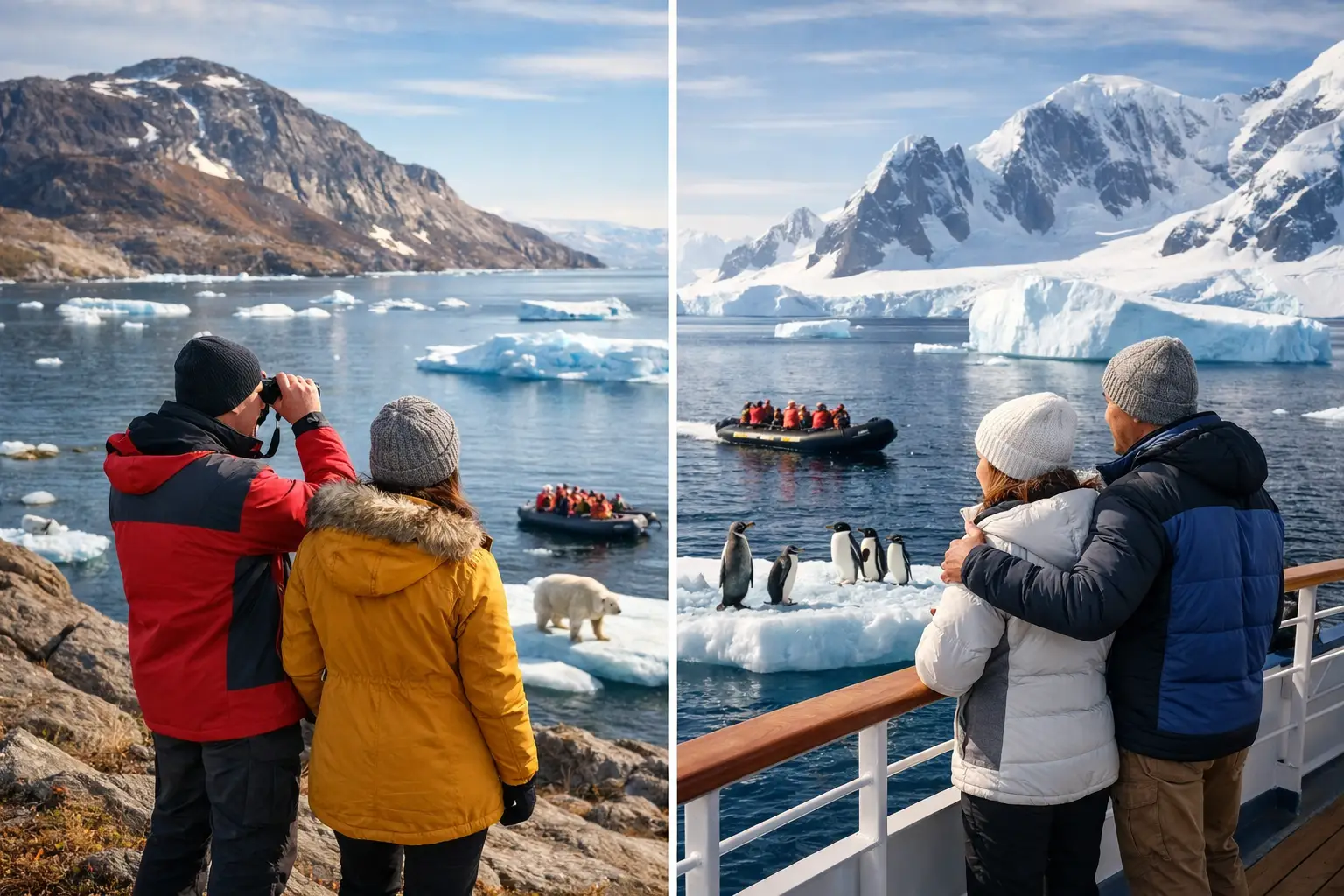
The first time a whale surfaces beside a Zodiac, or a penguin steps onto a beach so pristine it seems untouched by time, the question becomes more than a choice between two poles. Arctic vs Antarctica: which expedition should you choose? The answer lies in the kind of wonder you hope to carry home – whether that is the grandeur of a white continent ruled by ice and wildlife, or the richly textured northern world of polar bears, Inuit culture, dramatic fjords, and midnight sun.
Both are among travel’s most profound frontiers. Both reward curiosity, patience, and a willingness to step beyond ordinary comfort. Yet they are remarkably different experiences, and the right choice is rarely about which destination is “better.” It is about which one speaks more clearly to your personal sense of discovery.
Arctic vs Antarctica: Which Expedition Fits Your Travel Style?
Antarctica is a continent: vast, remote, and almost entirely devoted to wilderness. Its scale can feel cinematic. You sail through channels framed by towering glaciers, watch sculptural icebergs drift past your ship, and land among vast colonies of penguins that appear entirely untroubled by your arrival. There are no permanent towns, no indigenous population, and very little human infrastructure beyond research stations and expedition vessels.
The Arctic is an ocean surrounded by continents, spread across several countries and cultures. An Arctic voyage may take you to Svalbard, Greenland, Arctic Canada, Iceland, or the Norwegian coast. It offers extraordinary wilderness, but with a stronger human narrative: colorful settlements, Norse history, Indigenous traditions, working fishing communities, and traces of exploration that give the landscape added depth.
For travelers who want to feel completely removed from the familiar, Antarctica often has the stronger pull. For those who want wilderness alongside cultural context and geographic variety, the Arctic may be the more rewarding choice.
The Wildlife Experience: Penguins or Polar Bears?
Wildlife is often the emotional center of a polar expedition, but the encounters are different in character.
In Antarctica, life gathers in spectacular numbers. Gentoo, chinstrap, and Adélie penguins nest in sprawling colonies. Weddell, crabeater, and leopard seals rest along the shoreline or patrol the water’s edge. Humpback whales frequently feed in the nutrient-rich waters of the Antarctic Peninsula, sometimes close enough to hear their breath. The density of activity can be astonishing, especially in early summer when courtship, nesting, and chick-rearing fill the beaches with sound and motion.
Antarctica’s wildlife is also famously approachable. Because animals have evolved with little history of land-based predators, they can seem remarkably unconcerned by respectfully distanced visitors. A curious penguin may waddle near your boots. A seal may lift its head briefly from the snow before returning to sleep. These moments feel intimate, even when every guest follows strict environmental and wildlife guidelines.
The Arctic requires a different kind of patience. Polar bears are the defining sighting, but they are solitary, elusive, and never guaranteed. Seeing one crossing sea ice, scanning the horizon from a ridge, or resting beside a seal haul-out is a privilege precisely because it is unscripted. Walrus, Arctic foxes, reindeer, musk oxen, beluga whales, and seabirds add to the experience, depending on your route and season.
If your dream is abundant, close-range wildlife activity, Antarctica has the advantage. If you are drawn to the suspense and rarity of searching for an apex predator in its true habitat, the Arctic offers a quieter, more dramatic kind of thrill.
Ice, Light, and Landscape
Antarctica often feels like the planet’s purest expression of ice. The Antarctic Peninsula is a world of steep black rock, luminous blue glaciers, snow-covered peaks, and icebergs shaped into arches, towers, and fantastical floating sculptures. Kayaking across still water beneath a glacier face or standing silently on a shore surrounded by mountains can produce a rare sense of perspective. The landscape is elemental and almost abstract.
The Arctic is more varied. In Svalbard, glaciers tumble into broad fjords beneath jagged mountains. Greenland brings colossal icebergs, colorful coastal villages, and the immense Greenland Ice Sheet. Iceland pairs polar light with volcanic terrain, waterfalls, and geothermal drama. On some voyages, the landscape changes daily from pack ice to tundra, from bird cliffs to historic outposts.
Light also shapes the experience. Arctic summer brings the midnight sun, when evening can stretch for hours in a soft, golden glow. Antarctica’s long summer days offer abundant daylight as well, but its light often feels sharper and more silvered against the ice. Travelers who are passionate about photography will find inspiration in either destination, though the Arctic’s mix of culture, geology, and low-angle light can offer a wider visual palette.
The Journey There Matters
For many American travelers, Antarctica is more straightforward than its reputation suggests. Most classic Antarctic Peninsula expeditions begin in Ushuaia, Argentina, after flights through Buenos Aires. The traditional voyage crosses the Drake Passage, a legendary two-day sailing that can be exhilarating, contemplative, or rough, depending on the weather. For guests who prefer to avoid it, select fly-cruise itineraries cross the Drake by air and begin the voyage on the Antarctic Peninsula.
The Arctic is not one destination, which makes access more dependent on the itinerary. Svalbard is commonly reached through Oslo and Longyearbyen. Greenland routes may begin in Iceland, Canada, or Greenland itself. Canadian Arctic voyages can involve charter flights and more complex logistics, while Northwest Passage expeditions demand a greater tolerance for unpredictability and a longer time commitment.
Neither region should be chosen solely for ease of access. A thoughtfully planned itinerary can make either journey feel remarkably well supported, from pre-expedition hotel arrangements to baggage guidance, private transfers, and carefully timed flights. Still, Antarctica generally offers a more established first expedition experience, while the Arctic can feel more exploratory and geographically diverse.
Activities That Change the Experience
The finest polar expeditions are not passive cruises. They are active, expertly interpreted journeys shaped by weather, wildlife, ice conditions, and the interests of the guests aboard.
In Antarctica, daily Zodiac cruises and shore landings are central to the experience. Depending on your vessel and itinerary, you may kayak among icebergs, snowshoe across quiet ridges, camp on the ice, or take a polar plunge. Some departures offer more ambitious options, including mountaineering, cross-country skiing, and extended photography programs. The rhythm is immersive: breakfast looking out over a glacier, a morning landing among penguins, an afternoon whale watch, and an evening lecture from a marine biologist or polar historian.
Arctic activities often emphasize expeditionary variety. You may hike across tundra alive with summer wildflowers, cruise beneath bird-filled cliffs, visit a remote community, explore an abandoned whaling station, or scan the pack ice from the bridge alongside a naturalist. In Greenland and Arctic Canada, cultural encounters can be particularly meaningful when handled with respect and a genuine interest in local life.
For travelers seeking physical activity, it is worth looking beyond the brochure language. “Active” can mean very different things from one operator to another. The caliber of guides, the number of landing groups, the quality of expedition equipment, and the vessel’s ability to access quieter sites all influence the days you actually have ashore.
When to Go and What to Expect
Antarctica’s expedition season runs roughly from November through March. Early season offers pristine snow, courtship rituals, and dramatic ice conditions. December and January bring long days, active penguin colonies, and generally warmer temperatures. February and March are particularly compelling for whale activity and penguin chicks, with softer late-season light and fewer ships in some areas.
The Arctic season varies by region, but most voyages operate from late spring through early fall. In Svalbard, June and July can bring exceptional ice and birdlife, while August often offers greater access to northern areas as sea ice recedes. Greenland’s summer season is ideal for iceberg-filled fjords, hiking, and cultural visits. The Northern Lights are possible on certain shoulder-season Arctic itineraries, though they should be considered a possibility rather than a promise.
Weather in both regions is part of the story. It can change quickly, altering a landing site or sending your captain toward a more protected bay. The best expedition travelers understand that flexibility is not a compromise. It is what allows a skilled team to make the most of each day’s conditions.
A Simple Way to Decide
Choose Antarctica if you are captivated by vast, nearly uninhabited wilderness; want the most concentrated penguin and whale encounters; or are planning your first polar expedition and want a classic, visually overwhelming experience.
Choose the Arctic if polar bears are at the top of your wish list, if cultural and historical context matters as much as wildlife, or if you enjoy the idea of a journey that moves through a more varied world of fjords, sea ice, villages, and tundra.
For some travelers, the most honest answer is both – just not in the same year. Antarctica often creates the initial fascination with polar travel. The Arctic then offers a more layered return to the high latitudes, where nature, history, and human resilience meet.
The most meaningful choice begins with the story you want to live, not simply the destination you want to check off. With the right vessel, guides, timing, and level of comfort, a polar journey becomes far more than a voyage to the edge of the map. It becomes one of those rare experiences that stays vivid long after the ice has disappeared from view. At Dream Vacations – Matt Boshcka, we have several vetted expedition companies that we work with and can offer expert advise on the polar regions.
Leave a Reply