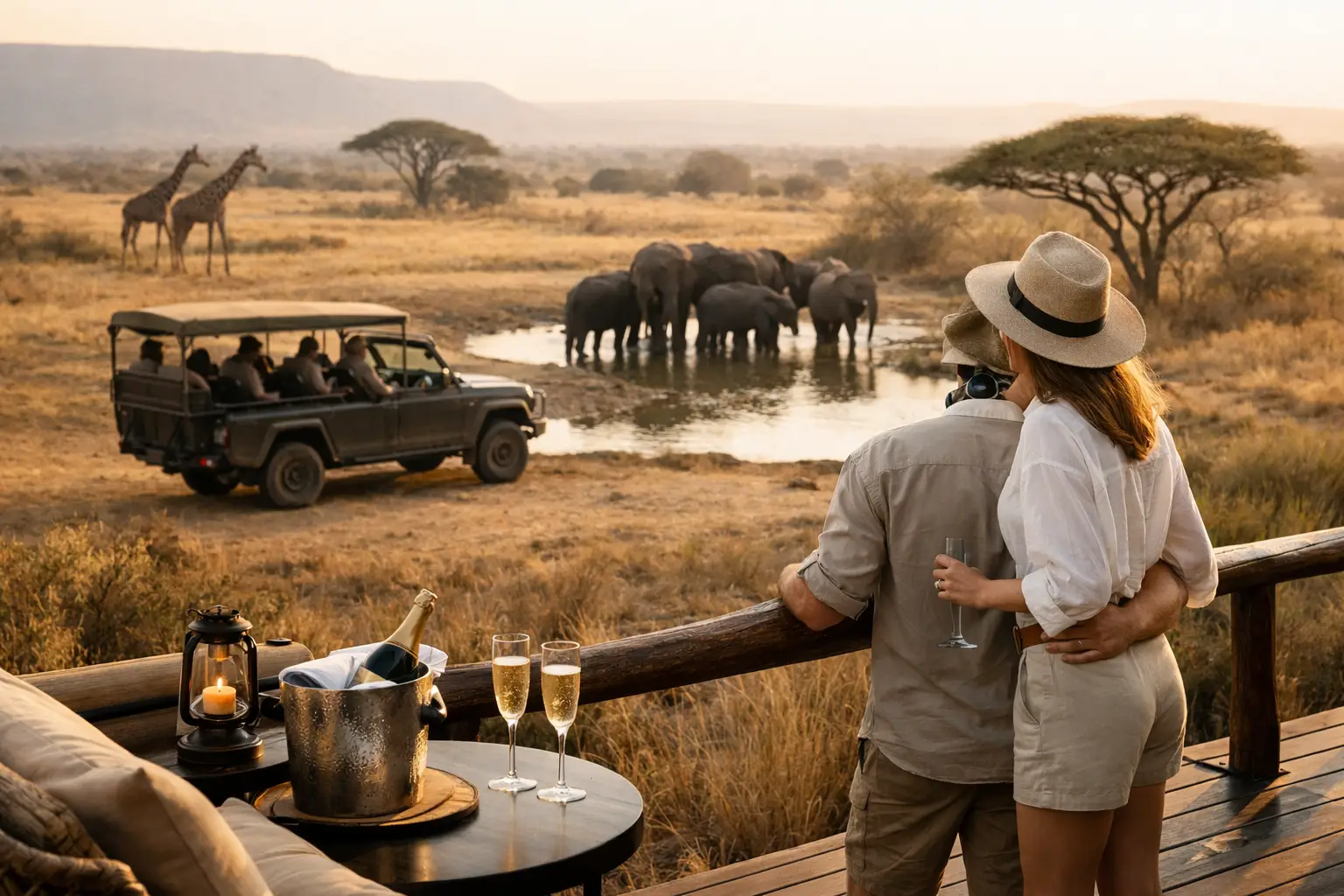
A lion stepping from the grass at first light, elephants crossing a river beneath a copper-colored sky, the quiet thrill of tracking a leopard with an expert guide – the best safari destinations are defined by far more than a wildlife checklist. They offer a particular feeling of place, a distinctive rhythm of each day, and encounters that linger long after the photographs have been shared.
For well-traveled guests, the question is rarely whether to take an African safari. It is where to go, when to travel, and how to shape an itinerary around the experiences that matter most. A private guide, a small camp in a wildlife-rich concession, exceptional hosts, and enough unhurried time in each landscape can transform an excellent trip into a deeply personal one.
How to Choose Among the Best Safari Destinations
There is no single best answer. The Serengeti is extraordinary for vast scale and the Great Migration, while Botswana offers a more water-based, intimate safari. South Africa can be ideal for first-time safari travelers who value excellent wildlife viewing and polished lodges, while Zambia appeals to those who prefer a more traditional, guide-led experience. Rwanda and Uganda belong in the conversation for travelers drawn to the profound privilege of meeting mountain gorillas in the wild.
Season matters as much as geography. Dry-season travel often concentrates wildlife near water and makes sightings easier, but green-season journeys bring dramatic skies, newborn animals, fewer visitors, and often a more favorable value. The right destination should also reflect your pace. Some travelers want two or three nights in several camps; others would rather settle into one exceptional lodge and explore a single ecosystem in depth.
10 Best Safari Destinations for Meaningful Wildlife Encounters
1. Serengeti National Park and Ngorongoro Crater, Tanzania
Tanzania delivers the classic East African safari on a magnificent scale. The Serengeti’s open plains, acacia-dotted horizons, and abundant predators create the setting many travelers imagine when they picture Africa. The Great Migration moves through the wider Serengeti ecosystem throughout the year, so thoughtful timing is essential. River crossings generally occur in the northern Serengeti from roughly July through October, while calving season in the southern plains, often January through March, offers a remarkable concentration of new life and predator activity.
Pair the Serengeti with the Ngorongoro Crater for a compelling contrast. Its enclosed floor supports dense wildlife populations, although it can feel busier than remote Serengeti camps. The trade-off is worthwhile for many guests, especially when the itinerary allows time beyond the crater rim.
2. Maasai Mara, Kenya
The Maasai Mara is renowned for big cats, dramatic Migration crossings, and a landscape that feels both cinematic and alive with detail. It is one of the best safari destinations for travelers hoping to see lions, leopards, cheetahs, and large herds in a relatively compact area. Private conservancies bordering the reserve are especially attractive for those who value fewer vehicles, off-road wildlife viewing where permitted, and night drives.
A Mara safari becomes richer when combined with time in a conservancy or a visit shaped around authentic, respectful cultural connection with Maasai communities. Peak Migration months bring energy and demand, while the shoulder seasons can offer superb wildlife viewing with a more relaxed atmosphere.
3. Okavango Delta, Botswana
Botswana’s Okavango Delta feels unlike any other safari landscape. Seasonal floodwaters turn the northern Kalahari into a mosaic of channels, lagoons, islands, and grasslands. A mokoro excursion through reeds and water lilies is not simply transportation; it is a quiet, sensory way to understand the delta’s delicate ecology.
This is an exceptional choice for travelers seeking refined camps, low-density tourism, and a varied safari that may include game drives, walking, boating, and scenic helicopter flights. Wildlife is abundant, but the experience is less about rushing from sighting to sighting and more about being immersed in a remote wilderness. For the most varied itinerary, combine a water-based delta camp with a land-focused camp in the game-rich concessions of the north.
4. Sabi Sand Game Reserve, South Africa
For reliable, close-up viewing of the Big Five, few places rival the private reserves adjoining Kruger National Park. Sabi Sand is particularly celebrated for leopard sightings, expert trackers, and sophisticated lodges that make it well suited to a first luxury safari or a shorter African journey.
This region offers practical advantages, including easy access from Johannesburg and excellent options for multigenerational families. It is not the place to seek enormous, untouched horizons or a highly remote feeling. It is, however, a place where the quality of guiding and wildlife access can make every drive feel wonderfully productive.
5. Laikipia, Kenya
Laikipia offers a more private, conservation-minded side of Kenya. Its vast ranches and community conservancies support elephants, endangered rhinos, African wild dogs, and a remarkable variety of birdlife. The terrain is more varied than the Mara, ranging from open plains to wooded hills, with Mount Kenya sometimes visible in the distance.
This is a fine choice for repeat safari travelers and for guests who want active options alongside game drives. Depending on the property, a day may include horseback riding, camel trekking, walking with a guide, or visiting conservation projects. Laikipia pairs beautifully with the Maasai Mara, giving a Kenya itinerary greater depth and contrast.
6. South Luangwa National Park, Zambia
South Luangwa is a destination for travelers who appreciate the art of safari guiding. The Luangwa River and its oxbow lagoons draw elephants, hippos, buffalo, and prolific birdlife, while leopards are frequently encountered after dark. Camps here tend to feel connected to the landscape rather than insulated from it.
Zambia is also one of the finest places for a walking safari. Accompanied by an armed ranger and an experienced guide, guests learn to read tracks, notice medicinal plants, and understand the smaller details that a vehicle safari can miss. Walking is not about getting close to dangerous animals. It is about slowing down and seeing the bush with fresh attention.
7. Hwange and Mana Pools, Zimbabwe
Zimbabwe combines exceptional guiding with a compelling sense of wilderness. Hwange National Park is known for its large elephant herds, particularly in the dry season, when animals gather around waterholes. It is a strong destination for travelers who enjoy sitting quietly at a camp hide and letting wildlife come to them.
Mana Pools, on the Zambezi River, is more intimate and adventurous. Canoeing, walking, and watching elephants forage beneath albida trees create a safari that feels deeply participatory. It works best for guests comfortable with a less predictable, more immersive style of travel. Combining the two parks, perhaps with a few nights near Victoria Falls, creates a wonderfully varied Zimbabwe journey.
8. Namib Desert and Etosha National Park, Namibia
Namibia is for travelers who find beauty in space, silence, and elemental landscapes. The sculpted dunes of Sossusvlei, stark desert light, and vast skies make it one of Africa’s most visually distinctive destinations. Desert-adapted elephants and rhinos add a powerful conservation dimension in the country’s northwest.
Etosha National Park offers a different experience, centered on salt-pan landscapes and waterholes where wildlife gathers. Namibia is less about dense wildlife at every turn than the Mara or Sabi Sand. Its reward is a rare combination of striking scenery, thoughtful conservation, and the feeling of having traveled somewhere truly expansive.
9. Volcanoes National Park, Rwanda
A mountain gorilla trek in Rwanda is among the most moving wildlife encounters on Earth. The trek can be demanding, with muddy trails, uneven terrain, and variable hiking times, but the hour spent with a habituated gorilla family is intimate, quiet, and unforgettable. Watching a silverback rest among the bamboo or a young gorilla tumble through the undergrowth changes the scale of what a wildlife experience can be.
Rwanda is compact and highly efficient for a short, focused journey. It can be paired with Kigali’s thoughtful cultural and historical sites or combined with a classic safari in East Africa. Accommodations near Volcanoes National Park range from elegant lodges to highly exclusive retreats, allowing the physical challenge of trekking to be balanced with genuine comfort.
10. Bwindi Impenetrable Forest, Uganda
Uganda offers another extraordinary route to mountain gorillas, often with a more remote and adventurous atmosphere. Bwindi’s forest is lush, steep, and richly biodiverse, with birdlife, monkeys, and dense vegetation making every trek feel like an expedition. Gorilla permits can sometimes offer more flexibility than Rwanda, though logistics are generally more involved.
For travelers with time, Uganda can be expanded beyond gorillas to include chimpanzee trekking in Kibale Forest and classic game viewing in Queen Elizabeth or Murchison Falls National Park. It is an ideal choice for those who want a layered wildlife journey rather than a single defining encounter.
Designing a Safari That Feels Like Your Own
The most memorable safari itineraries rarely try to see everything. They give each place room to reveal itself. Three nights is often the minimum at a camp, while four can be especially rewarding in a destination where weather, animal movement, or a particular family of big cats may shape the experience from day to day.
Consider combining only two or three regions, chosen for contrast: the plains of the Serengeti and the forests of Rwanda; Botswana’s waterways and South Africa’s private reserves; Namibia’s desert with a Zambian walking safari. The lodges matter, but so do the guides, the reserve rules, flight schedules, and the small transitions that determine whether a journey feels restorative or rushed.
At Dream Vacations – Matt Boshcka, a safari is planned around the stories you hope to bring home: the lion you watched at dawn, the guide who taught you to follow an elephant’s tracks, the evening you sat beneath an African sky with nowhere else to be. Begin with the experience you want to feel, then let the right destination and season lead the way.
Leave a Reply