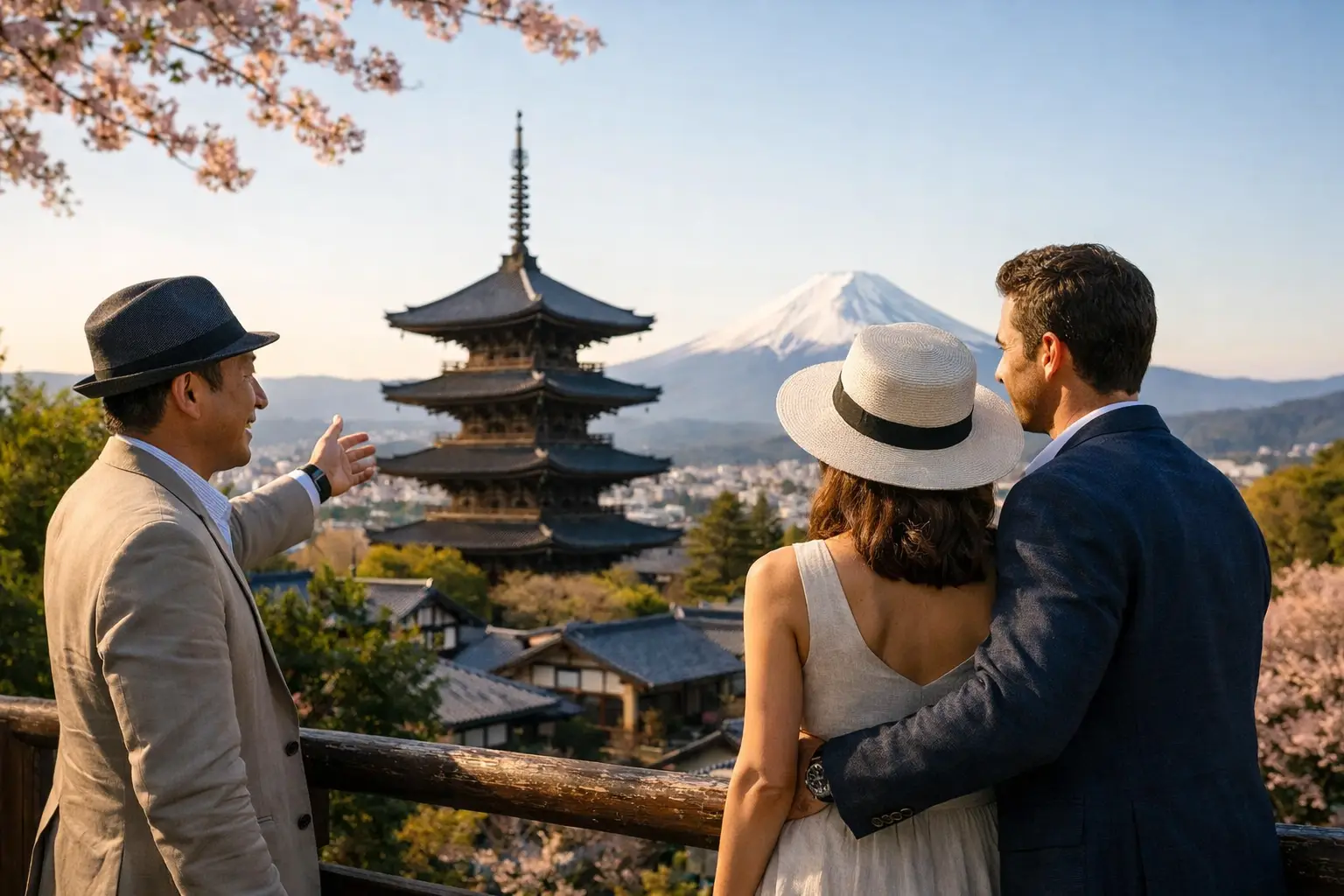
Japan rewards curiosity, but it can also overwhelm even the most experienced traveler. A single day may move from a centuries-old temple to a chef’s counter with six seats, from a hushed garden to the speed and spectacle of Tokyo. Private guided tours Japan travelers choose are not about rushing through more landmarks. They create the space to understand what you are seeing, meet the people behind the traditions, and follow the moments that become the stories you tell long after you return home.
For discerning travelers, the greatest value of a private journey is not simply convenience. It is the confidence that each day reflects your interests, energy, and sense of discovery. Japan is exceptionally organized, yet its most meaningful experiences often require context, careful timing, and relationships that cannot be found on a standard itinerary.
Why Japan Is Better Experienced Privately
Japan has a remarkable talent for presenting two realities at once. In Tokyo, immaculate contemporary design and centuries-old rituals coexist within a few blocks. In Kyoto, famous temples draw visitors from around the world, while a turn down a quiet lane may reveal a traditional machiya townhouse, a family-run tea shop, or the sound of a bamboo broom sweeping stone.
A knowledgeable private guide helps make sense of these layers. Rather than reciting dates, the right guide can explain why a shrine gate is painted vermilion, how Shinto and Buddhist practices intersect in daily life, or what to notice in a seasonal kaiseki meal. Those details change a visit from observation to connection.
Privacy also gives you control over pace. Perhaps you want to begin early at Fushimi Inari before the crowds gather, then spend an unhurried afternoon in a ceramic studio. Or perhaps Tokyo is your passion, and a morning at the fish market is less appealing than an architectural walk through Omotesando followed by time in a world-class gallery. A bespoke itinerary can honor either preference without asking you to compromise.
What Private Guided Tours in Japan Can Make Possible
The finest experiences are often subtle rather than flashy. They may be a private conversation with a sake producer in a rural brewery, a lesson in the precise gestures of a tea ceremony, or a guide who recognizes the ideal moment to pause beneath the maples at a temple garden. These experiences feel natural when they are thoughtfully woven into the rhythm of the day.
Tokyo Beyond the Obvious
Tokyo can be approached through almost any interest. Food-focused travelers may explore neighborhood markets, intimate sushi counters, depachika food halls, and izakaya culture with a guide who can explain the customs as well as the menu. Design enthusiasts might move from contemporary architecture to stationery ateliers and traditional craft districts. Those interested in Japan’s postwar story can pair museums and neighborhoods with conversations that give the city’s constant reinvention greater meaning.
A private guide is especially valuable in a city of Tokyo’s scale. They can streamline logistics without making the day feel programmed, adapting when a particular neighborhood deserves more time or an unexpected rain shower changes the plan.
Kyoto With Greater Depth
Kyoto deserves more than a checklist of temples. Its cultural riches are best understood through a carefully balanced day: an early visit to a major site, followed by a quieter encounter that reveals the city’s living traditions. That might mean meeting a textile artisan, learning about incense, visiting a garden with a specialist, or enjoying a seasonal lunch in a historic setting.
The trade-off is worth acknowledging. Kyoto’s most celebrated locations are popular for good reason, and complete solitude is not always realistic. A well-planned private itinerary does not promise an empty city. Instead, it uses timing, route planning, and less obvious alternatives to preserve a feeling of calm and intention.
The Countryside and Its Quiet Rewards
Beyond the major cities, Japan becomes more spacious and elemental. In the Japanese Alps, traditional villages, mountain scenery, and restorative hot springs invite a slower rhythm. In Kanazawa, samurai and geisha districts provide a compelling counterpoint to Kyoto, with exceptional gardens and a deep craft heritage. On Naoshima and nearby art islands, contemporary installations sit in conversation with sea, sky, and architecture.
For some travelers, a few nights at a refined ryokan become the emotional center of the journey. There is a particular pleasure in arriving to a room overlooking a river or forest, soaking in an onsen, and sitting down to a multi-course dinner shaped by the season. It is not for everyone – communal bathing customs and traditional dining formats may feel unfamiliar at first – but a thoughtful advisor can select properties and experiences that fit your comfort level.
The Details That Shape a Truly Personal Itinerary
Private does not automatically mean personal. A vehicle, a guide, and an expensive hotel are only the framework. What matters is whether the journey is designed around how you want to travel.
The planning should begin with the questions that reveal your priorities. Are you drawn to art, gardens, architecture, history, fashion, regional food, or spiritual traditions? Do you prefer memorable hotels with a strong sense of place, or would you rather devote more of the journey to immersive experiences? Is this a first visit to Japan, an anniversary journey, or a return trip intended to reach beyond the familiar?
Timing matters as much as destination choice. Cherry blossom season is undeniably beautiful, but it also brings high demand and crowds. Autumn foliage offers rich color and cooler temperatures, while late spring and early winter can provide excellent conditions with a more relaxed atmosphere. Summer festivals are vibrant, though heat and humidity can be significant. There is no universally best time to visit Japan. There is only the season that best suits the experience you hope to have.
Accommodation should also support the itinerary rather than merely impress on paper. A serene Kyoto retreat may be ideal for travelers seeking quiet after active days, while a central Tokyo hotel can make spontaneous evenings and excellent restaurants easier to enjoy. The most successful journeys often combine both: polished city hotels, intimate heritage properties, and one or two exceptional ryokan stays.
Choosing the Right Guide and Travel Partner
A guide’s knowledge is essential, but temperament matters too. The best guide for a history-minded couple may not be the best fit for travelers who want to focus on culinary traditions or contemporary art. Ideally, your guide is an engaging interpreter of place, attentive to your questions and comfortable adjusting the day without losing its shape.
Language support is another practical advantage. Japan is welcoming and remarkably safe, but not every small restaurant, train station, or rural shop operates in English. A private guide helps ease these moments gracefully, allowing you to engage more freely and confidently.
For a multi-city journey, the real skill lies in orchestration. Train travel, luggage forwarding, restaurant reservations, local guides, special-access experiences, and hotel transitions should feel effortless to the traveler. That does not happen by chance. It comes from meticulous planning and trusted local relationships, with room built in for serendipity.
At Dream Vacations – Matt Boshcka, that means beginning with the traveler rather than a pre-set route. The goal is not to fill every hour. It is to create a journey with enough structure to feel effortless and enough freedom for Japan to surprise you.
A Journey Measured in More Than Sights Seen
The most enduring memories of Japan are often unexpectedly small: the first sip of matcha in a quiet garden, a chef explaining the seasonality of one perfect ingredient, the soft clatter of geta on a stone lane, or the view from a train as rice fields give way to mountains. Private touring creates room for those moments because it is built around attention, not accumulation.
When considering private guided tours Japan offers, ask not only what you want to see, but how you want to feel while seeing it. The answer will lead to a more meaningful itinerary – one with the confidence of expert planning and the rare pleasure of feeling that Japan has opened itself to you personally.
Leave a Reply