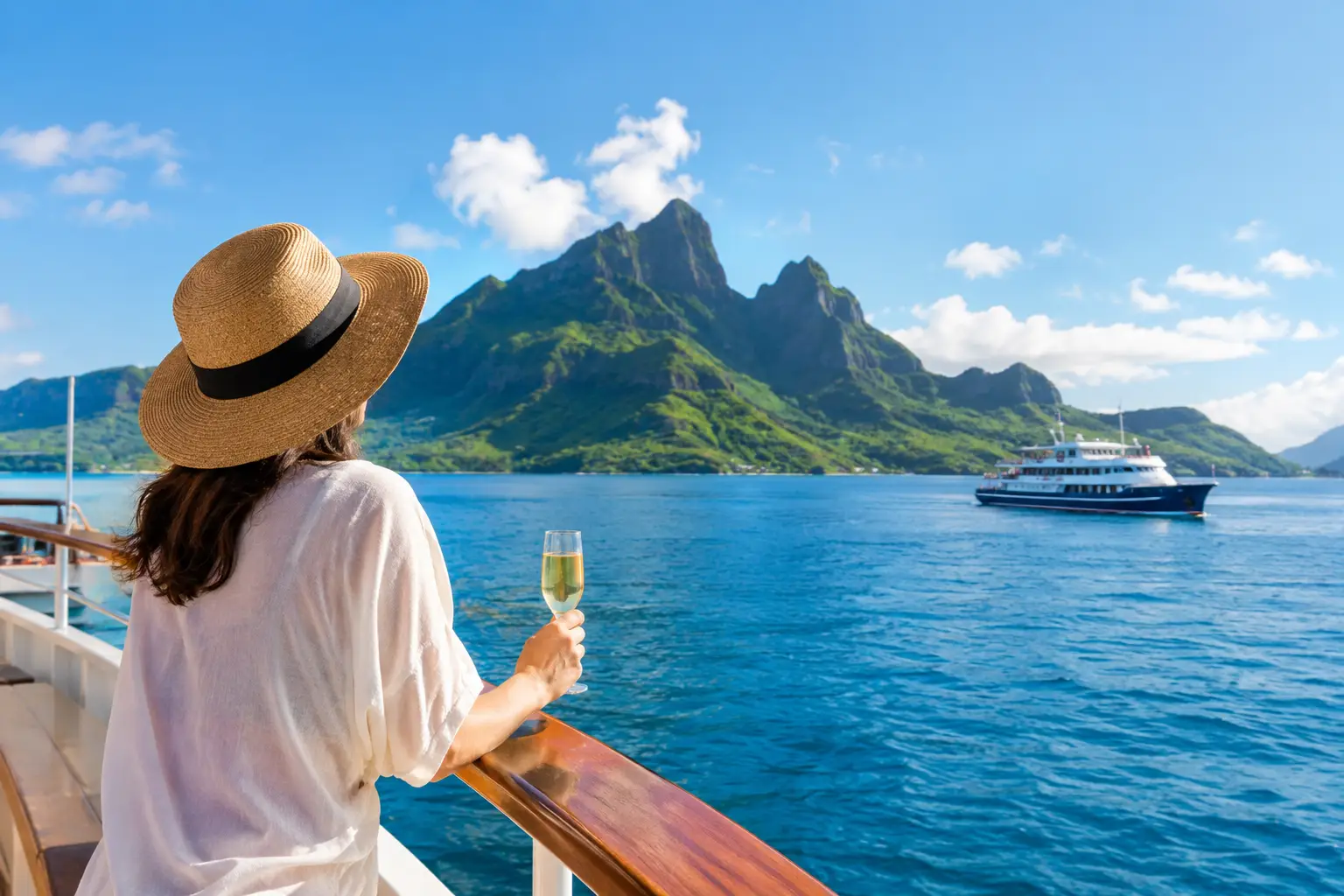
A morning swim in water so clear that the reef appears to float beneath you. A village welcome where music, stories, and a shared meal matter more than a tightly timed shore excursion. An afternoon passage between volcanic peaks with only a small circle of fellow travelers on deck. This is the enduring appeal of cruising the South Pacific: the voyage is not simply transportation between islands. It is the rare chance to experience one of the world’s most beautiful regions at an unhurried, deeply personal pace.
For travelers who have already seen the world’s celebrated capitals and well-known coastlines, the South Pacific offers a different kind of luxury. It is remote without being inaccessible, polished without feeling manufactured, and profoundly scenic while remaining rooted in living cultures. The right cruise turns distances that would be complicated by air and ferry into part of the experience itself.
Why Cruising the South Pacific Feels So Different
The South Pacific is not one destination with one personality. It is a vast expanse of ocean scattered with distinct island nations and archipelagos, each shaped by its own language, traditions, geography, and colonial history. French Polynesia may bring to mind Bora Bora’s lagoon and Tahiti’s lively markets, but it can also lead to the Marquesas, where soaring cliffs, archaeological sites, and artistic traditions create an entirely different atmosphere. Fiji offers warm village hospitality and extraordinary reefs, while Tonga can bring remarkable encounters with humpback whales during the right season.
A small-ship itinerary respects that variety. Instead of treating islands as interchangeable beach stops, it creates time for the places between the postcard images. That might mean visiting a family-run vanilla plantation on Taha’a, joining a local guide for a walk through lush interior trails in Moorea, or learning why a sacred ceremonial site remains meaningful to its community.
There is also a practical elegance to traveling by sea here. Inter-island flights can be limited, schedules can shift, and moving luggage repeatedly can dilute the pleasure of a journey. On a thoughtfully selected ship, your suite remains your private retreat while the landscape changes outside your window. You can enjoy breakfast in one anchorage and arrive at a distant atoll by afternoon without sacrificing the sense of discovery.
Choose the Ship Before You Choose the Itinerary
For this region, ship selection is not a minor detail. It defines the character of the entire journey.
Small expedition-style vessels are often the strongest choice for travelers drawn to remote islands, natural history, snorkeling, and cultural access. With fewer guests and more flexible operations, these ships can use tenders or Zodiacs to reach secluded beaches and smaller communities. Naturalists, marine specialists, and local experts can add valuable context, particularly in destinations where the stories beneath the surface are as compelling as the scenery above it.
Intimate luxury yachts and sailing vessels offer another exceptional approach. Their scale suits the South Pacific’s sheltered lagoons and quiet anchorages, and the experience tends to feel relaxed rather than programmed. Expect a more informal rhythm, excellent watersports access, and the pleasure of lingering in a beautiful place rather than racing to the next port.
Larger premium ships can make sense for travelers who prefer greater dining variety, a wider range of onboard amenities, or longer voyages that combine the South Pacific with New Zealand, Australia, or Hawaii. The trade-off is access. A larger vessel may be limited to established ports, while a smaller ship can often reach the intimate harbors that make the region feel truly remote.
The best decision depends on how you define luxury. For some, it is a generous suite, fine dining, and a full-service spa. For others, it is stepping directly from the ship into a kayak at sunrise, visiting an island community with a knowledgeable local host, or sharing a quiet reef with only a handful of fellow guests. Many discerning travelers want both, which is why the details of each ship, not simply its category, deserve close attention.
The Routes Worth Considering
French Polynesia is the most natural starting point for a first South Pacific cruise. A week or more among the Society Islands can include Tahiti, Moorea, Huahine, Raiatea, Taha’a, and Bora Bora. It offers the iconic combination of lush mountains, brilliant lagoons, refined resorts, and warm Polynesian culture. It is particularly well suited to couples celebrating a milestone, second honeymooners, and multigenerational families seeking a graceful balance of adventure and ease.
For a more remote perspective, consider an itinerary reaching the Marquesas. These islands are dramatically different from the low-lying lagoon landscapes many travelers expect. Their rugged terrain, deep bays, and rich cultural heritage reward those willing to spend more time at sea. The journey feels less like a resort escape and more like an exploration of a fiercely distinctive corner of Polynesia.
Fiji and Tonga are especially compelling for travelers who want more cultural immersion alongside exceptional marine life. Fiji’s hundreds of islands make it ideal for yacht-style cruising, with opportunities to snorkel soft-coral reefs, visit villages, and enjoy beaches that remain blissfully uncrowded. Tonga’s whale season creates one of the region’s most moving wildlife experiences, though its timing and regulations require careful planning.
Longer, more ambitious sailings can connect New Zealand with Fiji, Vanuatu, New Caledonia, or French Polynesia. These voyages appeal to experienced cruisers who value the journey as much as the ports. They also involve more sea days and occasionally more variable conditions, so they are best chosen for a genuine love of life on the water, not merely as a way to collect destinations.
When to Go and What to Expect
The South Pacific’s seasons vary by island group, but broadly speaking, May through October is the drier, cooler period for much of French Polynesia and Fiji. Days remain warm, humidity is generally lower, and the weather is often favorable for time outdoors. This is a popular period, especially during North American summer and holiday weeks, so preferred suites and intimate ships should be secured well ahead.
November through April brings warmer temperatures, more humidity, and a greater chance of rain in many areas. It can also bring fewer visitors, greener landscapes, and an appealing sense of calm for travelers comfortable with a little unpredictability. Weather should be viewed as a planning consideration rather than a reason to dismiss an entire season. A well-designed itinerary includes enough flexibility to make the most of changing conditions.
It is equally wise to set expectations around island time. Tender landings can depend on wind and sea state. A village visit may unfold according to local rhythms rather than a minute-by-minute schedule. Those are not shortcomings. They are part of traveling in a place where nature and community take precedence over a rigid timetable.
Make the Time Before and After the Cruise Count
The journey from the United States is substantial, and a South Pacific cruise deserves more than an airport-to-ship transfer. Arriving at least one or two nights before embarkation protects against flight disruptions and allows your body to settle into the slower rhythm ahead. In Tahiti, that may mean recovering at an elegant resort with views of Moorea, visiting Papeete’s market, or enjoying a private introduction to Polynesian food and culture.
After the cruise, consider staying longer in a setting that complements the voyage. A few nights in an overwater bungalow may be the perfect finale after a culturally rich small-ship expedition. Alternatively, a land stay in New Zealand can add vineyards, Māori cultural experiences, dramatic landscapes, and exceptional lodges to a broader Pacific journey.
This is where personalized planning matters most. The best itinerary considers preferred activity level, comfort with water-based exploration, dining expectations, flight connections, and the pace that makes travel feel restorative rather than exhausting. At Dream Vacations – Matt Boshcka, those details are treated as part of the experience, not afterthoughts.
Let Curiosity Set the Pace
The most rewarding South Pacific voyages leave room for moments that cannot be scheduled: an impromptu conversation with a local artisan, a pod of dolphins alongside the ship, or the quiet realization that no photograph can capture the colors of a lagoon at dusk. Choose a ship and route that give those moments space. The islands will take care of the rest.
Leave a Reply