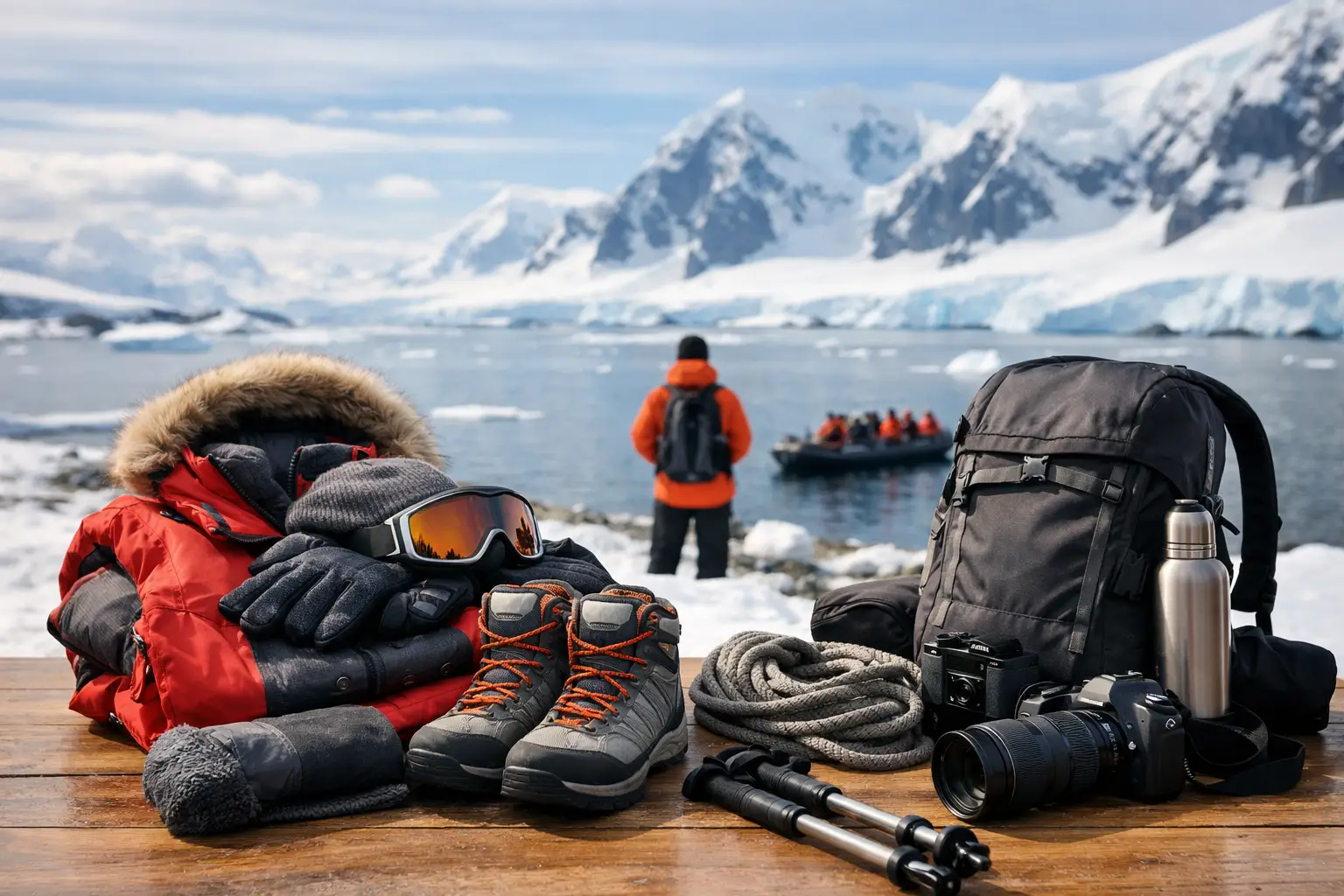
The first time you step from a Zodiac onto an Antarctic shoreline, the cold may be the least surprising part. It is the brilliance of the ice, the silence between penguin calls, and the vastness of a landscape with no visual clutter that tends to stay with you. Packing well gives you the freedom to be present for those moments rather than distracted by damp gloves, fogged glasses, or an uncomfortable day ashore.
Knowing what to pack for Antarctica expedition travel is less about filling a large suitcase with the heaviest clothing you own. It is about a thoughtful layering system, reliable gear for wet landings, and a few carefully chosen personal items that make a remarkable journey feel effortless.
Start With Your Expedition’s Inclusions
Before purchasing anything, review the equipment provided by your expedition operator. Many premium Antarctica voyages include a high-quality waterproof expedition parka for use during the sailing, and some also provide insulated waterproof boots. These items are designed for Zodiac transfers, beach landings, and the variable conditions found along the Antarctic Peninsula.
The details vary by ship and itinerary. An early-season voyage may bring colder temperatures and more sea ice, while late-season travelers can encounter wetter snow, more exposed rock, and lively penguin colonies. The Falkland Islands and South Georgia, when included, can introduce stronger winds, longer walks, and more changeable conditions. A carefully planned packing list begins with the actual route, excursion style, and gear supplied on board.
Do not assume that an included parka eliminates the need for a proper midlayer or waterproof outer pants. It does not. The parka protects you from wind and moisture, but warmth comes from the layers beneath it.
The Layering System That Works Ashore
Antarctica is not always as brutally cold as travelers imagine. During the expedition season, temperatures around the Peninsula often hover near freezing. Yet wind, spray, snow, and long periods standing still to watch wildlife can make 32 degrees feel considerably colder. Layers let you adjust without sacrificing comfort.
Begin With Moisture-Wicking Base Layers
Bring two or three sets of lightweight or midweight merino wool or quality synthetic long underwear. A long-sleeve top and leggings are the foundation for each day ashore. Merino is especially appealing for longer voyages because it remains comfortable across repeated wears and resists odor better than many synthetic fabrics.
Avoid cotton base layers. Once cotton becomes damp from perspiration or sea spray, it loses insulating value and takes a long time to dry. Antarctica rewards technical fabrics, even for travelers who generally prefer natural fibers.
Add Warmth With Flexible Midlayers
A fleece jacket, quarter-zip pullover, or light insulated jacket is often the layer you will wear most. Pack at least two options so one can dry while the other is in use. A vest can be useful for travelers who run warm, but it should supplement rather than replace a warm fleece or insulated jacket.
For particularly cold or windy days, a lightweight down or synthetic puffer is an excellent addition. Synthetic insulation performs better if it gets wet, while down provides exceptional warmth for minimal bulk. Either is a good choice when packed inside a waterproof shell or expedition parka.
Bring Waterproof Pants, Not Just Warm Pants
Waterproof, windproof outer pants are among the most overlooked items on an Antarctica packing list. You may kneel for photographs, sit briefly on a snowy surface, or be exposed to spray during Zodiac rides. Ski pants can work if they are not overly bulky, but uninsulated waterproof rain pants worn over a base layer are often more versatile.
Choose a pair with side zippers or a generous fit so they can go over boots and layers easily. Dark colors are practical, particularly on muddy or guano-marked landing sites.
What to Pack for an Antarctica Expedition: Hands, Head, and Feet
Small gaps in your cold-weather system are usually what end a landing early. Fingers, ears, and toes deserve as much attention as your jacket.
Bring a warm knit beanie that fully covers your ears, plus a backup. A neck gaiter or buff is more useful than a long scarf, which can flap in high winds and become awkward when boarding Zodiacs. Polarized sunglasses with UV protection are essential because light reflecting from snow and water can be intense. If you wear prescription glasses, a retaining strap is a simple but valuable safeguard.
For your hands, pack two pairs of gloves: a thin liner pair for photography and shipboard use, and insulated waterproof gloves or mittens for landings. Mittens are warmer, but gloves offer more dexterity. Many experienced photographers bring both, using liners beneath waterproof mittens until it is time to operate the camera.
If boots are not supplied, choose calf-height, insulated, waterproof rubber expedition boots with aggressive soles. They should fit comfortably over a medium-weight wool sock without pinching your toes. Do not break in boots for the first time in Antarctica. Wear them on several walks at home, and bring two or three pairs of merino or synthetic hiking socks. Very thick socks can make boots tighter and actually leave feet colder, so fit matters more than bulk.
Pack for the Ship, Not Only the Shore
An Antarctica expedition is a rare blend of active exploration and refined time at sea. Between landings, you may attend presentations from naturalists, watch icebergs pass from the observation lounge, enjoy a relaxed dinner, or spend unhurried time on deck as whales surface nearby. Your wardrobe should reflect both sides of the experience.
Comfortable casual clothing is right for most ships. Think polished layers: sweaters, soft trousers, long-sleeve shirts, and comfortable shoes with good grip. A pair of indoor shoes or slippers can make the cabin feel more relaxing after a day in boots. Most expedition vessels do not require formal attire, though a smart-casual outfit is pleasant for a special dinner or captain’s reception.
Bring a swimsuit as well. Many ships have a heated pool, hot tub, sauna, or a polar plunge opportunity for those tempted by a memorable story. Pack a small daypack for shore excursions, ideally water-resistant and large enough for an extra layer, water bottle, gloves, and camera equipment. A dry bag or waterproof pouch is a wise extra layer of protection for electronics during Zodiac travel.
Camera Gear That Does Not Get in the Way
Antarctica is profoundly photogenic, but the most satisfying photographs often come from travelers who are warm enough to wait. Bring equipment you know how to use rather than an unfamiliar, overly complicated setup.
A camera with a versatile zoom lens is ideal for wildlife and landscapes. A telephoto lens helps capture penguins, seals, and whales without approaching too closely, while a wide-angle lens conveys the scale of ice cliffs and mountain-backed bays. Extra batteries are essential, as cold drains power quickly. Keep spare batteries in an inside pocket near your body.
Pack more memory cards than you expect to need, a lens cloth, and a waterproof protective cover. For phone photographers, a waterproof case, portable battery pack, and wrist strap are excellent investments. Do not spend every landing looking through a screen. Some of Antarctica’s most lasting images are the ones you carry home in memory.
The Quietly Essential Items
A few practical pieces can make an outsized difference during a voyage. Bring any prescription medications in your carry-on, with several extra days’ supply, along with a copy of the prescription. Include motion sickness remedies even if you do not typically get seasick. The Drake Passage can be calm, dramatic, or somewhere between, and prevention works best when started before discomfort begins.
High-SPF sunscreen and lip balm are necessary despite the cold. The dry air, wind, and reflected sunlight can be surprisingly harsh. Hand cream, saline nasal spray, and a small moisturizer are welcome comforts on longer sailings. A reusable water bottle, compact binoculars, and a small notebook for recording wildlife sightings or reflections will serve you well.
Keep documents, medications, valuables, and one change of clothing in your carry-on. Luggage delays are uncommon, but this simple precaution preserves your comfort and peace of mind from the first day.
Leave Room for Flexibility
The best Antarctica packing strategy is disciplined rather than excessive. Ships have limited cabin storage, and expedition days become easier when your gear is organized, familiar, and ready near the door. Resist bringing duplicate bulky items for every possible condition. One excellent waterproof layer and a dependable set of insulating pieces will serve you better than an overstuffed suitcase.
At Dream Vacations – Matt Boshcka, we help travelers align every detail with the ship, season, and style of expedition they have chosen. The goal is not simply to arrive prepared. It is to feel completely at ease when a leopard seal glides beneath your Zodiac or the first penguin steps onto the snow beside you.
Pack for comfort, certainly, but leave room for wonder. Antarctica has a way of making even the most seasoned traveler feel newly awake to the world.
Leave a Reply