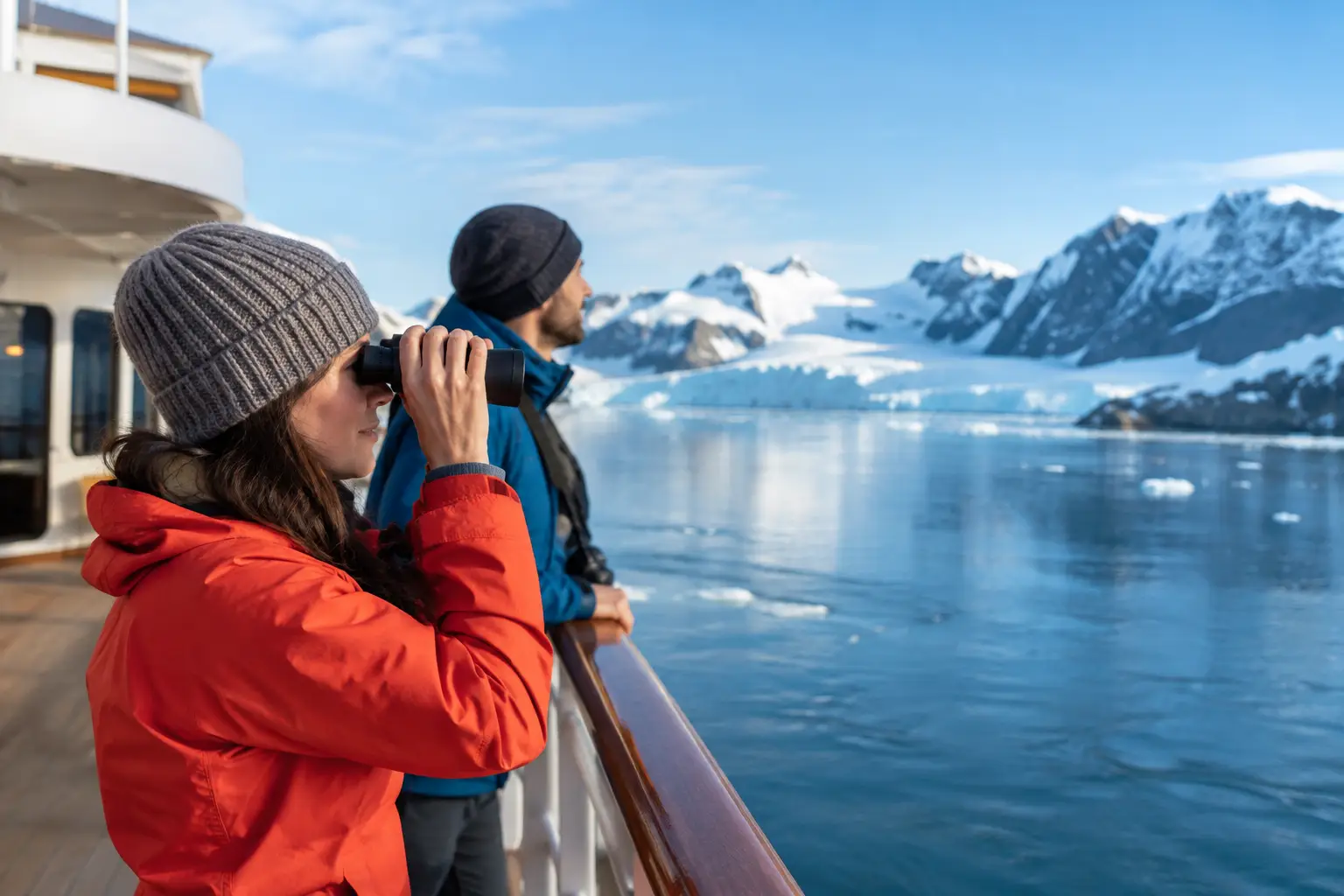
A Zodiac glides across a glassy Antarctic bay while a humpback whale surfaces close enough to hear its breath. By lunchtime, you are back aboard a beautifully designed small ship, warming up over a thoughtful meal and reviewing the afternoon’s landing with a naturalist. That contrast is the defining appeal of luxury expedition cruises for adventure travelers: extraordinary access to wild places without asking you to sacrifice comfort, care, or depth of experience.
For travelers who have already seen the world’s celebrated cities and resorts, an expedition voyage offers something rarer. It is not simply a cruise with better accommodations, nor is it a rugged trip softened by champagne. At its best, it is an expertly orchestrated journey into landscapes where wildlife, weather, and local knowledge set the rhythm of every day.
What Makes an Expedition Cruise Different?
A conventional ocean cruise follows a reliable itinerary centered on ports, entertainment, and time ashore. An expedition ship is designed around discovery. It carries a far smaller number of guests, travels with expedition leaders, naturalists, historians, photographers, and sometimes scientists, and uses Zodiacs, kayaks, and shore landings to bring travelers remarkably close to the environment.
The daily plan is intentionally flexible. In the Arctic, a captain may alter course for polar bears on sea ice. In the Galápagos, a naturalist may time a walk around active wildlife behavior or changing tides. In Antarctica, the clearest window of weather may determine whether the day brings a continental landing, a glacier cruise, or an unexpected encounter with a pod of orcas.
That flexibility is not a lack of planning. It is the result of experienced teams making thoughtful decisions in real time. For adventurous travelers, this is where the magic lies. You are not checking destinations off a list. You are participating in an unfolding expedition.
Luxury Expedition Cruises for Adventure Travelers: The Real Value
Luxury on an expedition is less about excess than it is about ease, access, and confidence. The finest ships offer gracious suites, excellent cuisine, attentive service, and inviting spaces to reflect on the day. Yet the greater luxury may be having the right team, equipment, and logistical support in a place where independent travel is difficult, impractical, or impossible.
A well-run expedition ship can put you on a remote beach before breakfast, provide a lecture from a marine biologist after lunch, and offer a quiet, comfortable suite at day’s end. It makes ambitious travel feel deeply personal rather than exhausting.
The quality of the expedition staff matters as much as the ship itself. A gifted guide transforms a penguin colony, a volcanic caldera, or a historic polar landing from a visual spectacle into a meaningful experience. They help you understand what you are seeing, anticipate what may happen next, and appreciate the conservation realities behind the beauty.
For many discerning travelers, the most memorable moments are not the obvious ones. It might be standing silently among thousands of king penguins, watching a young elephant seal investigate a Zodiac, or sharing stories over dinner with people who are equally curious about the world. Those experiences stay vivid because they are immersive, not manufactured.
Choosing the Right Destination
The destination should reflect the kind of wonder you want to pursue. Antarctica is powerful for first-time expedition travelers because the scale is almost beyond comprehension: sculpted icebergs, immense colonies of seabirds, and a sense of genuine remoteness. It is also physically more demanding than some itineraries, especially when crossing the Drake Passage, although fly-cruise options can reduce time at sea.
The Arctic offers a different kind of drama. Svalbard is known for polar bear habitat, walrus, and luminous summer light. Greenland combines vast ice, Inuit culture, and dramatic fjords. Arctic Canada and the Northwest Passage appeal to travelers drawn to exploration history and truly far-flung geography. Conditions can be variable, and sightings are never guaranteed, but that uncertainty is part of the experience.
The Galápagos is ideal for travelers who want exceptional wildlife encounters with a gentler physical profile. Animals are famously unafraid of people, and the archipelago rewards curious observers with marine iguanas, blue-footed boobies, giant tortoises, and playful sea lions. It is also a strong choice for multigenerational families, provided the ship and activity level match everyone’s comfort.
Other compelling regions include Alaska, the Kimberley coast of Australia, the coast of Costa Rica and Panama, the South Pacific, Indonesia, and the fjords of Norway. Each has its own balance of wildlife, culture, terrain, and seasonality. There is no universal “best” expedition cruise. The right voyage depends on whether your priority is photography, wildlife, hiking, cultural discovery, ice, marine life, or the simple pleasure of going somewhere few people reach.
The Ship Matters, but So Does Its Style
Not every luxury expedition ship delivers the same experience. Some prioritize an intimate, yacht-like atmosphere with fewer guests and a highly personal feel. Others are purpose-built polar vessels with sophisticated stabilization, more indoor space, and a deeper roster of onboard experts. A larger expedition ship may offer more dining choices, wellness facilities, and lecture venues, while a smaller vessel may make landings feel more intimate and can sometimes access narrower waterways.
Cabin choice deserves careful thought as well. A balcony can be rewarding in destinations with frequent scenery and wildlife sightings, but it may be less essential if you expect to spend much of your time on deck or in public observation lounges. On polar voyages, a centrally located cabin on a lower deck can be a practical choice for travelers concerned about motion.
It is also worth looking beyond the marketing language. Ask about the guest-to-guide ratio, the number of Zodiacs, the experience of the expedition team, included activities, the ship’s ice classification, and how often all guests can land at once. These details directly shape your time in the destination.
How Active Do You Need to Be?
Expedition cruising accommodates a wide range of abilities, but it is not entirely passive travel. Getting into and out of a Zodiac requires balance and a willingness to follow crew instructions. Shore landings can involve uneven ground, wet feet, stairs, or changing weather. In return, the experience offers a striking sense of participation.
Most luxury operators provide choices. You may take a gentle nature walk while more active guests tackle a longer hike. You may observe a glacier from the comfort of a Zodiac rather than kayak beside it. In some destinations, options such as snorkeling, paddleboarding, camping, snowshoeing, or even polar plunges are available.
The wisest approach is to be candid about mobility, endurance, and appetite for adventure before booking. An excellent itinerary does not need to be the most demanding one. It needs to allow you to be fully present for the experiences that matter most to you.
The Advantage of Thoughtful Planning
Expedition travel rewards early, detailed preparation. The best suites and preferred sailing dates often go first, particularly for Antarctica and the Arctic. Air arrangements, pre- and post-cruise stays, travel insurance, medical considerations, gear guidance, and contingency planning all deserve more attention than they might for a familiar resort vacation.
A personalized approach also protects the experience from avoidable compromises. Perhaps you would value a private guide in Buenos Aires before Antarctica, a few nights in Quito before the Galápagos, or an unhurried stay in Iceland after an Arctic sailing. Perhaps your preference is a quieter ship, a more active program, or a suite that provides genuine privacy. These choices turn an impressive itinerary into a journey that feels distinctly your own.
At Dream Vacations – Matt Boshcka, the goal is not to place travelers on the most fashionable vessel or the longest itinerary. It is to match the journey to the traveler: their interests, travel style, comfort level, and vision for what an extraordinary experience should feel like.
The finest expedition voyages leave you with more than photographs. They change your sense of scale, sharpen your attention, and remind you how much wonder still exists beyond the familiar. Choose the place that calls to you, then give yourself the time and expert support to experience it well.
Leave a Reply