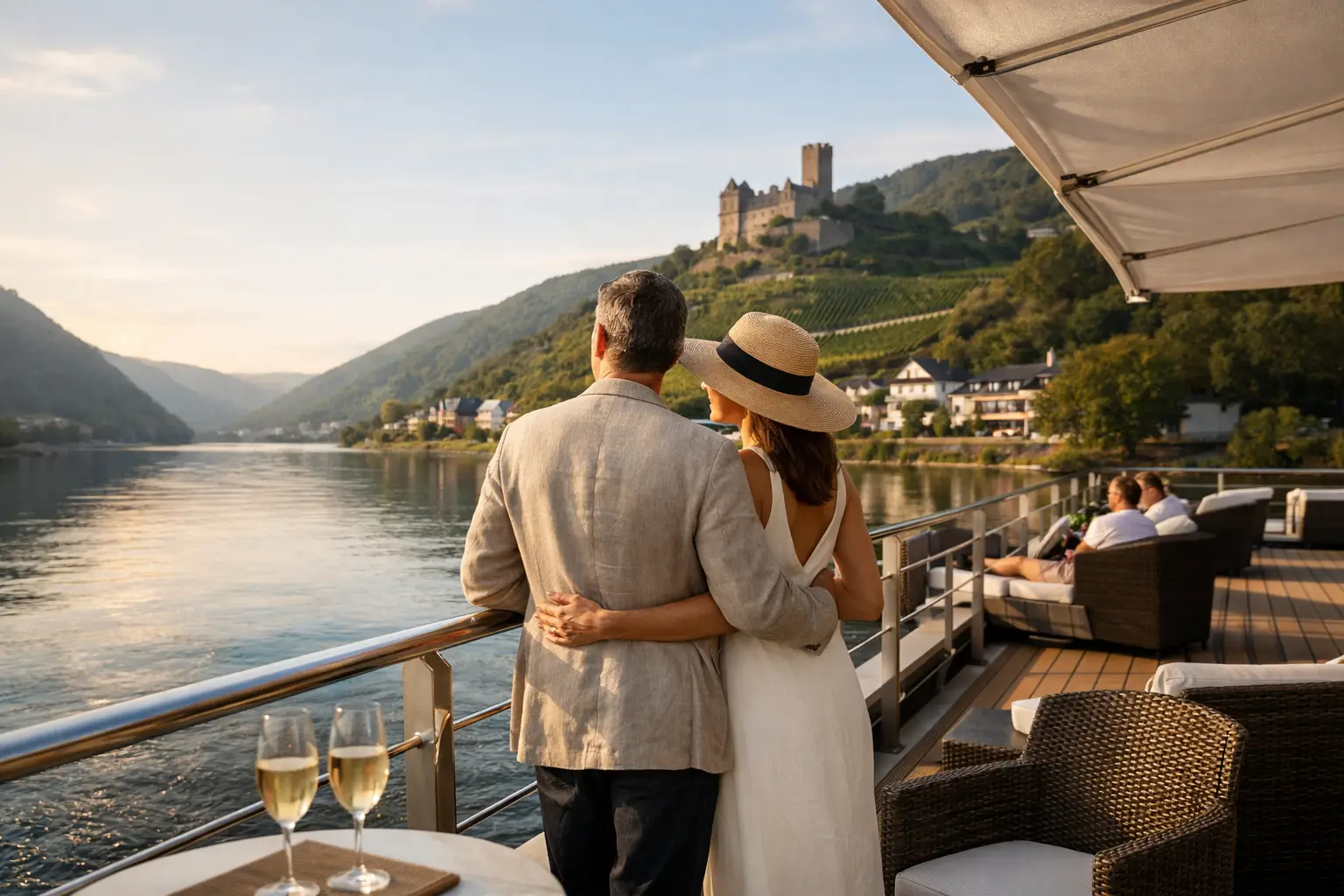
A great river cruise can begin with a glass of Champagne on a quiet sundeck, but its real luxury is more profound: waking steps from a medieval town, meeting a local winemaker before the crowds arrive, and returning to a ship where every detail has already been considered. This is the ultimate guide to luxury river cruising for travelers who want Europe and the world’s great waterways to feel personal, unhurried, and deeply rewarding.
Unlike an ocean voyage, river cruising places you at the center of a destination. The ship is not the attraction competing with the places you came to see. It is an elegant, intimate home that carries you from one cultural encounter to the next.
What Defines a Luxury River Cruise?
Luxury river cruising is not simply a larger suite or a more polished dining room, though both may be part of the experience. It is the cumulative effect of thoughtful design, exceptional service, meaningful access, and the freedom to travel without constantly packing, checking in, and coordinating transportation.
The finest ships are deliberately small, often carrying fewer than 200 guests. This creates a social atmosphere without the impersonality of a large resort at sea. Staff quickly learn how you take your coffee, whether you prefer a lively guided walk or a leisurely afternoon in a café, and which interests deserve extra attention.
Onboard, expect refined but relaxed surroundings: well-appointed suites, regional wines, menus shaped by local culinary traditions, and public spaces designed for conversation rather than spectacle. Some vessels offer butler service, a small number of specialty dining venues, heated pools, wellness treatments, or bicycles for independent exploration. Yet the defining difference is usually the caliber of the experience ashore.
A private after-hours museum visit, an intimate concert in a palace, lunch at a family-owned vineyard, or a guided walk with a resident historian can turn a beautiful itinerary into a lasting memory. The most compelling journeys make room for these moments while also respecting the pleasure of having time to wander on your own.
Choosing the Right River and Itinerary
The right river depends less on a checklist of famous cities and more on how you want to feel as you travel. Do you picture grand capitals and music-filled evenings? Vineyard landscapes and long lunches? Storybook villages, dramatic gorges, or a journey through places you have never seen from the water?
The Danube for History, Culture, and Grand Cities
The Danube offers remarkable variety, flowing through Central and Eastern Europe from Germany toward the Black Sea. A classic itinerary may pair Budapest, Bratislava, Vienna, and the Wachau Valley, combining imperial history, art, architecture, and wine-country scenery. Longer voyages introduce less-visited ports in Croatia, Serbia, Romania, and Bulgaria, where the perspective becomes more layered and unexpected.
Choose the Danube if you appreciate cultural depth, classical music, grand architecture, and an itinerary that balances celebrated capitals with smaller riverside towns.
The Rhine for Castles, Vineyards, and Iconic Scenery
The Rhine is one of Europe’s most visually immediate river journeys. Between Rüdesheim and Koblenz, steep hillsides rise above the river, vineyards cling to the slopes, and castles appear around seemingly every bend. Itineraries often connect Amsterdam, Cologne, Strasbourg, and Basel, making this route especially appealing for travelers drawn to art, food, history, and beautifully preserved towns.
It is a superb first river cruise, but it is not only for first-timers. A well-crafted Rhine journey rewards repeat visitors with deeper experiences in Alsace, the Moselle Valley, and lesser-known wine villages.
The Rhône and Saône for Food, Wine, and French Art de Vivre
Southern France moves at a delicious pace. Sailing the Rhône and Saône can bring you to Lyon’s celebrated culinary scene, the vineyards of Burgundy, Provençal markets, Roman ruins, and the landscapes that inspired Van Gogh. This is a river cruise for travelers who enjoy lingering over a regional wine, learning why a local cheese tastes different in the place it was made, and allowing the rhythm of a destination to lead the day.
The Seine, meanwhile, is ideal for Paris, Normandy, impressionist art, and the history of World War II. Its emotional range is considerable, from Parisian elegance to the solemnity of the Normandy beaches.
The Douro for Intimate Landscapes and Portuguese Hospitality
Portugal’s Douro Valley feels wonderfully distinct from the larger rivers of Central Europe. Ships are smaller, the terrain is more dramatic, and the terraced vineyards create a landscape that is both cultivated and wild. Porto’s character, port wine estates, and the Spanish city of Salamanca often make this route particularly appealing to travelers who value cuisine, wine, and a strong sense of place.
Beyond Europe’s Classic Rivers
Luxury river cruising extends far beyond Europe. The Mekong introduces Cambodia and Vietnam through village life, Buddhist temples, and the energy of the delta. The Nile offers a remarkable framework for experiencing ancient Egypt with expert Egyptologists. In Africa, the Chobe River can be woven into a safari-focused journey, where mornings may bring elephants gathering along the shoreline rather than church spires and vineyard terraces.
These itineraries demand greater destination knowledge and more careful planning, particularly when flights, visas, pre- or post-cruise stays, and varied activity levels are involved. They also tend to deliver a stronger sense of discovery.
The Ultimate Guide to Luxury River Cruising: Selecting Your Ship
It is tempting to compare river ships by suite size alone. Space matters, particularly on a longer voyage, but the better question is how the ship supports the way you travel.
Some travelers value a calm, highly inclusive experience with a refined, club-like atmosphere. Others prefer an active approach, with guided cycling, hiking, and multiple excursion choices in each port. Certain ships feel contemporary and cosmopolitan; others lean toward classic European elegance. There is no universal best choice, only the best fit for your preferences.
Consider the pace of the daily program. A cruise that offers several included excursions can be ideal for a traveler who wants variety without decision fatigue. But if you prefer independent afternoons, private guides, and spontaneous time in town, an itinerary with more flexibility may be a better match.
Suite configuration deserves close attention as well. French balconies provide fresh air and a view, while full step-out balconies offer a more traditional outdoor experience. On some rivers, however, the scenery is so close and port calls so frequent that a thoughtfully designed indoor sitting area may matter more than a larger balcony. Ask about deck location, noise near common areas, and what is actually included in the fare, from airport transfers to specialty dining and gratuities.
When to Go and What the Seasons Change
The river cruise season generally runs from spring through early winter, and each period offers a different character.
Spring brings green landscapes, blooming gardens, and cooler temperatures. It can be an excellent choice for travelers who enjoy walking and prefer fewer visitors in popular ports. Summer brings the longest days and a lively atmosphere, though heat and crowds can be more pronounced in major cities.
September and October are often prized for harvest season, comfortable weather, and rich autumn color. Vineyard-focused routes become especially appealing at this time, although demand is high and the most desirable suites are often reserved well in advance. Late November and December offer Christmas market voyages, with festive lights, seasonal foods, and a more celebratory mood.
Water levels are a practical consideration on European rivers. Extended drought or heavy rain can occasionally affect routing, docking, or the ability to pass beneath low bridges. Reputable cruise lines have contingency plans, but no advisor should promise that nature will follow a schedule. Travelers who value certainty should build a little flexibility into flight arrangements and choose a partner with strong operational support.
Elevating the Journey Beyond the Ship
The cruise itself is only one chapter of the experience. A well-planned pre- or post-cruise stay can transform the journey. Arriving in Amsterdam a day or two early allows time to recover from international travel and experience the city without watching the clock. Ending in Prague, Paris, Lucerne, or Lisbon can provide a more immersive finish than heading directly to the airport on disembarkation day.
Private experiences add another dimension when used selectively. Perhaps that means a private driver and guide in Vienna, a cooking lesson in Lyon, or a private tasting at a small estate in the Douro Valley. They are most valuable when they reflect a genuine interest, not because every hour needs to be programmed.
The same is true of pace. Many discerning travelers have already seen the major sights. Their greatest pleasure may come from a quiet morning market, a conversation with a local guide, or an unplanned stop for pastry and coffee in a town they had never expected to love.
Why Expert Planning Makes a Difference
Luxury river cruises appear straightforward because much is included, but the right decisions happen before you board. The most suitable line, ship, sailing date, suite, air arrangements, hotel extensions, and shore experiences vary significantly from one traveler to another.
At Dream Vacations – Matt Boshcka, the planning begins with your travel style and aspirations, not a generic itinerary. That perspective helps shape a journey with the right balance of cultural immersion, comfort, independence, and attentive care from departure through return.
Choose the river that calls to you, then leave enough room in the itinerary for its quieter surprises. The view from your suite may be beautiful, but the story you remember is likely to begin when you step ashore.
Leave a Reply