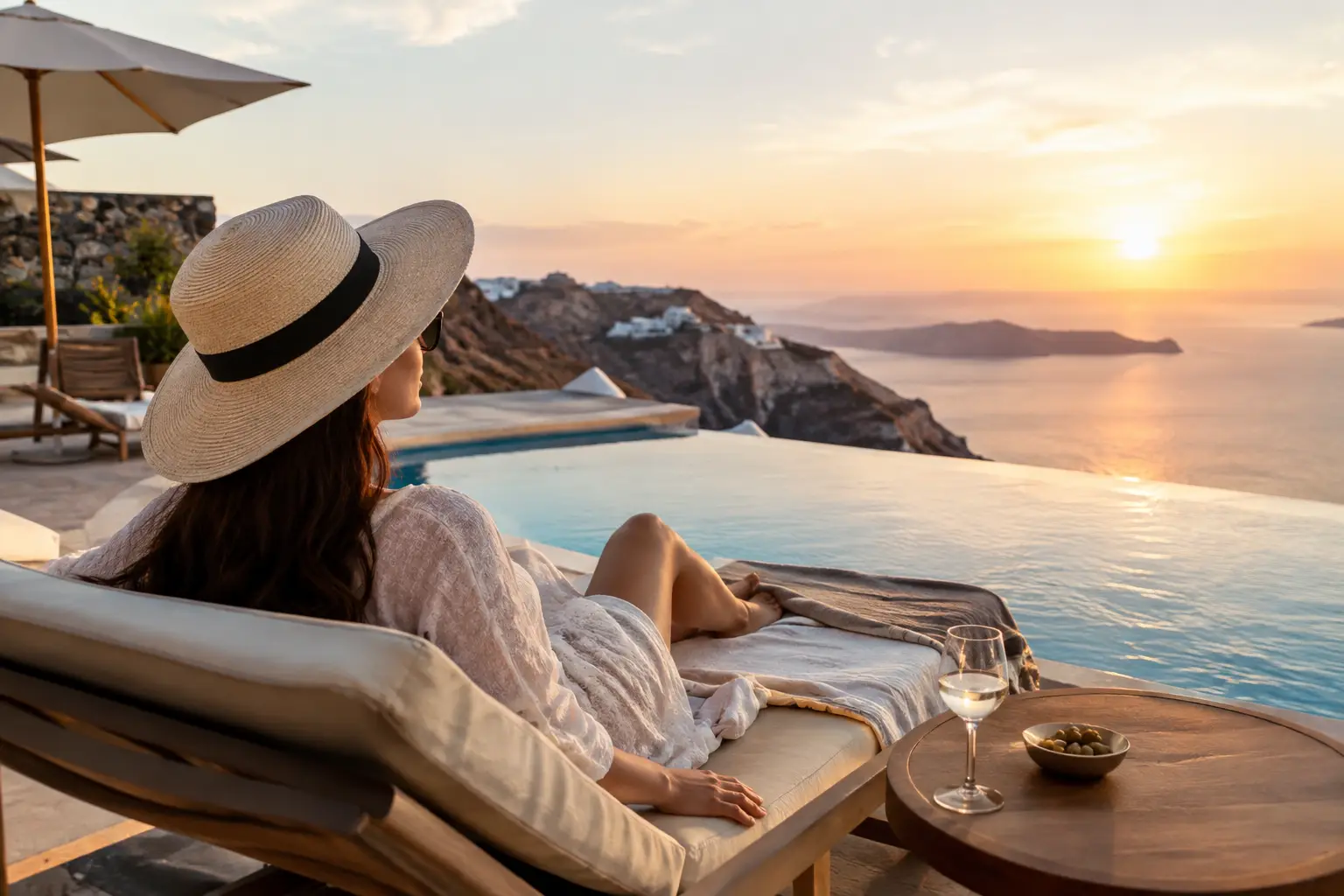
A private terrace overlooking the Serengeti at first light. A quiet suite in Kyoto after an evening with a local food historian. A cliffside room above the Aegean where breakfast arrives as the fishing boats leave the harbor. Luxury hotels are not simply a place to sleep between excursions. Chosen well, they shape the rhythm, comfort, and emotional texture of an entire journey.
For experienced travelers, luxury is rarely about a marble lobby or a familiar brand name alone. It is about arriving somewhere that feels considered: a hotel with a sense of place, intuitive service, and the ability to make a destination feel more accessible rather than more distant. The right property becomes part of the story you bring home.
Luxury Hotels Are More Than a Beautiful Room
A truly exceptional hotel offers something more valuable than an impressive suite. It creates a setting in which you can experience a destination with greater ease, depth, and pleasure. This may mean staying steps from Florence’s artisan workshops rather than across town, waking near Rwanda’s Volcanoes National Park before a gorilla trek, or having a naturalist-led camp in the Okavango Delta as your base between game drives.
Location matters, but context matters just as much. A grand hotel in a European capital may preserve architectural history while offering access to a private guide who knows the city beyond its most crowded landmarks. A small lodge on safari may have fewer formal amenities, yet deliver something far rarer: a front-row seat to elephants gathering at a waterhole, with guides who understand the land intimately.
The distinction is important. Luxury can be lavish, but it should never feel disconnected from where you are. The most memorable stays bring local culture, cuisine, landscape, and craftsmanship into the experience without turning them into decoration.
The Details That Create a Meaningful Stay
Discerning travelers often recognize quality before they can name it. It is evident in the welcome that feels warm rather than rehearsed, the room that anticipates how guests actually live, and the staff who solve a problem before it interrupts the day.
At the best properties, service is personal but not intrusive. A concierge may secure a table at a difficult-to-book restaurant, arrange an after-hours museum visit, or ensure that dietary needs are handled thoughtfully from the first meal onward. Housekeeping notices preferences. The front desk knows when a transfer is due. A guide is selected for genuine compatibility, not merely availability.
These details are especially valuable on complex itineraries. After a long international flight, a well-planned arrival at the right hotel can help you recover quickly and begin the trip with energy. After several exhilarating days tracking wildlife or exploring remote terrain, a restorative lodge or resort gives you time to absorb what you have seen. Travel should be enriching, but it should also leave room to breathe.
Food is another measure of a hotel’s connection to place. The strongest culinary programs are not defined solely by formal dining rooms or extensive wine lists. They might include a chef who works with nearby farms, a breakfast that reflects regional traditions, or a cooking experience in a private home. In destinations known for their cuisine, a hotel can become a gateway to the local table rather than a substitute for it.
The Difference Between Opulence and Relevance
Not every journey calls for the same kind of luxury. In Paris, a storied palace hotel may be exactly right for a celebratory anniversary. In Antarctica, luxury looks very different: a well-designed expedition vessel, expert lecturers, excellent gear, and a crew able to help guests make the most of unpredictable conditions. On a river cruise, it may be an elegant suite, a small number of fellow guests, and the pleasure of arriving in the heart of a historic town.
This is where relevance matters more than excess. A property can be magnificent and still be the wrong choice if it creates too much distance from the experiences you value. A resort that requires an hour of driving for every outing may not suit travelers hoping to explore a lively city on foot. Conversely, a remote private reserve may be worth the journey when privacy, wildlife, and stillness are the purpose of the trip.
The question is not, “What is the most expensive hotel?” It is, “What kind of experience do I want this stay to make possible?”
How to Choose Luxury Hotels for Your Travel Style
Start with the reason for the journey. Couples celebrating a milestone may prioritize romance, privacy, and unhurried time together. Multigenerational families may need interconnecting rooms, flexible dining, and experiences that engage different ages without compromising quality. Well-traveled guests returning to a favorite country may prefer an intimate property in a less familiar neighborhood over a large hotel near major attractions.
Then consider pace. An ambitious itinerary can be deeply rewarding, but changing hotels every day or two often reduces the pleasure of each destination. Sometimes the most luxurious decision is to stay longer in fewer places. A three-night stay at an exceptional countryside estate can provide a more lasting sense of Italy than a rushed procession through several cities. The same is true in Africa, where enough time at one exceptional camp allows the wildlife patterns, guides, and landscape to become familiar.
It also helps to distinguish between a hotel that photographs beautifully and one that functions beautifully for your trip. Ask practical questions. Is the room category truly quiet? Are key sights within easy reach? Does the property have a strong team on the ground? Can it accommodate an early departure for a private tour or a late arrival after a cruise? Is there a spa, pool, or tranquil outdoor space that you will actually use?
The answer may change by destination. In a city with abundant restaurants and culture outside the door, a smaller boutique hotel may offer the stronger experience. In a remote setting, the hotel or lodge itself may be the central event, making spacious accommodations, thoughtful cuisine, and exceptional guiding far more important.
Why Expert Guidance Matters
Hotel descriptions rarely convey the whole experience. They do not always reveal whether a newly renovated room overlooks a busy service area, whether a celebrated property feels formal or relaxed, or whether a particular suite category offers the privacy that makes a special occasion feel genuinely special.
A trusted travel advisor brings perspective that goes beyond star ratings and online reviews. Through established relationships and current destination knowledge, an advisor can match a property to the way you travel, identify meaningful value within an itinerary, and coordinate the many details surrounding each stay. That can include airport assistance, private transfers, special celebrations, early arrival requests, dining arrangements, and support when circumstances change.
At Dream Vacations – Matt Boshcka, the hotel is considered as part of the larger journey. A refined stay in Cape Town may be paired with a private winelands experience before a safari. A carefully selected hotel in Athens may create the ideal beginning or ending to a small-ship cruise through the Greek Islands. The goal is not to fill an itinerary with famous names. It is to create continuity, comfort, and moments that feel distinctly yours.
The Best Hotel Stays Stay With You
Years later, travelers may not remember every detail of a room’s design. They remember the morning coffee brought to a balcony above the Amalfi Coast, the lodge manager who arranged a surprise birthday sundowner, or the feeling of returning to a welcoming suite after a day that exceeded every expectation.
That is the lasting value of choosing well. The finest luxury hotels do not compete with the destination. They deepen your connection to it, provide a gracious place to pause, and give remarkable days the setting they deserve. When planning a journey that matters, choose the stays that will help you be fully present for it.
Leave a Reply