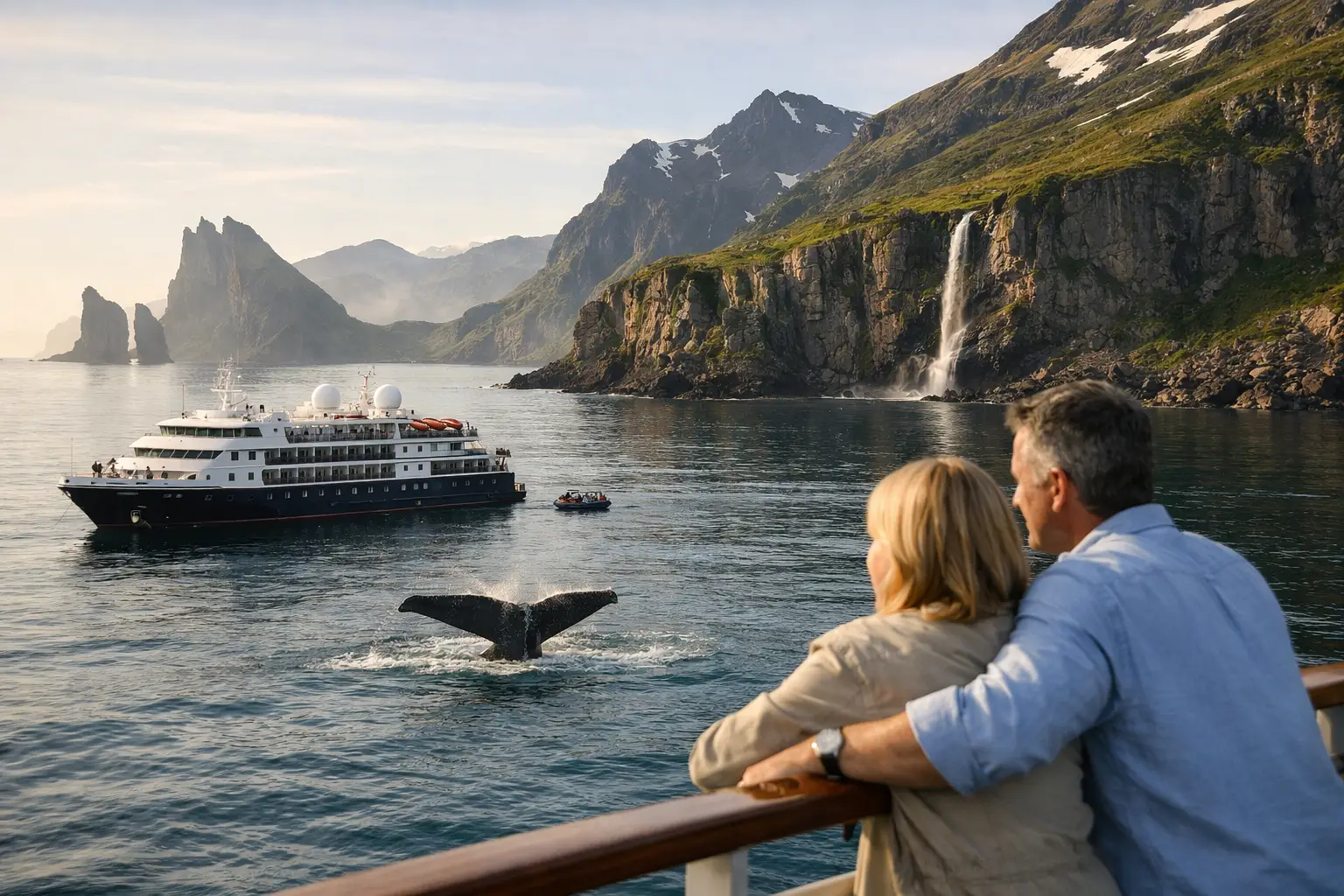
A cruise can place you in the center of a celebrated port at the same moment thousands of other visitors arrive. Or it can bring you into a quiet harbor before breakfast, where fishing boats are beginning their day and the destination still feels entirely its own. That difference is why discerning travelers are increasingly choosing small ship ocean cruises.
These voyages are not simply larger cruises with fewer passengers. At their best, they offer a more considered way to travel by sea: access to smaller ports, more time ashore, a gentler onboard rhythm, and the kind of personal attention that lets the journey reflect your interests rather than a fixed, mass-market formula. For travelers who have already seen the world and want to experience it more deeply, that distinction matters.
What Makes Small Ship Ocean Cruises Different?
There is no single passenger count that defines a small ship, but most vessels in this category carry anywhere from fewer than 100 guests to several hundred, rather than several thousand. Size is meaningful not because smaller is automatically better, but because it changes what is possible.
A more intimate vessel can often call at ports that cannot accommodate the largest ships. Think of a Croatian island town with a medieval waterfront, a secluded Greek harbor, a Norwegian fjord village, or a remote stretch of coastline in the Galápagos or Alaska. Instead of being tendered ashore alongside crowds, guests may step directly onto a pier close to the heart of town. The ship itself becomes less of a destination and more of an elegant, comfortable base from which to encounter a place.
The onboard experience tends to follow the same philosophy. Public spaces are quieter. Service teams quickly learn how you take your coffee, which table you prefer at dinner, and whether you are more interested in a guided market visit or an afternoon with no schedule at all. The atmosphere is polished, but usually less formal and more relaxed than the traditional grand ocean liners of earlier decades.
The Luxury Is Often in the Access
For experienced travelers, the most valuable part of a voyage is rarely the square footage of a suite alone. It is being able to walk into a family-run winery before it opens to the public, hear a local historian explain a port’s complicated past, or return to a ship anchored beneath a dramatic coastal landscape after a day that felt genuinely connected to its setting.
Small-ship itineraries are often designed around these opportunities. In the Mediterranean, that may mean overnight stays in ports such as Venice, Valletta, or Dubrovnik, allowing for dinner ashore after day visitors have departed. In Northern Europe, it can mean sailing deep into fjords and spending meaningful time in smaller coastal communities. In regions such as the South Pacific, Indonesia, and the Seychelles, it may mean reaching islands where geography naturally limits the number of visitors.
The experience depends on the cruise line and destination. Some voyages emphasize culture, cuisine, and relaxed coastal exploration. Others are expedition-oriented, placing naturalists, historians, and photographers at the center of the journey. A ship with 200 guests may feel ideal for one traveler, while another may prefer a yacht-like vessel with fewer than 50. Choosing well starts with knowing what you want the days to feel like.
Port Time Is More Important Than Port Count
A long list of destinations can look impressive on paper. Yet a voyage that visits a different port every day may leave little room to absorb any of them. A more rewarding itinerary often includes later departures, overnights, or a deliberate balance between active exploration and unstructured time.
Consider what you want from a destination. If you are drawn to coastal Italy for its food, architecture, and daily rituals, an overnight in a place like Sorrento or Portofino may offer more than two brief stops elsewhere. If wildlife is the priority, a flexible expedition itinerary that adjusts to conditions can be more valuable than a rigid schedule built around checking off landmarks.
This is one reason a carefully selected voyage can be more satisfying than simply choosing a famous route. The itinerary should leave room for discovery, not just transit.
Choosing the Right Ship and Style
Not all small ships create the same experience. Some are contemporary and social, with open-seating dining, wellness programming, and a casually sophisticated mood. Others offer a more classic style, with formal service, spacious suites, and an emphasis on traditional maritime elegance. Expedition ships tend to be purpose-built for remote environments, with Zodiac landings, expert-led briefings, and a stronger focus on nature and science.
Your choice should begin with personal travel style rather than brand recognition. Ask whether you value a lively onboard atmosphere or a quiet retreat. Decide how much structure you want in your days ashore. Think honestly about mobility, especially for itineraries involving tenders, uneven cobblestones, Zodiac transfers, or long walks in historic towns.
The details are equally important. A ship may be small but have limited outdoor space, a dining room that feels too formal, or cabins that vary greatly in location and layout. Conversely, a ship that is slightly larger may provide the suite configuration, culinary quality, or enrichment program that makes it the better fit. There is no universal best choice, only the right match for a particular traveler and journey.
When a Small Ship Is Not the Best Fit
Small ships involve trade-offs. They typically offer fewer dining venues, less entertainment, and a more limited range of onboard activities than large resort-style vessels. Families seeking waterslides, extensive nightlife, or constant variety may be happier elsewhere. They can also feel more motion in rough seas, although modern stabilizers make a considerable difference and itinerary planning can reduce exposure.
Availability is another consideration. The most desirable suites, seasonal sailings, and expedition departures can fill far in advance. Travelers with very specific preferences may need to plan earlier, particularly for Antarctica, the Galápagos, Alaska at peak season, or sought-after Mediterranean itineraries.
For many couples and seasoned travelers, those trade-offs are precisely the point. They are willing to forgo a casino or a dozen restaurants in exchange for a ship that can enter a narrower harbor, provide a more personal level of care, and create a sense of shared purpose among fellow guests.
The Value of Pairing Sea and Land
A small-ship voyage is often strongest when it is part of a larger, thoughtfully paced journey. Arriving a few days early gives you time to settle into a gateway city rather than stepping aboard fatigued from an overnight flight. Staying afterward can turn a fine cruise into a richer regional experience.
Imagine beginning in Lisbon with private access to its culinary and cultural character before sailing the Iberian coast. Or spend several nights in Athens or Istanbul before an Aegean voyage, allowing time to experience each city beyond its port. In Alaska, a carefully designed land extension can add intimate lodge stays, scenic rail travel, or time in Denali. The cruise offers the connective thread, while the land experience adds perspective and depth.
A travel advisor who understands both the ship and the destination can also help evaluate cabin placement, pre- and post-cruise logistics, transfer timing, hotel character, shore experiences, and the practical details that shape a trip long before embarkation day. At Dream Vacations – Matt Boshcka, the goal is not to place travelers on the next available sailing. It is to shape an experience around the places, pace, and moments they will remember.
A More Meaningful Way to Travel by Sea
The finest small ship ocean cruises replace the feeling of being processed through a vacation with the pleasure of being thoughtfully hosted on a journey. They make room for lingering over a local lunch, watching a coastline drift by from your balcony, and returning to the ship with stories that could not have happened on a standard itinerary.
When the ship, route, and shore experiences are chosen with care, the voyage becomes more than a beautiful way to move between ports. It becomes a rare opportunity to see familiar parts of the world with fresh attention – and to come home with memories that feel distinctly your own.
Leave a Reply