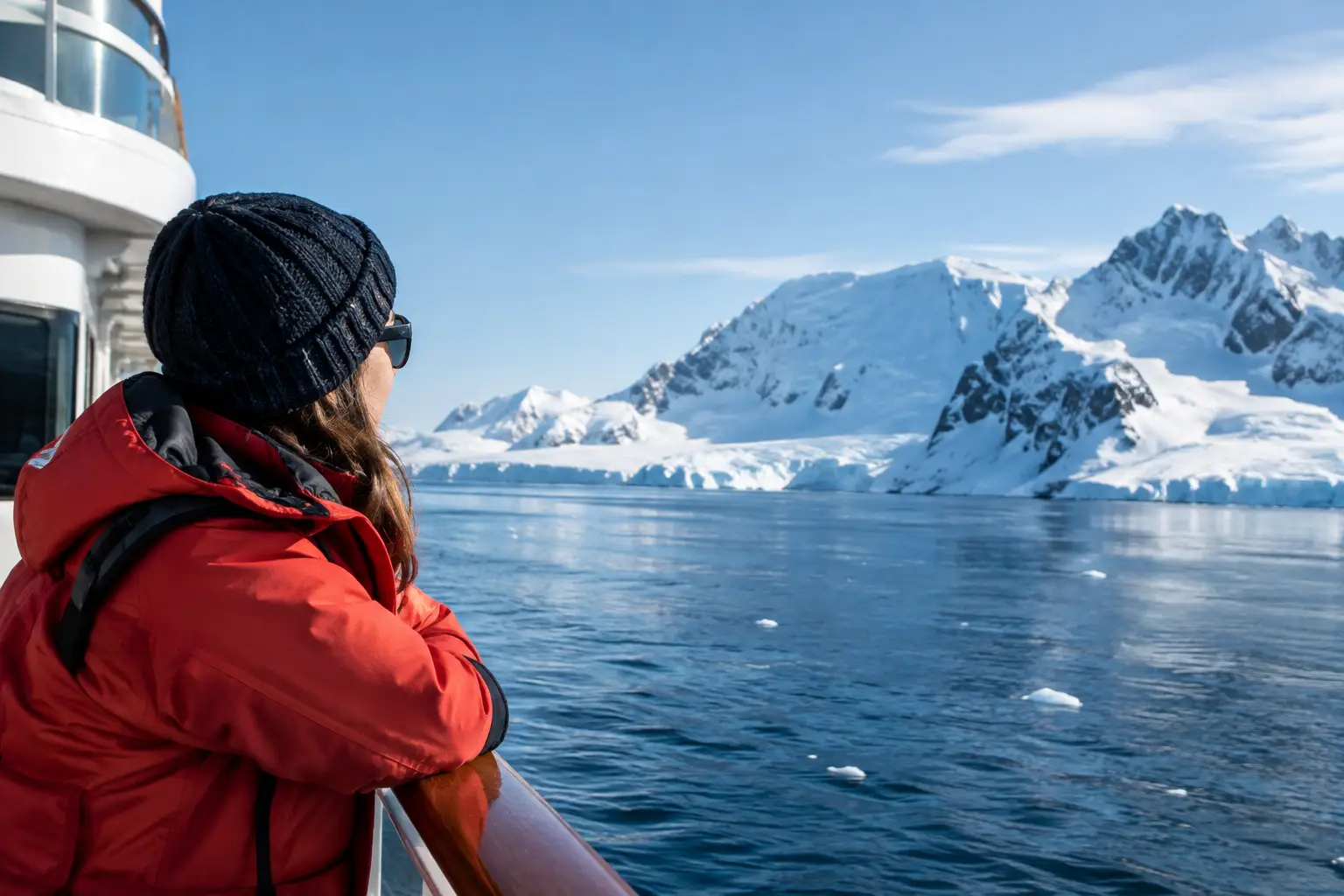
The first landing in Antarctica is rarely about checking off a continent. It is the moment the ship’s gangway reaches a shore of snow and stone, a penguin colony suddenly becomes audible, and the scale of the landscape makes ordinary travel feel very far away. HX Expeditions is designed for travelers who want to experience such places closely, with a serious focus on science, interpretation, and daily exploration rather than a conventional cruise routine.
Formerly known as Hurtigruten Expeditions, HX operates expedition voyages to Antarctica, the Arctic, Greenland, Iceland, the Galápagos, Alaska, and other nature-forward destinations. For well-traveled guests considering a polar journey, its appeal lies in the balance of accessible adventure and thoughtful comfort. The better question is not simply whether HX is a good expedition company. It is whether its approach is the right match for the way you want to travel.
What Defines HX Expeditions
HX is built around expedition cruising, a style of travel where the destination sets the rhythm. Weather, ice, wildlife movements, and local conditions can reshape a day’s plans. That flexibility is not a shortcoming. It is fundamental to reaching remote regions responsibly and making the most of fleeting opportunities.
A typical day may begin with a lecture on glaciology or polar history, followed by a Zodiac landing among nesting seabirds, a guided hike, or time ashore at a historic site. In Antarctica, guests might watch humpback whales from the deck in the morning and step onto the continent later that afternoon. In the Arctic, the day could center on a walrus haul-out, a tundra walk, or scanning the ice edge for polar bears.
The expedition team is central to the experience. Naturalists, marine biologists, historians, geologists, photographers, and destination specialists provide context before and after each outing. For travelers who have already seen many of the world’s great cities and landmark sites, this intellectual dimension can be especially rewarding. You are not merely looking at a glacier or observing a colony of penguins. You begin to understand the systems, stories, and human decisions that shape these fragile places.
The Onboard Experience: Comfortable, Not Formal
Travelers sometimes assume an expedition vessel requires sacrificing every creature comfort. HX ships are designed to make remote travel feel civilized, with inviting public spaces, well-appointed cabins, dining venues, lounges, fitness facilities, and wellness areas on many ships. The newer vessels also incorporate more contemporary Scandinavian design and have dedicated science centers that encourage hands-on learning.
Still, HX should not be confused with a traditional ultra-luxury cruise line. The atmosphere is relaxed, practical, and collegial. You may wear outdoor layers to a presentation, return from a landing with windblown hair, then share dinner with fellow guests who spent the day watching the same extraordinary wildlife encounter. There is no need for formal evenings, and the social energy tends to come from conversation, shared discovery, and the anticipation of tomorrow’s landing.
That is a meaningful trade-off. Travelers seeking lavish suites, highly formal service rituals, extensive entertainment, or a large selection of specialty restaurants may find another style of ship more suitable. Guests who value knowledgeable guides, an expedition-minded community, and the ability to get off the ship often will likely see the priorities differently.
Why the Smaller-Ship Format Matters
In many expedition destinations, smaller ships create a more intimate experience and can make logistics easier. Fewer guests may mean shorter waits for Zodiac transfers and a less crowded feeling on shore. Ship size also affects where a vessel can operate, particularly in areas with narrow channels, ice, or tightly regulated visitor limits.
That said, smaller does not always mean better in every respect. Larger expedition ships can offer more cabin choices, more indoor space during rough weather, and amenities that matter on longer voyages. The ideal vessel depends on how much you value intimacy, physical ease, shipboard comfort, and your preferred cabin category.
Choosing an HX Expeditions Itinerary
The destination is only the beginning. Two Antarctica voyages can look similar on a map yet feel entirely different depending on route length, ship, season, and the number of sea days involved.
For a first Antarctic experience, the classic Antarctic Peninsula itinerary offers dramatic ice formations, abundant penguins, seals, whales, and historic landing sites. It is often the most practical choice for travelers with limited time, though crossing the Drake Passage requires a willingness to accept that the sea can be energetic. For some, that crossing is part of the romance and narrative of the journey. For others, a fly-cruise option is worth considering to reduce time at sea.
Longer voyages can add the Falkland Islands, South Georgia, or the Weddell Sea. These are not simply extensions of the standard itinerary. South Georgia, for example, is a pilgrimage for wildlife enthusiasts and polar-history lovers, with vast king penguin colonies and strong connections to Sir Ernest Shackleton. It also requires more time, a larger travel investment, and comfort with a more demanding expedition structure.
In the Arctic, seasonality matters just as much. Svalbard is especially compelling for travelers hoping to see polar bears, though wildlife is never guaranteed and responsible viewing means maintaining appropriate distance. Greenland offers monumental ice, Inuit cultural connections, and dramatic fjord landscapes. Northwest Passage voyages bring a powerful sense of remoteness and history, but they are longer, more logistically complex, and inherently dependent on ice conditions.
Galápagos voyages offer a different kind of expedition experience. The wildlife is often close and remarkably unconcerned by human presence, while the islands reveal volcanic landscapes and evolutionary stories at every landing. This can be an excellent choice for travelers who want meaningful natural history without the cold-weather gear and more variable conditions of the poles.
The Details That Shape the Journey
Expedition travel rewards travelers who plan early and ask specific questions. Cabin location, for instance, can influence your experience more than many guests expect. A midship cabin on a lower deck may feel more stable in rough seas, while a higher-deck suite may offer greater space and views. The right answer depends on your comfort with motion, how much time you expect to spend in your cabin, and how you weigh privacy against convenience.
Air arrangements deserve equal attention. Polar voyages often begin in gateway cities where weather and limited flight schedules can affect connections. Arriving at least a day early is a sensible safeguard, particularly for voyages departing from Ushuaia, Longyearbyen, or other remote embarkation points. It also gives you time to settle in before the journey begins.
Physical expectations should be discussed candidly. Most guests do not need to be elite athletes, but expedition cruising is active by nature. Boarding Zodiacs, walking on uneven ground, managing stairs, and spending time outdoors in wind or cold are part of the experience. Mobility needs do not automatically rule out an expedition, but they should guide ship selection, itinerary design, and the level of support arranged in advance.
Insurance is another essential consideration, not an afterthought. Remote destinations have limited medical infrastructure, and evacuation can be costly. Comprehensive coverage that addresses medical care, evacuation, trip interruption, and the realities of expedition travel provides valuable reassurance.
Is HX the Right Fit for You?
HX is particularly well suited to travelers who want their journey to be shaped by the natural world rather than by a fixed entertainment schedule. It appeals to the guest who is happy waking early because the captain has spotted whales, who finds a lecture from a marine biologist as memorable as a fine dinner, and who understands that a changed landing plan may lead to an even better afternoon.
It may be less ideal for those who want guaranteed port calls, highly predictable days, or a resort-like cruise experience. Expedition travel asks for patience and a degree of flexibility. In return, it offers access to places that cannot be experienced through a window alone.
For discerning travelers, the greatest value of an HX voyage is not simply the ship or the itinerary. It is the chance to be present in landscapes that still feel immense, wild, and humbling. Dream Vacations – Matt Boshcka can help match the right vessel, route, season, cabin, and pre- or post-cruise experience to your personal travel style. When the destination is Antarctica or the High Arctic, those details are what turn an impressive trip into a journey that stays with you for the rest of your life.
Leave a Reply