A condor lifting from the canyon wall at first light. A skiff gliding past pink river dolphins in a quiet Amazon tributary. An evening in Mendoza where a private vineyard dinner follows a day in the Andes. The finest South America expeditions are not defined by how many countries appear on an itinerary. They are defined by the rare privilege of being fully present in places that still feel immense, elemental, and deeply alive.
For well-traveled guests, this continent offers a compelling contrast: singular wilderness alongside sophisticated design hotels, exceptional cuisine, gracious private guides, and small vessels that reach landscapes larger ships cannot. The art lies in choosing the right pace, the right season, and the experiences that deserve more than a passing visit.
What Makes South America Expeditions Different
An expedition is not simply an active vacation with a few scenic stops. It is a journey organized around access, interpretation, and a sense of discovery. You may travel by expedition yacht through the Galápagos, by elegant river vessel into the Peruvian Amazon, by private vehicle across Patagonia, or by rail through the Sacred Valley. Each mode changes what you can see and how closely you can experience it.
South America is particularly rewarding because its defining landscapes are wonderfully distinct. The Atacama Desert is all high-altitude silence, salt flats, and night skies. Patagonia feels wind-swept and cinematic, with granite towers, glaciers, and remote estancias. The Amazon is intimate rather than monumental, revealing itself in small details: a sloth in the canopy, a flash of blue morpho wings, the sound of rain on the river.
The cultural dimension matters just as much. In Peru, an exceptional guide can make the difference between merely seeing Machu Picchu and understanding the ingenuity, astronomy, and spiritual worldview that shaped it. In Colombia, a thoughtful route can connect the vitality of Cartagena with coffee country estates and the creative energy of Medellín. In Argentina and Chile, meals, wine, architecture, and regional traditions give context to the landscapes beyond the lodge window.
The Expeditions That Stay With You
Patagonia: For space, stillness, and drama
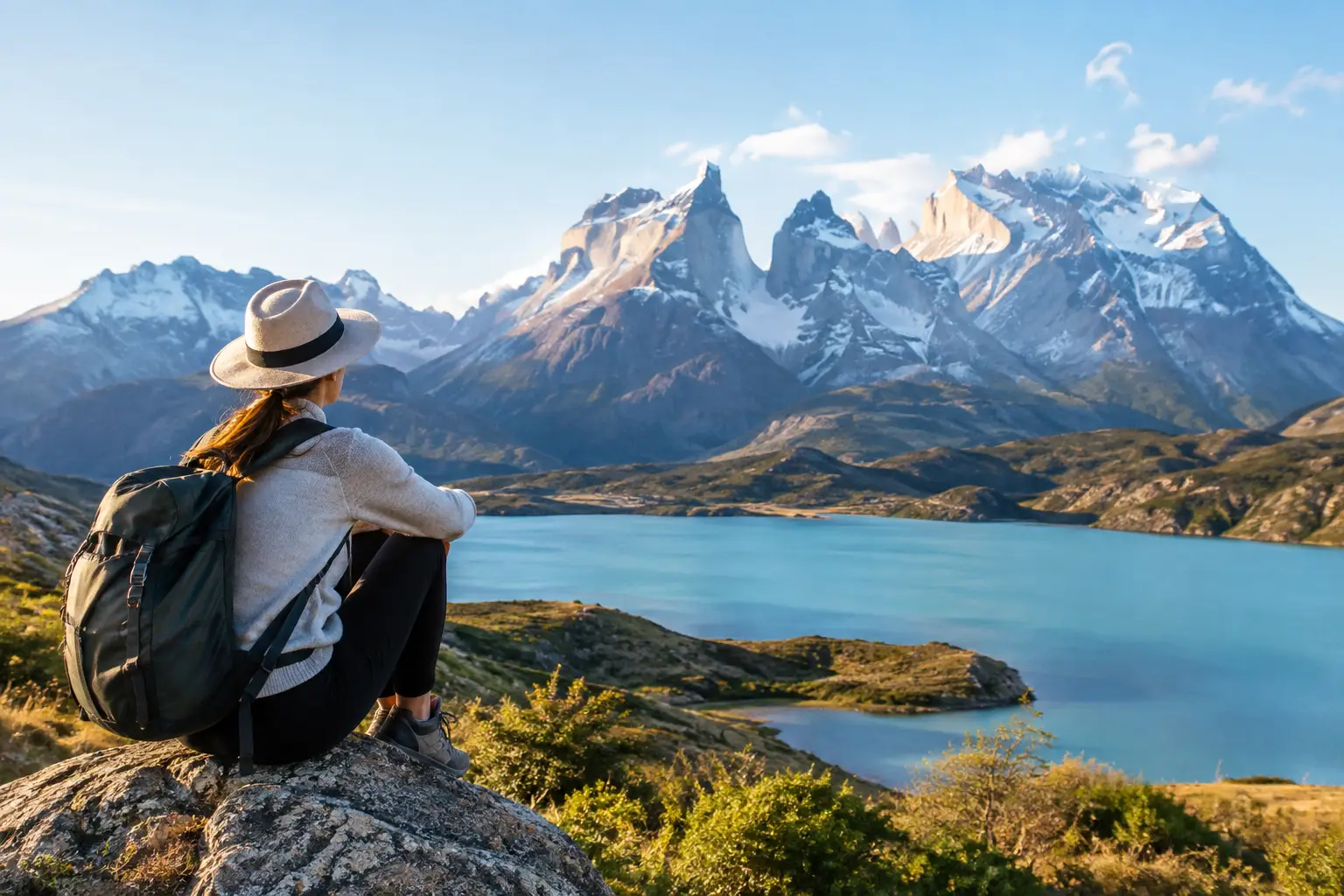
Patagonia is often the emotional centerpiece of a South American journey. On the Chilean side, Torres del Paine delivers striking views of the Paine Massif, turquoise lakes, and guanacos moving across open grassland. Argentine Patagonia adds the immense Perito Moreno Glacier, the glacier-fed lakes around El Calafate, and the possibility of combining wilderness with Buenos Aires and its extraordinary dining scene.
The luxury here is not excess. It is returning from a guided hike to a beautifully considered lodge, a warming fire, a well-made pisco sour, and a guide who knows precisely where the light will fall tomorrow morning. Some travelers want full-day treks and glacier walks. Others prefer scenic drives, gentle nature walks, horseback riding, and long lunches. A well-designed itinerary makes room for both ambition and rest.
Patagonia is best approached with time. Four nights in one region is usually more satisfying than rushing through two or three. Weather is part of the experience, and a flexible schedule lets you respond to it rather than fight it.
The Galápagos: Wildlife without a barrier
The Galápagos reward curiosity at every turn. Sea lions lounge beside the dock, marine iguanas gather on black volcanic rock, and blue-footed boobies conduct their elaborate courtship rituals with little concern for human observers. The quality of the experience depends greatly on the vessel, naturalist guides, route, and passenger count.
For discerning travelers, a small expedition yacht offers the most satisfying balance of comfort and access. Days unfold around guided walks, snorkeling with sea turtles and playful sea lions, kayaking in protected coves, and conversations that deepen your appreciation for the archipelago’s fragile ecology. Cabins may be compact compared with a conventional cruise ship, but that is the trade-off for anchoring close to remarkable sites and avoiding the feeling of traveling with a crowd.
An extension in Quito, the Ecuadorian Andes, or the cloud forest adds texture before or after the islands. It also gives guests time to acclimate to the rhythm of the region rather than flying in and out solely for the cruise.
Peru and the Amazon: Ancient civilizations, living rainforest
Peru is one of the rare destinations where a journey can move naturally from world-class gastronomy to sacred valleys to rainforests that feel nearly primeval. Lima has emerged as a serious culinary capital. Cusco and the Sacred Valley provide a graceful introduction to Incan history, particularly when travelers stay long enough to adjust to altitude before visiting Machu Picchu.
A journey into the Peruvian Amazon is an ideal counterpoint. Boutique river vessels and intimate rainforest lodges offer a refined base for daily explorations by skiff and on foot. The encounters are never scripted. You might spot red howler monkeys at dawn, fish for piranha in a quiet oxbow lake, or watch macaws crossing above the river at sunset.
The Amazon asks travelers to embrace humidity, insects, and the occasional early wake-up. In return, it offers a sense of immersion that few destinations can match. Thoughtful packing, knowledgeable guides, and a property with attentive service make that immersion both comfortable and meaningful.
Chile and Argentina: A journey shaped by taste
Not every expedition requires technical hiking or zodiac landings. For travelers drawn to wine, food, desert landscapes, and mountain culture, Chile and Argentina create one of the continent’s most elegant combinations.
In Chile’s Atacama, days may include visiting otherworldly lagoons, watching flamingos in high-altitude wetlands, and observing the stars with an expert astronomer. The elevation is significant, so the first days should be deliberately gentle. Pairing the desert with Santiago and the wine valleys offers a rewarding transition before crossing into Argentina.
Mendoza invites a slower kind of exploration: private tastings, vineyard lunches, horseback riding beneath the Andes, and time to appreciate why Malbec has such a devoted following. Buenos Aires provides an urbane finale, whether your interests lean toward contemporary art, tango, historic neighborhoods, or a table at one of the city’s most sought-after restaurants.
Timing Is Part of the Design
South America is too vast for one simple “best time to go.” Patagonia generally shines from October through April, with the most reliable hiking conditions during the Southern Hemisphere summer. It can also be busier then, so shoulder months may appeal to guests who value quieter trails and do not mind more variable weather.
The Galápagos are a year-round destination, though conditions change. Warmer, calmer waters typically arrive from December through May, while the cooler season can bring richer marine activity and more energetic seas. The Amazon can be visited throughout the year, but high-water and low-water periods affect the routes, wildlife viewing, and style of excursions.
Rather than forcing several regions into one narrow window, begin with the experience that matters most. If seeing Patagonia’s dramatic peaks is nonnegotiable, build around its season. If the Galápagos are the dream, secure the preferred vessel and cabin first. The rest of the journey can then be shaped around that anchor.
Why Pacing and Planning Matter
South America rewards careful choreography. Internal flight schedules can be limited, distances are substantial, and altitude changes deserve respect. A beautiful itinerary on paper can become tiring if it includes too many one-night stays, early departures, and ambitious connections.
The most successful journeys leave room for recovery and surprise. That may mean an extra night in the Sacred Valley before Machu Picchu, a flexible day in Patagonia for weather, or a private guide who can adjust an afternoon in Buenos Aires around your interests. It also means choosing accommodations that add to the destination rather than merely serving as a place to sleep.
For some guests, the ideal expedition is a focused 10-night experience in Peru and the Amazon. For others, it is a three-week arc through Ecuador, the Galápagos, Chile, and Argentina. There is no universal formula. The right journey reflects your appetite for activity, tolerance for transitions, preferred level of privacy, and the stories you most want to bring home.
At Dream Vacations – Matt Boshcka, we can turn those preferences into a journey with the right guides, the right lodges, and thoughtful details handled before you depart. The goal is not to collect South American highlights. It is to give the extraordinary places on your itinerary enough time to become personal.
Leave a Reply