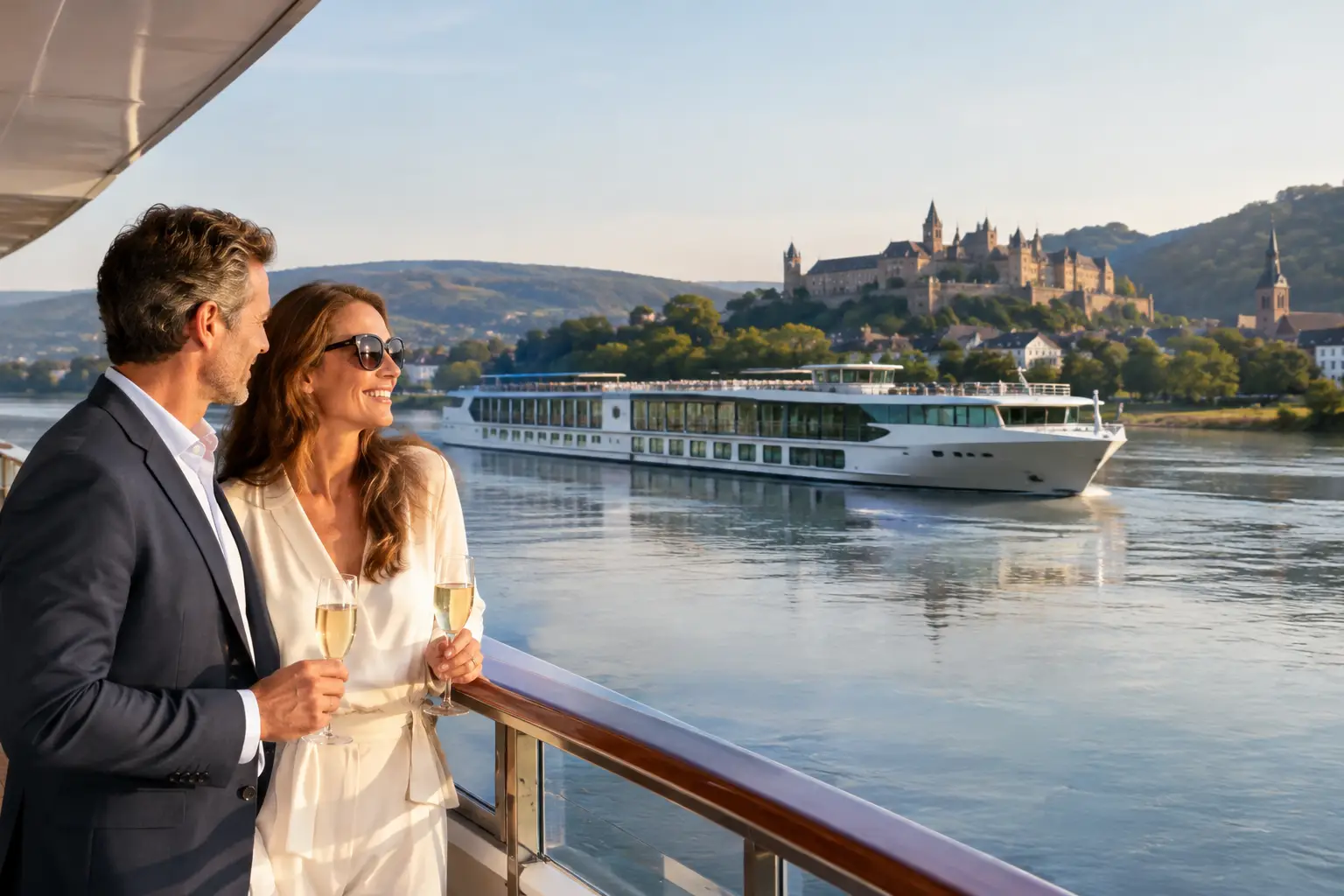
A luxury river cruise changes the rhythm of Europe. You might wake to vineyards rising above the Douro, step ashore for a private visit to a family-run winery, then return to a beautifully considered suite while the landscape slips quietly past your window. Everything you need to know about luxury river cruises begins with this distinction: the experience is not simply about getting from one city to another. It is about settling into a destination rather than rushing through it.
For travelers who have already seen many of the world’s great cities, river cruising offers a particularly elegant way to go deeper. It pairs the ease of unpacking once with access to historic centers, smaller villages, regional cuisine, and cultural encounters that can be difficult to arrange independently. The best journey, however, depends on far more than selecting an itinerary with appealing ports.
What Makes a River Cruise Truly Luxurious?
Luxury on the river is measured less by spectacle than by thoughtful details. Ships are intentionally intimate, often carrying fewer than 200 guests and sometimes far fewer. The scale fosters a more personal atmosphere, with staff who quickly learn how you take your coffee, what interests you most ashore, and whether you prefer a lively table at dinner or a quiet evening with a view.
Accommodations are designed for comfort rather than excess. Expect well-appointed suites, quality bedding, refined bath amenities, and, on many ships, French balconies or full outdoor balconies. Because river vessels must fit beneath low bridges and through locks, their design is more constrained than an ocean ship’s. A suite may feel polished and spacious by river-cruise standards without offering the expansive square footage of a luxury resort at sea. That trade-off is worth understanding before booking.
The most memorable luxury also happens ashore. A culinary walk through Lyon, a private chamber-music performance in Vienna, an after-hours museum visit, or a morning with a local historian can turn a lovely itinerary into a lasting story. The strongest cruise lines build these experiences into their programming, while a skilled travel advisor can shape the days before and after your sailing around your personal interests.
Choosing the Right River for Your Travel Style
Each European river has its own character, pace, and cultural rewards. Choosing well matters more than choosing what appears most famous.
The Danube: Grand Cities and Imperial History
The Danube is ideal for first-time river cruisers and travelers drawn to architecture, music, and Central European history. Routes commonly link Budapest, Bratislava, Vienna, and the Wachau Valley, with some extending into Germany or the Balkans. It offers a rewarding blend of magnificent capital cities and romantic countryside.
The trade-off is popularity. Major Danube routes can feel busier at peak season, especially in late spring and during the Christmas markets. Choosing a premium line with smaller groups and distinctive excursions can make a meaningful difference.
The Rhine: Castles, Vineyards, and Storybook Scenery
The Rhine is celebrated for its dramatic castle-lined stretch between Koblenz and Rüdesheim, as well as the cultural appeal of Amsterdam, Cologne, Strasbourg, and Basel. It is a wonderful choice for travelers who want iconic European scenery paired with easy walks through historic towns.
This is often a more visually dramatic sailing experience than some other routes, but the itinerary tends to include well-known ports. Travelers seeking quieter corners of Europe may prefer the Rhône, Douro, or Moselle.
The Rhône and Saône: France Through Food and Wine
For those who plan travel around a great meal, the Rhône and Saône are deeply appealing. These itineraries bring together Lyon’s culinary heritage, Burgundy’s wine country, Provençal markets, Roman history, and the gentle beauty of southern France.
This region rewards travelers who enjoy unhurried lunches, local tastings, and textured cultural experiences. It is less about checking off famous capitals and more about savoring place.
The Douro: Portugal’s Most Intimate River Journey
Portugal’s Douro Valley feels distinct from the larger rivers of Central Europe. Its terraced vineyards, small quintas, and golden hills create an exceptionally scenic setting, while Porto offers character, gastronomy, and an easy extension before or after the cruise.
The Douro’s narrow channel and locks mean ships are generally smaller, and the sailing is a centerpiece of the itinerary. Be prepared for hilly terrain in Porto and some countryside visits. For many travelers, that is part of the charm.
Beyond the Classic Routes
The Seine offers Paris, Normandy, and the history of the D-Day beaches. The Bordeaux region appeals to wine lovers who value estates and village life. The Moselle is quieter and more pastoral, while Portugal’s Douro and France’s Canal du Midi deliver a slower, more intimate atmosphere. There is no single best river. There is only the one that best reflects what you hope to feel, learn, and remember.
The Best Time to Sail Depends on What You Value
River cruise season generally runs from spring through December, though exact timing varies by destination. April and May bring fresh greenery, tulips in the Netherlands, and pleasantly cool sightseeing weather. September and October offer harvest season, warm light, and a more relaxed feeling after the height of summer.
Summer is ideal for travelers who enjoy long daylight hours and outdoor cafés, but it also brings higher temperatures and larger crowds in popular cities. Winter sailings focused on Christmas markets have a special appeal: festive lights, mulled wine, and historic squares at their most atmospheric. They are less suited to travelers who prioritize lush scenery or extended time outdoors.
Water levels deserve a candid mention. Prolonged drought or heavy rainfall can occasionally affect river navigation, particularly on the Rhine and Danube. Reputable cruise lines have contingency plans, which may include coach transfers, itinerary changes, or a ship swap. Thoughtful planning includes choosing a trusted cruise partner and allowing a little flexibility in expectations.
What Is Usually Included – and What May Not Be
Luxury river cruising is often more inclusive than other forms of travel. Most fares typically cover accommodations, dining, select beverages, onboard entertainment, Wi-Fi, and a range of guided shore experiences. Some premium lines include gratuities, airport transfers, specialty dining, or more exclusive excursions; others price these separately.
The details matter. An itinerary that appears comparable at first glance may offer a very different level of inclusion, excursion quality, suite category, and onboard experience. Ask whether excursions are offered in small groups, whether there are active and gentler-paced options, and what private experiences can be arranged. Also consider pre- and post-cruise stays. Arriving a few days early in Budapest or lingering in Lisbon after a Douro sailing often gives the journey a more relaxed, complete feeling.
Airfare, travel insurance, premium wines and spirits, spa services, and private touring may be additional costs. Rather than focusing solely on the initial fare, assess the overall experience you want and what is genuinely included in delivering it.
How to Choose Your Ship and Suite
Not every luxury river ship creates the same experience. Some feel contemporary and social, with lively lounges and multiple dining venues. Others are more traditional, quiet, and residential. Certain lines emphasize culinary programming; others are known for active excursions, wellness, or richly immersive cultural access.
Your suite selection should reflect how you travel. If you intend to spend most days ashore and use your cabin mainly for sleep, a well-designed standard stateroom may be entirely sufficient. If slow mornings with room service, quiet afternoons watching the river, and private outdoor space are central to your vision, a balcony suite is a worthwhile investment.
Pay attention to location, too. Cabins near the center of the ship may experience less motion, although river cruising is generally very smooth. Lower-deck staterooms can offer excellent value but may sit closer to the waterline and have fixed windows rather than balconies. There is no wrong choice, only a choice that should align with how you want to spend your time onboard.
Why Personalization Matters on the River
A river cruise is most rewarding when it becomes one chapter of a broader journey. Perhaps that means beginning with private art guides in Amsterdam, arranging a behind-the-scenes wine experience in Burgundy, or ending with several restorative nights at a Lisbon hotel after the Douro. It may mean selecting excursions that honor a lifelong interest in World War II history, classical music, architecture, or local cuisine.
That is where concierge-level planning adds value. The right advisor does more than compare ships. They help match your pace, interests, dining preferences, mobility considerations, and desired level of privacy to the right itinerary and cruise line. They can also anticipate the practical details that shape peace of mind, from transfers and hotel choices to timing an overseas arrival properly.
At Dream Vacations – Matt Boshcka, the goal is not to place you on a river cruise that happens to be available. It is to curate a journey that feels unmistakably yours. Choose the river that stirs your curiosity, leave room for the unexpected conversation or village café, and let the journey unfold at a pace worthy of the places you have come to know.
Leave a Reply