A safari itinerary can look extraordinary on paper and still be wrong for the way you want to travel. That is why the question of East vs South Africa deserves more than a quick comparison of animals, lodges, and flight times. One choice may place you beneath the vast, copper-colored skies of the Serengeti as wildebeest cross a river. The other may pair a private wildlife reserve with Cape Town’s restaurants, winelands, and coastal scenery. Both can be exceptional. They simply offer different definitions of a complete journey.
There is also a useful distinction to make at the outset: East Africa is a region, most often referring to Kenya and Tanzania for classic safari planning, with Rwanda and Uganda often added for gorilla trekking. South Africa is one country with a remarkably diverse range of experiences. For discerning travelers, the better question is not which destination is objectively superior. It is which one best fits the moments you hope to remember.
East vs South Africa: The Essential Difference
East Africa delivers safari on a grand, cinematic scale. Kenya’s Maasai Mara, Tanzania’s Serengeti, and the Ngorongoro Crater are names that have earned their place in the imagination. The landscapes feel expansive, the wildlife concentrations can be astonishing, and a well-timed journey can bring you into the path of the Great Migration.
South Africa offers a more varied and often more polished rhythm. In the Greater Kruger region, private reserves such as Sabi Sand are known for intimate wildlife encounters, excellent guiding, and sophisticated lodges. Beyond the bush, travelers can continue to Cape Town, the Cape Winelands, the Garden Route, or a private coastal retreat without crossing borders or taking on a complicated series of flights.
Neither experience is less authentic. East Africa often feels wilder and more elemental. South Africa can feel more layered, combining a superb safari with food, wine, art, history, and dramatic coastal landscapes in one beautifully paced itinerary.
Choose East Africa for Scale, Migration, and Classic Safari Drama
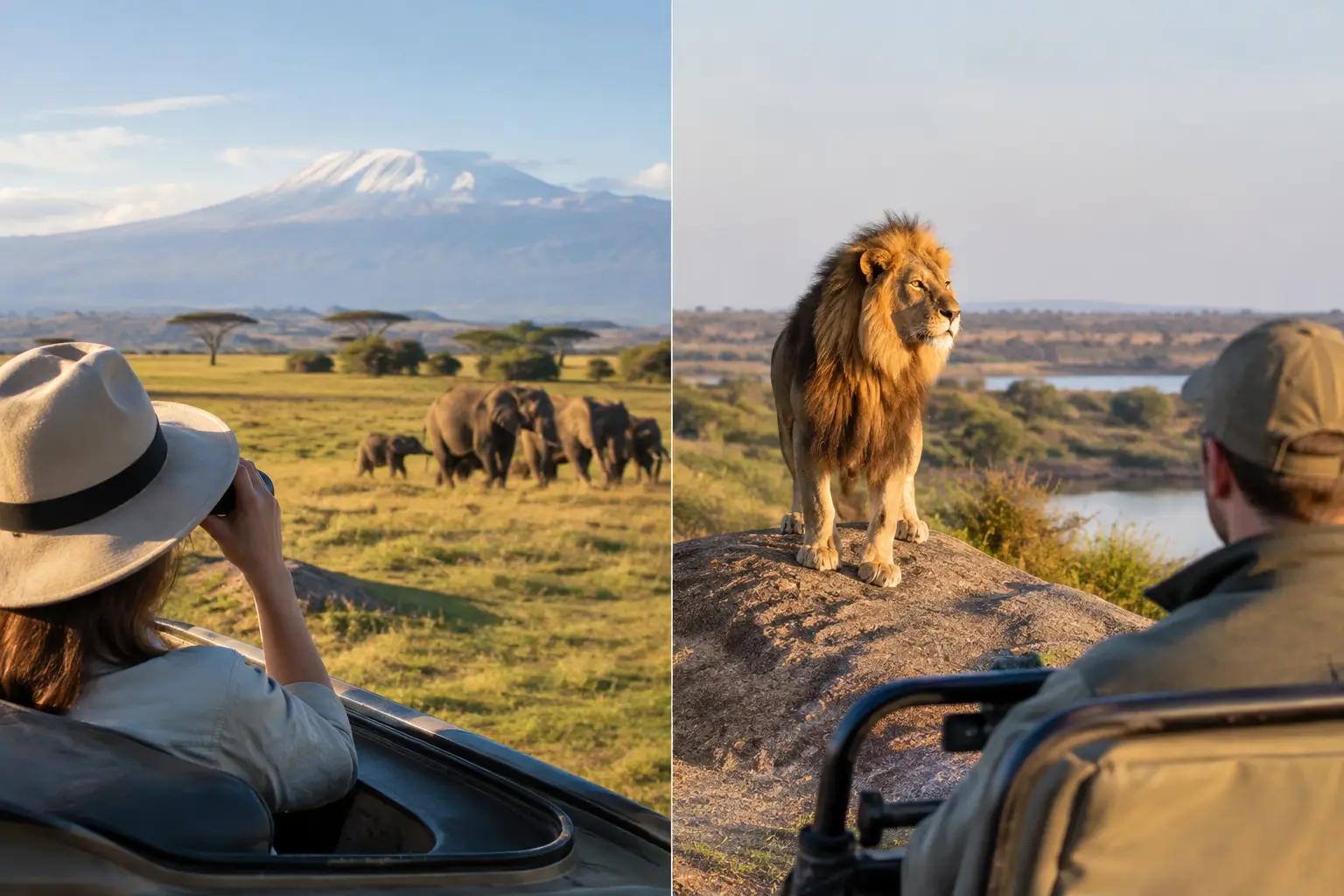
For many first-time safari travelers, East Africa fulfills the dream they have carried for decades. The Serengeti and Maasai Mara offer open grasslands where animals are visible across great distances. You may watch elephant families move through golden light, see lions resting on granite kopjes, or follow a cheetah as it surveys the plains. The setting itself is part of the experience: broad horizons, acacia silhouettes, and the sensation that nature is unfolding on its own immense terms.
The Great Migration is the most compelling reason to choose Kenya and Tanzania, but it requires thoughtful timing. The movement of wildebeest and zebra follows rainfall rather than a fixed calendar. River crossings are dramatic but never guaranteed, while calving season in the southern Serengeti offers a different kind of spectacle, with vast herds and abundant predator activity. A skilled itinerary is designed around the seasonal patterns that matter most to you, rather than promising nature on demand.
East Africa is also the natural choice for travelers who want a multi-country safari. Kenya and Tanzania combine beautifully, and Rwanda or Uganda can add a profoundly moving gorilla trek. Meeting mountain gorillas in a misty forest is unlike a game drive in any respect: physical, quiet, emotional, and limited by permits and terrain. It is ideal for travelers who want their journey to include both the iconic and the deeply personal.
There are trade-offs. East African safaris can involve more small-aircraft flights, longer transfers, and itineraries that ask you to accept a little dust in exchange for remoteness. Some camps are intentionally intimate and unfenced, which is part of their magic but may not suit every traveler. The reward is a rare feeling of being far from the ordinary world.
Best for travelers who want the iconic safari story
Choose East Africa if the heart of your trip is wildlife on an epic scale, especially the Great Migration. It is particularly rewarding for those comfortable with a more safari-centered journey, where the day is shaped by dawn game drives, afternoon tea, and evenings around the fire listening to the sounds beyond camp.
Choose South Africa for Variety and Effortless Refinement
South Africa excels when you want an outstanding safari without making safari the only chapter of the trip. A few nights in a private Greater Kruger reserve can bring exceptional Big Five viewing, often including some of Africa’s most sought-after leopard sightings. Because off-road tracking is permitted in many private reserves, guides and trackers may be able to follow wildlife carefully through the bush, creating close but respectful viewing opportunities.
The lodge experience is another strength. South Africa offers an impressive spectrum, from contemporary design-forward properties to classic bush lodges with gracious service, superb wine cellars, and private plunge pools. This is not to suggest that East Africa lacks extraordinary camps. It does not. But South Africa often makes the transition from wilderness to city, vineyard, or coast feel especially easy.
Cape Town adds depth that few safari extensions can match. One day might include the views and cultural energy of the city; another, a private tasting and long lunch among the vineyards of Franschhoek or Stellenbosch. The Cape Peninsula offers ocean scenery, botanical beauty, and a sense of place that contrasts wonderfully with the bush. For couples celebrating a milestone, or for travelers who enjoy the pleasures of cuisine and culture as much as wildlife, that balance can be decisive.
South Africa may also be the more practical first safari for guests traveling with family members of different ages or interests. Many reserves are easily reached by road or a short domestic flight, and certain malaria-free options can be appropriate for travelers who prefer that consideration. Still, practicality should not be mistaken for compromise. The right private reserve can deliver wildlife encounters of remarkable quality.
Best for travelers who want safari plus a richer destination journey
Choose South Africa if you want to begin with lions, elephants, and leopards, then linger over exceptional meals, explore vineyards, or enjoy a few unhurried days in Cape Town. It is particularly strong for second honeymoons, anniversaries, and travelers who prefer a trip with several distinct textures.
Wildlife Viewing: Abundance Versus Intimacy
Both regions can provide extraordinary sightings of the Big Five. The difference is more about setting and style than a simple measure of quantity.
In East Africa, sightings often unfold in wide-open ecosystems. You may watch a lion pride with no other vehicle in sight, observe a massive herd of buffalo moving across the plains, or encounter hundreds of thousands of migrating animals over several days. The scale is the story.
In South Africa’s private reserves, the experience can feel more intimate and tailored. Highly experienced guides and trackers have deep knowledge of animal territories, and vehicle access may be more flexible than in national parks. You may spend an extended, unhurried time with a leopard in a tree or a rhino family moving through the brush. The landscape can be denser, so sightings feel discovered rather than seen from afar.
For serious photographers, the answer depends on subject and style. East Africa favors expansive compositions, migration scenes, and open-light landscapes. South Africa often favors close wildlife portraits and carefully guided positioning. A photographer who wants both can build a journey around their priorities rather than trying to do everything in one rushed trip.
The Question of Pace, Season, and Comfort
The best itinerary is rarely the one with the most stops. East Africa rewards time: ideally three or four nights in each camp so you can settle into the rhythms of a region and allow wildlife encounters to evolve. South Africa can support a slightly faster pace, though a private reserve still deserves at least three nights, followed by enough time in Cape Town or the Winelands to enjoy it properly.
Season matters in both places. East Africa’s dry season generally supports excellent wildlife viewing, while migration timing requires a more precise conversation. South Africa’s seasons reverse those in the Northern Hemisphere: its winter months, roughly May through September, are often prized for dry bush conditions and concentrated wildlife around water sources. Cape Town is at its warmest and driest during the American winter, making a safari-and-city itinerary especially appealing from November through March.
Luxury in Africa is not only about the lodge category. It is about choosing the right camp location, guide, vehicle configuration, flight routing, room type, and rhythm for how you travel. A tented camp with no television may be more luxurious than a suite with every modern convenience if it places you where the migration is passing at dawn. Equally, a private villa in a reserve may be the right answer for a family seeking space, flexibility, and discreet service.
The most rewarding choice begins with an honest picture of your travel style. If you have imagined endless plains, migration herds, and a journey centered on wilderness, East Africa may be calling. If you want exceptional wildlife framed by wine country, culture, and an elegant city stay, South Africa may offer the perfect balance. The right safari is the one that leaves enough room for wonder – and enough time to feel fully present when it arrives.
Leave a Reply