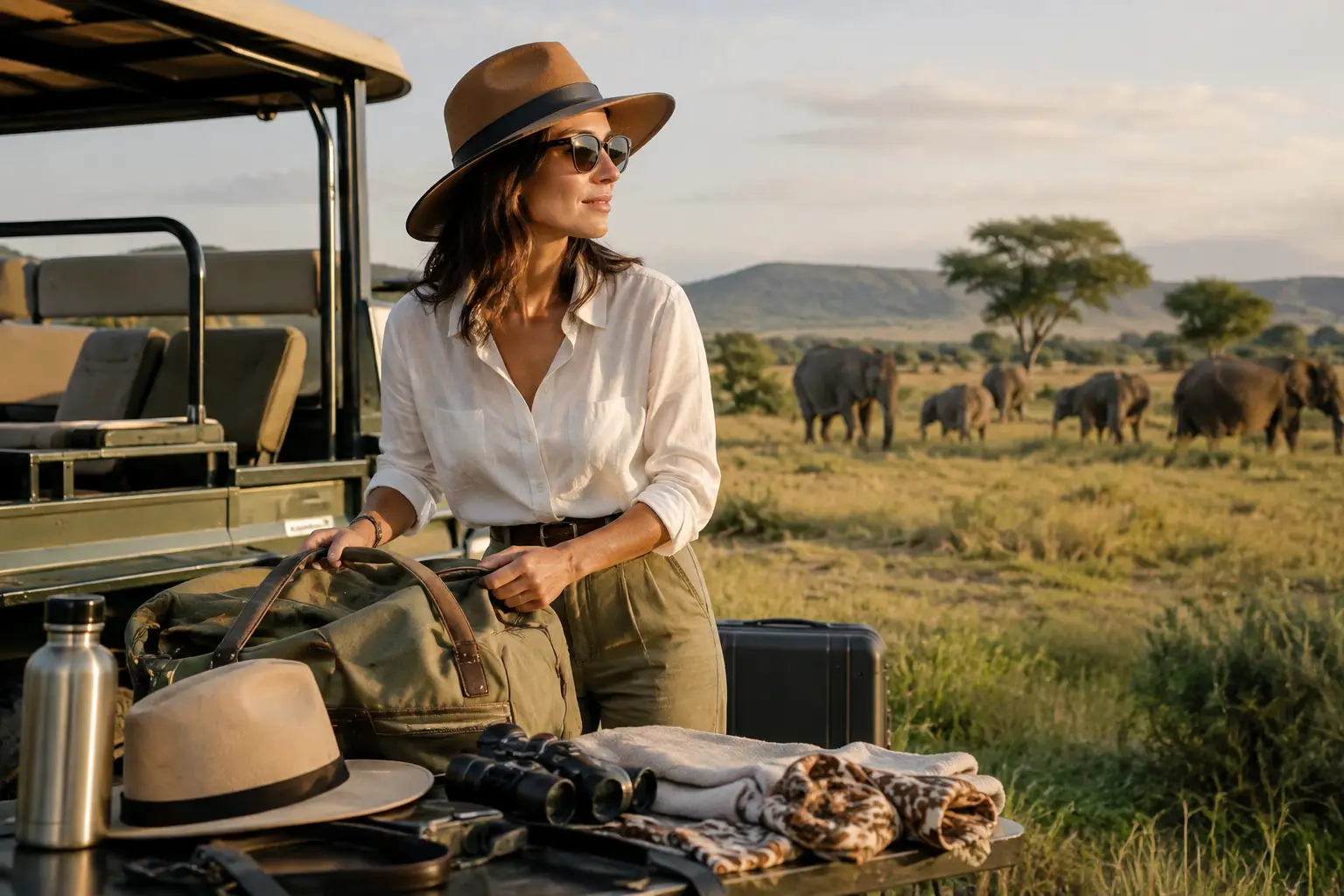
The first time you step from a safari vehicle into the cool, amber light of an African dawn, you will be grateful for the right layers far more than an overfilled suitcase. Knowing what to pack for an African safari is less about buying a wardrobe of new gear and more about preparing thoughtfully for changing temperatures, dust, intimate wildlife moments, and the particular rhythm of life in the bush.
A beautifully planned safari may include elegant lodges, attentive hosts, and exceptional cuisine, but it still rewards practical choices. Pack lightly, choose pieces that work together, and leave room for the treasures of the experience itself: photographs, stories, and the sense of wonder that lingers long after you return home.
What to Pack for an African Safari Begins With Your Itinerary
Africa is not one climate, and a safari in Botswana in June requires a different approach than Kenya’s coast in February or South Africa’s private reserves in November. Altitude, season, region, and the style of your journey all matter. Early morning game drives can be surprisingly cold, even when afternoons are warm. Open-sided vehicles create a noticeable breeze, while midday may bring powerful sun.
Your luggage also depends on how you will travel between camps. Many light aircraft serving remote safari areas impose strict soft-sided baggage limits, often around 33 pounds including carry-on items, though allowances vary by operator. A structured suitcase can be difficult to load into small aircraft, so a lightweight duffel or soft-sided roller is usually the wiser choice. Confirm the exact allowance before packing, especially if you are bringing professional camera equipment or combining safari with a longer itinerary.
The goal is not to look as though you are heading on an expedition. It is to feel polished, comfortable, and appropriately prepared from a sunrise drive through the Serengeti to a candlelit dinner beneath the stars.
Build a Safari Wardrobe Around Lightweight Layers
Neutral, breathable clothing remains the foundation of a smart safari wardrobe. Think khaki, olive, stone, taupe, soft gray, and muted blue. These shades are practical around wildlife and photograph beautifully without competing with the landscape. Very bright colors can be distracting, while dark blue and black may attract tsetse flies in certain regions of East Africa.
Choose technical or natural fabrics that breathe, wash easily, and dry overnight. Linen feels elegant but wrinkles readily and can be less forgiving on dusty drives. Cotton is comfortable in dry conditions, while moisture-wicking blends are especially useful in humid areas and during active excursions. The best approach is a mix: refined enough for lodge life, durable enough for the bush.
For most classic safaris, pack two or three pairs of lightweight trousers, a pair of shorts if the destination and your comfort level call for them, and several breathable shirts. Long sleeves are invaluable for sun protection, cool mornings, and evenings when insects are more active. A light sweater, fleece, or cashmere wrap adds welcome warmth at dawn. In southern Africa’s winter months, a packable insulated jacket can be one of the most useful items you bring.
Women may also appreciate a relaxed dress or flowing skirt for evenings at camp, provided it is easy to move in. Men often find that a collared knit shirt or a crisp long-sleeve button-down works beautifully for dinner. Most luxury lodges are elegantly relaxed rather than formal. You do not need dress shoes or elaborate evening wear.
Choose Footwear for the Experience You Have Planned
For vehicle-based safaris, supportive walking shoes, trail shoes, or lightweight ankle boots are generally sufficient. You will spend much of your wildlife-viewing time in a vehicle, and oversized hiking boots can consume precious luggage space. Bring shoes that are already broken in. A safari is not the setting to discover a blister halfway through a bush walk.
If your itinerary includes walking safaris, gorilla trekking, or substantial hiking, footwear becomes more specialized. Waterproof hiking boots with ankle support, moisture-wicking socks, and gaiters may be appropriate. Gorilla trekking in Rwanda or Uganda can involve steep, muddy terrain, while a walking safari in Zambia favors quiet, closed-toe shoes with dependable grip. Your itinerary should determine the gear, not a generic packing list.
A pair of sandals or loafers for lodge time is a welcome luxury. After a long day of game viewing, changing out of dusty shoes can feel remarkably restorative.
Protect Yourself From Sun, Dust, and Cool Mornings
A wide-brimmed hat is one of the few non-negotiable safari accessories. Select one with a secure chin strap, since wind on an open vehicle can be relentless. Polarized sunglasses reduce glare and make it easier to scan open plains or shimmering waterways. Bring a spare pair if you rely on prescription lenses.
Sunscreen, lip balm with SPF, and a small bottle of moisturizer deserve a place in your day bag. Safari air can be dry, and dust finds its way everywhere. A lightweight buff or scarf is useful on particularly dusty roads and can also add warmth during early departures.
Insect repellent should be chosen with your destination in mind. Many camps provide it, but travelers often prefer to bring a familiar brand. Your travel health professional can advise on malaria prevention, recommended vaccinations, and any prescriptions to carry. Keep medications in their original labeled containers, with a small supply in your carry-on in case checked baggage is delayed.
Bring Camera Gear You Will Actually Use
The best camera is the one you feel confident using when a leopard appears in the branches above your vehicle. A smartphone with a strong camera may be all some travelers need, particularly when paired with binoculars for lingering observation. For more dedicated photographers, a mirrorless or DSLR camera with a versatile telephoto lens is ideal.
A lens in the 100-400mm range offers flexibility for distant wildlife, while a wider lens captures landscapes, camp interiors, and the scale of a herd crossing the plains. Bring extra memory cards, spare batteries, a charging adapter suited to your destinations, and a soft protective pouch for dust. A beanbag is often more useful than a tripod in a vehicle, where tripods are awkward and space is shared.
Do not let photography become a barrier between you and the moment. There is real value in putting the camera down when elephants move silently past or when the sky turns deep violet after sunset. Your guide will help you understand what you are seeing, and that knowledge often becomes the most enduring souvenir.
Keep Documents and Everyday Essentials Close
Your passport, travel insurance details, flight information, vaccination documentation if required, and a copy of your itinerary should travel in your personal item. A small crossbody bag, zippered tote, or daypack keeps these essentials organized without becoming cumbersome.
Bring a universal adapter, charging cables, and a compact power bank. While many premier camps have charging facilities in suites or communal areas, power can be limited at remote properties. A small flashlight or headlamp is useful for walking between your tent or suite and the main lodge after dark, even when camps provide escorted service.
For a more comfortable journey, consider packing a reusable water bottle, a few favorite snacks for travel days, a small notebook, and reading material for the restful hours between drives. Safari days have a lovely cadence: an early start, a return for breakfast, time to relax, then a late-afternoon outing as the light softens. There is no need to fill every quiet moment.
What Not to Pack for an African Safari
Avoid hard-shell luggage when your itinerary includes small aircraft, excessive clothing “just in case,” and brand-new gear you have not tested at home. Heavy hair tools are rarely necessary, and many lodges provide hair dryers. Fine jewelry is best left behind, not because luxury camps lack security, but because safari travel invites a more relaxed, unencumbered kind of elegance.
Camouflage clothing is prohibited or discouraged in several African countries because of its military associations. Drones are another item to leave at home unless you have carefully verified permissions. They are restricted in many national parks and can disrupt wildlife and other guests’ experience.
A Thoughtful Final Check Before You Leave
Before closing your bag, lay out your wardrobe and ask whether every piece works with at least two others. Then reserve a little room for the unexpected: a warmer-than-anticipated morning, a spontaneous village visit, a treasured photograph printed by a lodge, or a small artisan find selected along the way.
At Dream Vacations – Matt Boshcka, we believe thoughtful preparation creates more freedom once you arrive. When the practical details have been anticipated, you can give your full attention to the lioness in the grass, the distant call of a fish eagle, and the extraordinary privilege of being present in one of the world’s most remarkable wild places.
Leave a Reply