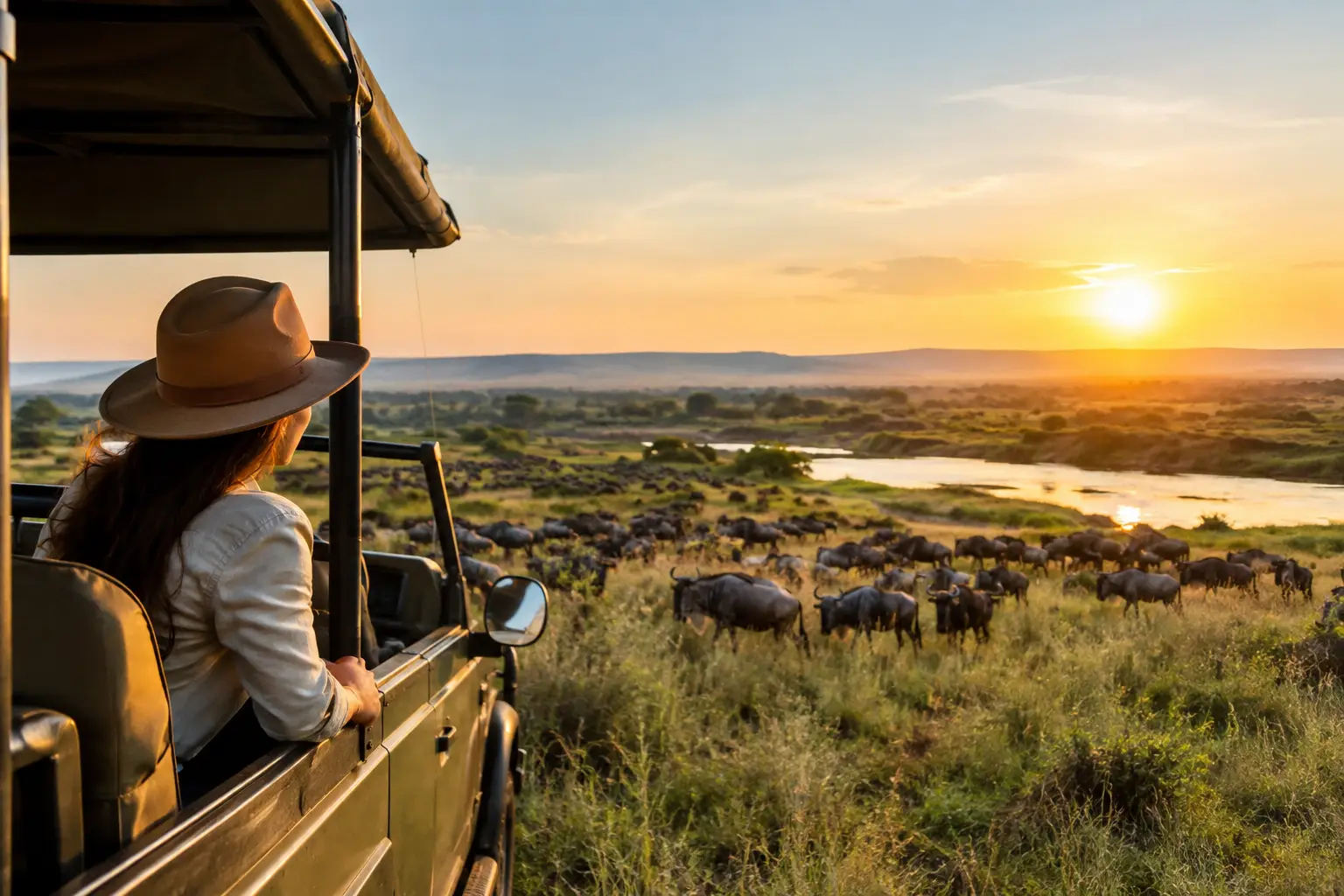
A herd gathers on the far side of the Mara River, filling the bank with dust, nervous energy, and the low, constant sound of wildebeest. Then, without warning, a few animals commit to the water and thousands follow. It is one of Africa’s defining wildlife spectacles, but it is not a performance that happens on command. The best time for Great Migration safari planning depends on the moments you hope to witness, the rhythm of the rains, and how you prefer to experience the Serengeti-Mara ecosystem.
For discerning travelers, the right answer is rarely simply “July through October.” That window can be extraordinary, particularly for river crossings, yet the migration offers a different kind of drama in every season. A beautifully designed safari begins by matching your interests with the animals’ likely location, then securing the right camps, guides, and pacing to make the journey feel deeply personal rather than rushed.
Why the Great Migration Has No Single Perfect Month
The Great Migration is a year-round movement of roughly 1.5 million wildebeest, joined by vast numbers of zebra and gazelle, across northern Tanzania and southwestern Kenya. They follow fresh grass brought by seasonal rain, moving in a broad, circular pattern through the Serengeti, Ngorongoro Conservation Area, and Maasai Mara.
This is why a fixed calendar can be misleading. Rainfall determines where grazing is best, and rainfall is never entirely predictable. River crossings may occur several times in a season, pause for days, or unfold where no vehicle is positioned to see them. A trusted safari specialist plans around the strongest seasonal probabilities, while choosing camps and routing that leave room to respond to conditions on the ground.
The essential question is not, “When can I see the migration?” You can see it in some form throughout much of the year. The more useful question is, “What kind of wildlife story do I want to come home with?”
Best Time for Great Migration Safari Experiences by Season
December through March: Calving Season on the Southern Plains
For many experienced travelers, the southern Serengeti and Ndutu region during calving season deliver the migration at its most intimate and emotionally compelling. After the short rains, the herds gather on the nutrient-rich grasslands of the southern Serengeti and the Ngorongoro Conservation Area. Usually from late January through February, hundreds of thousands of wildebeest calves are born in a remarkably concentrated period.
The scale is difficult to comprehend until you are there: newborn calves finding their footing, mothers calling across the plains, and predators taking advantage of an abundance of vulnerable prey. Lions, cheetahs, hyenas, leopards, and African wild dogs may all be part of the daily story, although sightings are never scripted.
This season suits travelers who value rich predator action, photography, and expansive landscapes more than the iconic image of a river crossing. It is also an excellent choice for a private safari that combines the migration with the Ngorongoro Crater, where a single game drive can reveal an exceptional concentration of East African wildlife.
April and May: The Green Season and a More Private Serengeti
As the long rains arrive, the herds begin moving northwest through the central and western Serengeti. Some lodges and camps reduce operations during this period, and road conditions can be more challenging. For travelers who expect flawless blue skies every day, this may not be the ideal time.
Yet April and May have a compelling appeal. The grass is green, the skies can be dramatic, and visitor numbers are lower than in peak season. A well-chosen camp with experienced guides can make the rain feel like part of the atmosphere rather than an inconvenience. There is a particular luxury in having a broad sweep of the Serengeti feel almost entirely your own.
This is a thoughtful choice for travelers who have flexibility, appreciate landscape photography, and prefer solitude over the certainty of a specific migration event. It can also offer excellent value in select luxury properties, though the decision should be driven by the experience, not the rate.
June: Movement Through the Western Corridor
By June, the herds are often moving through the western Serengeti toward the Grumeti River. The landscape begins to dry, the migration tightens into impressive columns, and the sense of forward momentum becomes palpable. This is a transitional month, but it can be one of the most rewarding times for guests who want to witness the journey unfolding before the better-known Mara River season.
Grumeti River crossings can occur, though they are generally less predictable and may not carry the same scale as their Mara River counterparts. The advantage is a safari that feels less centered on waiting for one famous moment and more attuned to the full movement of the herds. Pairing the western corridor with central Serengeti offers a varied and beautifully paced Tanzania itinerary.
July through October: Northern Serengeti and Mara River Crossings
For travelers whose dream is to witness a river crossing, July through October is often the strongest period to focus on the northern Serengeti and Kenya’s Maasai Mara. Herds gather along the Mara River, sometimes moving back and forth between Tanzania and Kenya as grazing conditions change.
Crossings are unforgettable precisely because they are uncertain. You may spend hours watching animals approach, hesitate, retreat, and return before the first wildebeest finally enters the current. Crocodiles, steep banks, and the force of the water add to the tension. At other times, a crossing happens quickly and without an audience. No ethical safari professional should promise one.
This is also the most sought-after period, so exceptional camps, private vehicles, and well-positioned guides should be arranged far in advance. Travelers who prefer a more secluded feel may choose a camp in a private conservancy bordering the Maasai Mara. While the exact migration movement can vary, conservancies offer excellent guiding, fewer vehicles, night drives in many areas, and a more exclusive sense of place.
November: The Return South
The short rains usually prompt the herds to begin their journey south through the eastern Serengeti. November is another shoulder season that rewards flexibility. The migration is on the move, the air begins to clear after the dry months, and camps often feel calmer than they do during peak river-crossing season.
It is an appealing option for travelers who want meaningful migration viewing without the intensity of August and September. Because the herds can cover considerable ground, selecting mobile or strategically located camps becomes especially valuable.
Kenya or Tanzania: Which Belongs in Your Itinerary?
Tanzania offers the widest canvas for understanding the migration, especially from December through June and again in the northern Serengeti from midyear onward. It is ideal for travelers who want to combine the Serengeti with the Ngorongoro Crater, Tarangire’s elephant-rich landscapes, or a restorative finish on the Swahili Coast.
Kenya’s Maasai Mara is particularly compelling from roughly August through October, when herds are often present in large numbers and Mara River activity may be possible. The region also offers outstanding private conservancies, where a more exclusive safari rhythm can include private dining in the bush, off-road opportunities where permitted, and time with Maasai hosts.
For a once-in-a-lifetime journey, there is no need to treat this as an either-or decision. A cross-border itinerary can follow the migration while revealing the distinct character of both countries. The best route depends on the season, the camps that fit your style, and how much time you wish to devote to safari.
How to Plan for the Experience You Actually Want
An eight- to twelve-night safari allows the migration to become more than a checklist sighting. It gives you time in two or three contrasting regions, a margin for weather and wildlife movement, and unhurried mornings with your guide. Those extra nights often make the difference between observing wildlife and becoming fully absorbed in the place.
Camp selection matters as much as timing. A small, characterful tented camp may offer the closest connection to the landscape, while a more indulgent lodge may be right for travelers who want generous suites, spa treatments, and a polished retreat after each game drive. Mobile camps can be especially valuable because they relocate with the herds, placing guests nearer to the seasonal action without sacrificing comfort.
The finest safaris also leave space for what cannot be scheduled: a leopard in a fever tree at first light, a private sundowner as elephants cross the horizon, or an unplanned conversation with a guide whose knowledge changes the way you see the land. At Dream Vacations – Matt Boshcka, a Great Migration itinerary is designed around those possibilities, with each detail considered before you arrive.
Choose the season that speaks to your imagination, then allow enough time for Africa to surprise you. The crossing may become your headline memory, or it may be the quiet morning when the plains seemed to breathe around you.
Leave a Reply