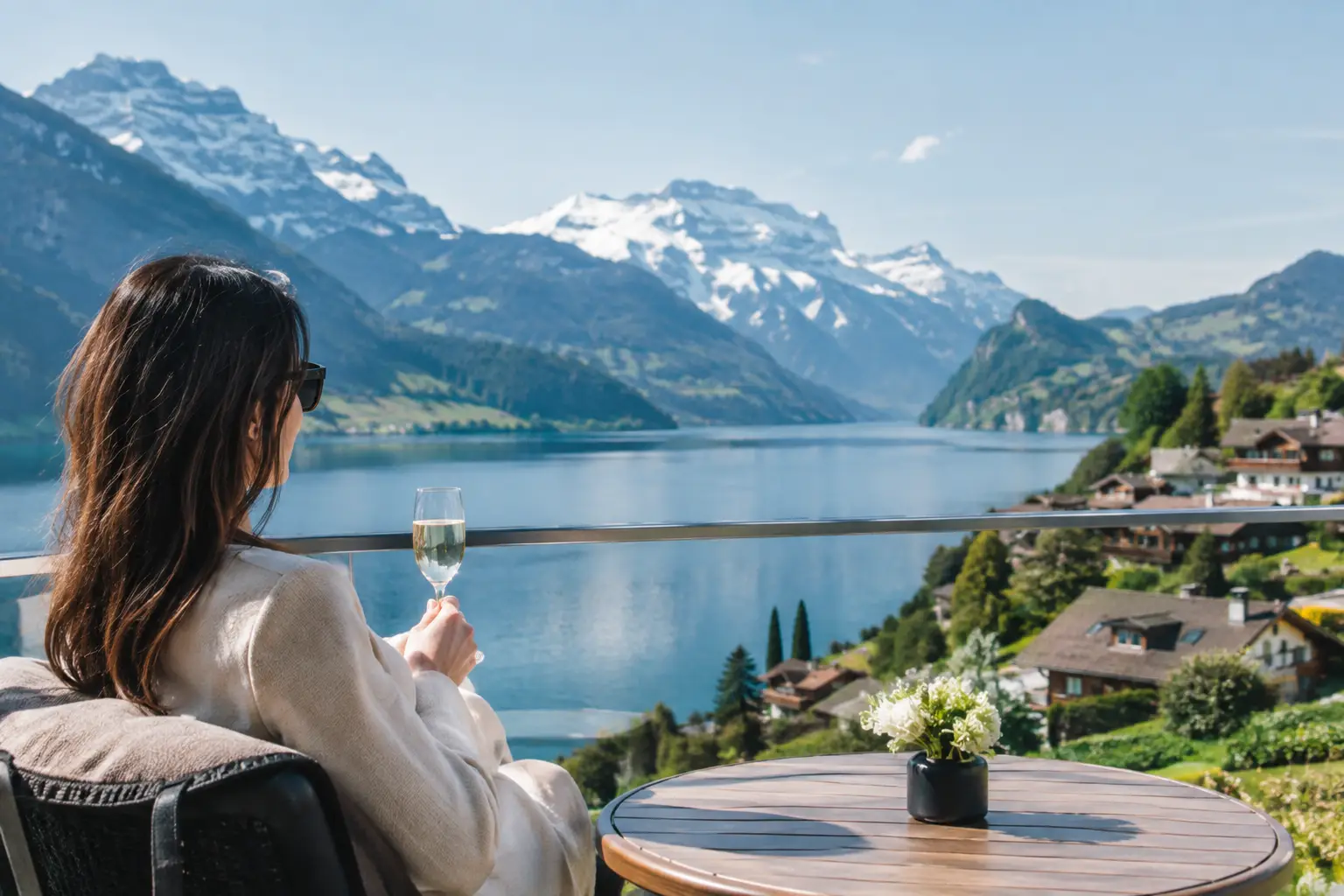
The sound of a cowbell carries across a high meadow above Zermatt. A few hours later, champagne is poured as the Matterhorn catches the final light from your terrace. That contrast – elemental Alpine beauty paired with exacting hospitality – is what makes luxury travel through Switzerland so compelling. This is a country where extraordinary scenery is easy to find, but an extraordinary journey depends on the rhythm, access, and personal details built around it.
For well-traveled guests, Switzerland is not best approached as a checklist of mountain towns and famous trains. It is a place to savor deliberately: a private guide who reveals the stories behind a centuries-old Lucerne chapel, a table at a family-run mountain restaurant reached before the crowds arrive, a lakeside suite that makes an afternoon with no plans feel like the right choice.
Why Luxury Travel Through Switzerland Feels Effortless
Switzerland has an unusual talent for making ambitious travel feel composed. Rail connections are remarkably precise, roads are beautifully maintained, and the country’s hospitality culture understands discretion. You can begin the morning beside Lake Geneva, have lunch in a vineyard overlooking the Lavaux terraces, and settle into a grand alpine hotel by evening without the fatigue that can accompany multi-stop European travel.
Yet efficiency alone is not luxury. The true appeal lies in the quality of each transition. First-class rail travel can turn moving between regions into one of the journey’s defining experiences, especially when luggage transfers are arranged and every arrival is met with a private driver or knowledgeable local host. A thoughtfully paced itinerary leaves room for the unscripted moments: lingering over fondue after a snowy walk, stopping for photographs when clouds lift from a valley, or deciding to spend a second afternoon at a spa because the view is simply too good to leave.
Switzerland also rewards travelers who appreciate contrast. French-speaking Geneva and Lausanne feel polished and cosmopolitan. The Bernese Oberland is all waterfalls, pastures, and dramatic peaks. In Ticino, palm-lined lakes and Italian-inflected cuisine create an entirely different mood. A bespoke journey can move through these worlds without feeling rushed, provided the itinerary favors depth over distance.
The Swiss Regions Worth Savoring
The Bernese Oberland for Iconic Alpine Drama
For first-time visitors and returning mountain lovers alike, the Bernese Oberland offers Switzerland at its most cinematic. Interlaken can serve as a useful arrival point, but the more memorable stays are often in Wengen, Mürren, or a refined property near Grindelwald. Here, the Eiger, Mönch, and Jungfrau dominate the horizon, while car-free villages preserve a welcome sense of calm.
A private hiking guide can tailor walks to your pace and interests, whether that means a gentle trail through flower-filled meadows or a more energetic route with a mountain hut lunch. The Jungfraujoch is undeniably famous, and it can be remarkable in clear weather, but it is not the only high-altitude experience worth planning. A quieter early-morning cable car ascent, a helicopter excursion over glaciers, or an intimate cheese-making visit can offer a more personal connection to the region.
Zermatt for the Matterhorn and Mountain Glamour
Zermatt is both unmistakably Swiss and distinctly international. Its car-free center, excellent dining, and legendary mountain setting make it a natural choice for a milestone anniversary, a second honeymoon, or a winter escape built around exceptional skiing.
The Matterhorn is visible from many places, but the right hotel room changes the experience. A terrace, balcony, or floor-to-ceiling view transforms the mountain from a sight to a constant companion. In summer, private guided walks and scenic helicopter flights reveal the scale of the surrounding peaks. In winter, a ski itinerary can be shaped around expert instruction, preferred terrain, long lunches, and a private return transfer at the end of the day.
Zermatt is lively in high season, which is part of its energy. Travelers seeking a more secluded mountain atmosphere may prefer to pair it with quieter St. Moritz-area valleys or a few restorative nights in the Bernese Oberland.
Lake Geneva for Culture, Wine, and Grand Hotels
The shores of Lake Geneva offer a more graceful counterpoint to Switzerland’s high mountains. Lausanne provides access to the Lavaux vineyards, where steep terraces tumble toward the water and tastings can be arranged with producers whose wines rarely travel far beyond the region. Montreux brings Belle Époque elegance, lakeside promenades, and the nearby Chillon Castle.
Geneva is ideal for travelers who enjoy museums, watchmaking, international culture, and fine dining. It also works beautifully as a gateway for a longer itinerary that continues into France or Italy. The right private guide gives the city texture beyond its polished storefronts, connecting its diplomatic present with its independent, often surprising past.
St. Moritz and Engadin for a Different Kind of Winter
St. Moritz has long attracted a sophisticated international audience, but the Engadin Valley offers far more than a glamorous name. Its light is extraordinary, its lakes are expansive, and its villages feel rooted in a distinct Romansh culture. Winter brings skiing, horse-drawn carriage rides, snowshoeing, and the kind of spa afternoons that justify an unhurried schedule.
Summer is equally appealing for travelers who prefer crisp mountain air without winter sports. Hiking routes, e-biking, lake activities, and memorable train travel make this an excellent choice for a multigenerational family gathering or a couple seeking active days balanced with serious comfort.
The Rail Journey Should Be Part of the Experience
Switzerland’s scenic rail routes are often treated as transportation. They deserve to be treated as an event. The Glacier Express, which travels between Zermatt and St. Moritz, crosses bridges, climbs through high passes, and moves through landscapes that make conversation pause. The Bernina Express, with its dramatic route toward Italian-speaking Ticino, delivers an entirely different perspective on the Alps.
The best rail choice depends on how you like to travel. Some guests value the panoramic spectacle of a signature route; others prefer regular first-class services, which can be more flexible and less crowded while still offering beautiful scenery. Private transfers may be better for a short itinerary, remote hotel, or travelers who want the freedom to stop at a village, winery, or scenic overlook along the way.
A well-designed Swiss itinerary rarely relies on one mode of travel alone. It combines rail where the journey is part of the pleasure, private driving where flexibility matters, and carefully timed connections that protect the relaxed pace luxury travelers expect.
What Turns a Swiss Vacation Into a Bespoke Journey
The most important decisions are not always the obvious ones. Choosing a hotel with a view matters, but so does deciding whether you want a celebrated resort with a lively social scene or a smaller retreat where the staff quickly knows your preferences. A private guide is valuable, but the best guide is one matched to your curiosity – art, architecture, food, hiking, history, or simply the quiet corners most visitors miss.
Culinary experiences are especially worthy of personalization. Switzerland is far more varied than fondue and chocolate, though both are pleasures when done well. Consider a private vineyard lunch in Lavaux, a chef-led market experience in Zurich, a chalet meal centered on regional cheeses, or a tasting menu that reflects the culinary influence of neighboring France, Germany, and Italy.
Season matters as well. Summer offers long walking days, Alpine wildflowers, and high mountain routes. September often brings clear air, harvest activity, and fewer families traveling. December through March is ideal for skiing and festive villages, though weather can affect high-altitude plans. May and late October can be quieter and appealing, but some mountain hotels and lifts close between seasons. There is no single best time – only the best time for the experience you want.
Give Switzerland the Time It Deserves
A common mistake is trying to see Geneva, Lucerne, Interlaken, Zermatt, St. Moritz, and Zurich in one week. Switzerland looks compact on a map, and its transport system encourages ambition. But a journey that changes hotels every other night can reduce one of the country’s greatest gifts: its sense of ease.
For many travelers, nine to twelve nights allows for a more meaningful pace. A classic route might pair Lake Geneva with the Bernese Oberland and Zermatt. Those returning to Switzerland may focus on Lucerne, the Engadin, and Ticino, with special experiences shaped around music, art, hiking, rail, or gastronomy. Switzerland also pairs naturally with a river cruise departure, Northern Italy, the French Alps, or a broader Central European itinerary.
At Dream Vacations – Matt Boshcka, the purpose of planning is not simply to fit more into the days. It is to create space for the moments that cannot be scheduled: the mountain view at breakfast, the conversation with a local winemaker, the quiet realization that there is nowhere else you need to be. Switzerland is at its finest when the itinerary gives you permission to stay present long enough to feel it.
Leave a Reply