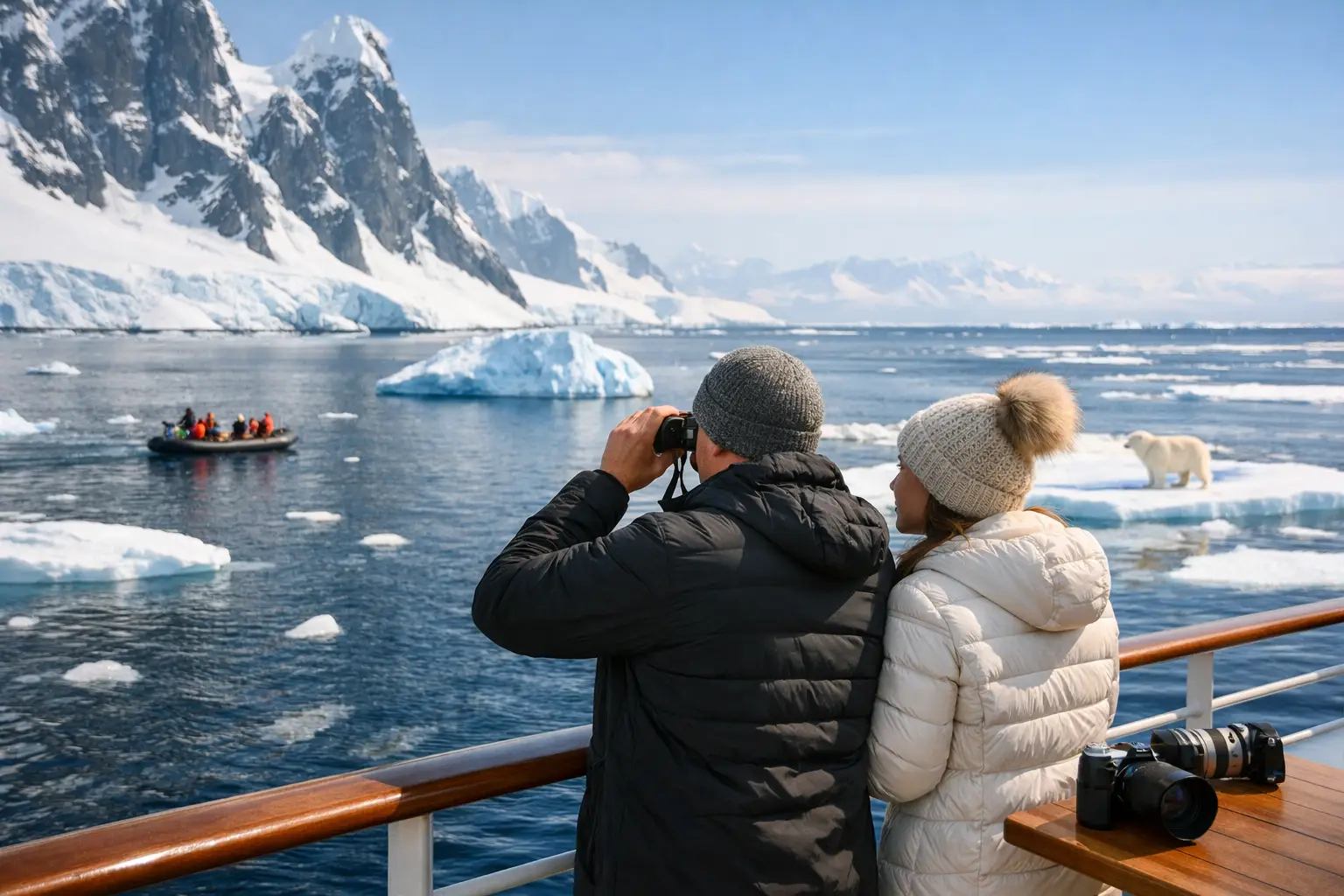
A Zodiac slips through still, black water while a humpback whale surfaces close enough to hear its breath. On another polar frontier, a polar bear moves silently across sea ice beneath a pale Arctic sky. Antarctica & Arctic expeditions share a sense of remoteness few journeys can match, yet they create profoundly different memories. Choosing between them is less about selecting the “better” destination and more about deciding what kind of wonder you hope to feel.
For travelers who have already seen much of the world, the polar regions offer something increasingly rare: true scale, genuine unpredictability, and the privilege of being a respectful guest in landscapes that do not perform on command. The right expedition balances those moments with the level of comfort, activity, and expert interpretation that makes the journey deeply rewarding.
Antarctica and the Arctic Are Not Interchangeable
Antarctica is a continent: vast, white, uninhabited, and astonishingly theatrical. Its visual language is icebergs sculpted into improbable shapes, cathedral-like glaciers, mountains rising straight from the sea, and immense penguin colonies that fill the air with sound. Most first-time visitors travel to the Antarctic Peninsula, departing from Ushuaia, Argentina, and crossing the Drake Passage or flying over it to join their ship.
The Arctic is an ocean surrounded by continents, cultures, and islands. It is more varied, both geographically and emotionally. Depending on the itinerary, an Arctic expedition may include Greenland’s iceberg-lined fjords, Svalbard’s polar bear habitat, Inuit cultural experiences in the Canadian Arctic, or the volcanic landscapes and seabird cliffs of Iceland. Human history is present here in a way it is not in Antarctica, from Indigenous traditions and early exploration to contemporary communities living with a rapidly changing climate.
That distinction matters. Antarctica often feels like entering another planet, a place where nature entirely sets the terms. The Arctic combines wilderness with people, place, and history. A traveler drawn to pristine grandeur and abundant penguins may feel an immediate pull toward Antarctica. Someone fascinated by wildlife, northern cultures, geology, and the complex story of the High North may find the Arctic more layered.
What Antarctica & Arctic Expeditions Do Best
Antarctica is exceptional for concentrated wildlife encounters. On the Peninsula, penguins are not a distant possibility but an essential part of the experience. Gentoo, chinstrap, and Adélie penguins may be seen in extraordinary numbers, joined by seals resting on ice floes and whales feeding in productive summer waters. Landings often bring guests directly into the sensory world of a colony, with carefully managed distances and strict environmental protocols.
Its landscapes also make even quiet moments feel momentous. Watching brash ice drift past your balcony, hearing a glacier crack from across a bay, or standing on shore as snow begins to fall can be as memorable as any wildlife sighting. Antarctica rewards travelers who are comfortable surrendering a degree of control to weather, sea conditions, and nature’s changing rhythms.
The Arctic’s greatest strength is variety. In Svalbard, guests may search for polar bears, walrus, Arctic foxes, reindeer, and whales while navigating through sea ice. In Greenland, a day might include kayaking beneath towering bergs, visiting a small coastal settlement, and hearing from expedition staff about Norse history and glaciology. Iceland adds geothermal drama, waterfalls, and birdlife to the mix.
There is a crucial difference in wildlife expectations. Penguins are often abundant and visible in Antarctica. Polar bears are never guaranteed in the Arctic, and they should not be. A responsible expedition treats a bear sighting as a privileged possibility, observed from a respectful distance, rather than a promised photo opportunity. Travelers who understand this usually find the experience far more meaningful.
The Journey Begins With the Right Season
Antarctic expedition season generally runs from late October through March, during the Southern Hemisphere summer. Early-season voyages offer cleaner snow, dramatic ice conditions, and active courtship among penguins. December and January bring long days and bustling colonies, often with chicks beginning to appear later in the period. February and March can be particularly compelling for whale activity, while the light becomes softer and more dramatic.
Arctic seasons vary by region. Svalbard voyages typically operate from late spring through early fall. Earlier departures may offer more sea ice and a stronger chance of encountering polar bears in their preferred habitat. High summer brings milder temperatures, prolific birdlife, and access to locations that may be icebound earlier in the season. Greenland’s timing also affects whether a journey emphasizes blooming tundra, cultural visits, whales, or the imposing drama of newly calved ice.
There is no universally ideal month. The best departure depends on your priorities. A photographer may favor crisp early Antarctic light or the deep colors of late season. A traveler whose dream is to watch penguin chicks may choose a different sailing than someone most interested in whales. This is where thoughtful pre-trip guidance has real value: the calendar should serve the experience you want, not simply the dates that happen to be open.
Comfort and Adventure Can Belong on the Same Journey
Polar expedition travel is not traditional cruising. Daily plans are designed around conditions, with expedition leaders deciding where and when it is safe to land. That flexibility is part of the magic, but it also requires a certain mindset. A scheduled landing may shift because of wind. A captain may linger near whales rather than continue directly to the next bay. The finest expeditions make these changes feel purposeful, not inconvenient.
Ship choice shapes the entire experience. Smaller vessels can often carry fewer guests ashore at a time and foster an intimate atmosphere among fellow travelers. Larger expedition ships may offer more varied dining, more expansive wellness facilities, and additional space for days at sea. Neither is automatically superior. It depends on whether you value a quieter, more nimble expedition rhythm or broader onboard comforts and amenities.
For many discerning travelers, a luxury expedition means more than a beautiful suite. It means accomplished naturalists who make a whale encounter more intelligible, excellent equipment that fits properly, thoughtful dining after a cold day outdoors, and staff who remember how you take your coffee before an early-morning landing. It also means logistics handled with precision, including flights, pre- and post-cruise stays, private transfers, travel insurance considerations, and contingency planning.
Be Honest About the Physical Side
You do not need to be an elite athlete to enjoy a polar voyage, but mobility deserves candid discussion. Zodiac transfers require stepping into and out of a small inflatable craft, sometimes in rolling conditions. Landings may involve uneven ground, wet shorelines, snow, or rocks. Guests who are steady on their feet and willing to layer up tend to have the greatest freedom to participate.
Many ships offer options such as kayaking, snowshoeing, camping, or longer hikes. These are enriching additions, not requirements. Some of the most profound polar experiences happen from the deck, in a lounge with a field guide, or during a gentle shore walk. A well-curated itinerary matches activity level to ability without making anyone feel they are settling for less.
The Drake Passage deserves similar honesty. It can be calm, or it can be memorable for entirely different reasons. Travelers concerned about motion sickness may prefer an Antarctic itinerary that includes charter flights over the passage, though this usually comes with a higher price and less flexibility around flight schedules. Others regard the crossing as a meaningful rite of passage and appreciate the time at sea for lectures, rest, and anticipation.
Choosing the Polar Journey That Feels Most Like You
Consider Antarctica if you are drawn to immense ice scenery, close encounters with penguins and seals, and the emotional force of visiting Earth’s least populated continent. It is especially powerful for first-time polar travelers who want a concentrated, visually spectacular expedition with a clear sense of arrival at the end of the world.
Consider the Arctic if you want a more varied narrative: wildlife alongside cultural connection, landscapes that range from sea ice to green tundra, and a destination that can be revisited through different regions. It is ideal for travelers who enjoy context as much as spectacle and who understand that its most iconic wildlife is encountered on nature’s terms.
There is also a case for not choosing permanently. Antarctica and the Arctic complement one another beautifully. One may stay with you for the silence of its white wilderness; the other for a conversation in a remote community, a bear track on the ice, or midnight light stretching across a Greenlandic fjord.
The best polar journey is planned well before you board the ship. At Dream Vacations – Matt Boshcka, that begins with listening: whether your priority is photography, wildlife, active exploration, a milestone celebration, or simply the rare gift of standing somewhere that reshapes your sense of the world. Give yourself permission to choose the expedition that feels personal, then let the polar landscape take care of the rest.
Leave a Reply