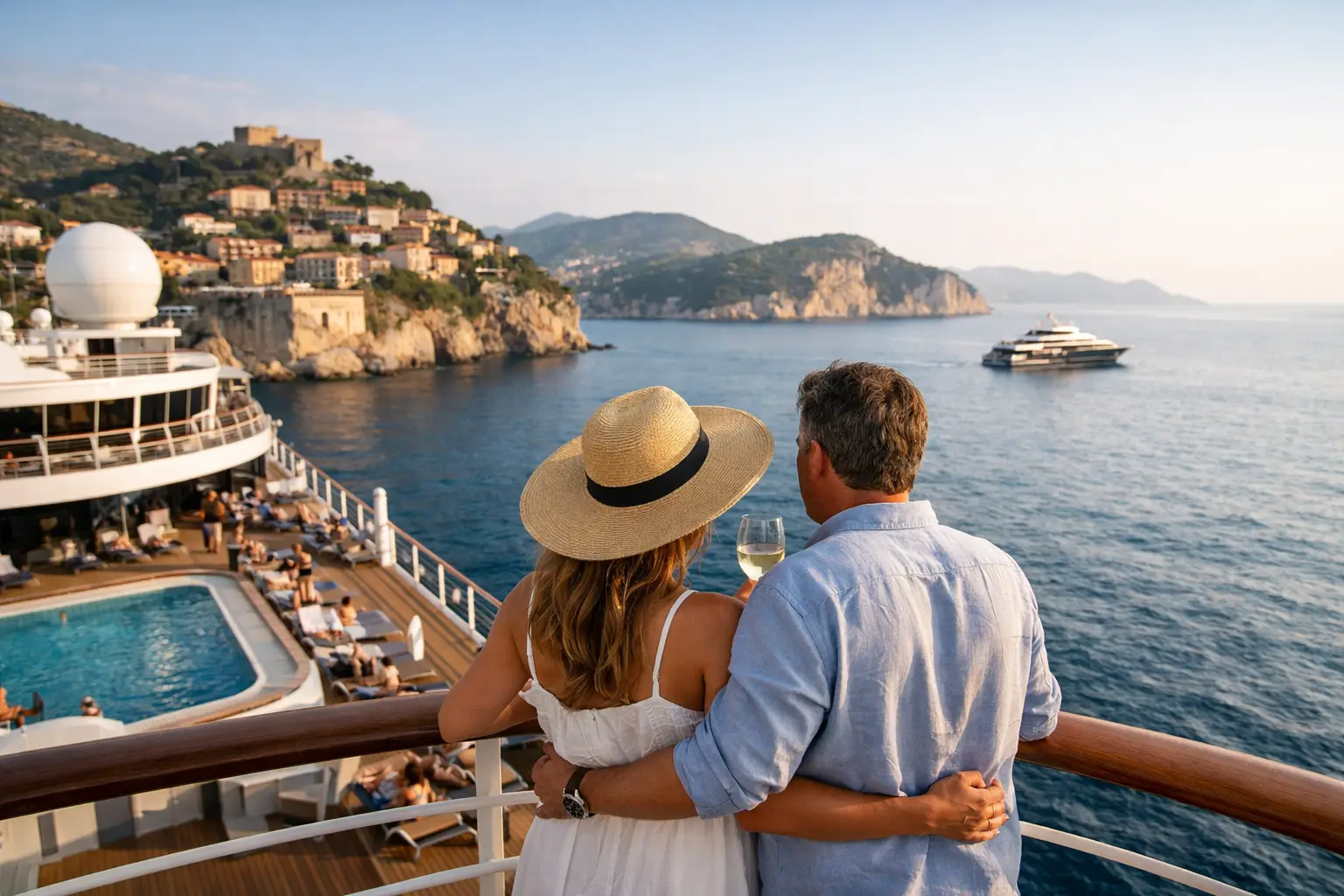
A private guide leads you through Pompeii before the midday crowds arrive. Later, you return to a ship anchored beneath the cliffs of Sorrento, where lunch is served on deck and the afternoon is entirely your own. This is the appeal of mediterranean luxury cruises when they are thoughtfully chosen: not simply seeing more places, but experiencing each place with greater ease, depth, and freedom.
For well-traveled guests, the Mediterranean is rarely a first encounter. It may be the region where you celebrated an anniversary in Tuscany, lingered over dinner in Barcelona, or first watched the sunset from Santorini. A luxury cruise offers a different perspective – one that replaces hotel changes, transfers, and daily logistics with an elegant floating home while retaining access to the art, cuisine, history, and local character that make the region endlessly compelling.
What Makes Mediterranean Luxury Cruises Different?
Luxury in the Mediterranean is not defined by marble bathrooms or chilled Champagne alone, although both have their place. It is the ability to arrive in a captivating destination well rested, to choose between a private exploration and an unhurried morning onboard, and to know that every detail has been considered before you leave home.
The finest small-ship voyages are designed around access. A more intimate vessel can often call at smaller ports and anchor near islands that larger ships cannot reach. Rather than joining thousands of passengers in a congested terminal, you may step ashore in a historic harbor, take a tender into a quiet bay, or arrive close enough to walk into the heart of town.
The onboard experience should feel personal rather than performative. Expect attentive service, spacious accommodations, excellent regional cuisine, and enriching programming that gives context to what lies beyond the ship. The best cruise lines also leave room for spontaneity. An afternoon in Portofino, for example, need not be scheduled down to the minute to be memorable.
Choose a Mediterranean Region That Matches Your Curiosity
The Mediterranean is not one experience. Its western and eastern shores, Adriatic coastline, and island chains each reward a different kind of traveler. Selecting the right region matters more than choosing the itinerary with the longest list of ports.
The Western Mediterranean for art, food, and cosmopolitan energy
Routes linking Spain, France, Monaco, and Italy are ideal for travelers drawn to architecture, museums, fashion, and exceptional food. Barcelona may lead to the Balearic Islands, the French Riviera, Corsica, Sardinia, and the Italian coast. These journeys can blend marquee experiences, such as a private after-hours visit or chef-led market excursion, with quieter pleasures like a long waterfront lunch in Mahon or Alghero.
This region is particularly appealing for guests who want to extend their trip with a few nights in a favorite city. Barcelona, Florence, Rome, and Venice all deserve time beyond a single port day. A pre- or post-cruise stay transforms a fine itinerary into a more complete journey.
The Eastern Mediterranean for history and dramatic landscapes
Greece, Turkey, and Croatia often deliver the most vivid contrast between ancient civilizations and spectacular seascapes. One day might bring the Acropolis and a private guide who makes its history feel immediate; the next, a swim from the ship in a clear Aegean cove.
Greek island itineraries are especially attractive for couples seeking romance and a sense of place, but timing matters. Santorini and Mykonos can be exceptionally busy in peak summer, particularly when several large ships are in port. The right small-ship itinerary, an early private tour, or a visit in shoulder season can make an enormous difference.
Turkey adds another layer for travelers fascinated by archaeology, design, and cuisine. Ephesus is extraordinary, but so are less expected moments: tasting olive oil near Kusadasi, browsing a small artisan studio, or sailing into Bodrum as evening settles over the harbor.
The Adriatic for villages, coastlines, and slower discovery
The Adriatic rewards travelers who prefer a more intimate rhythm. Croatia and Montenegro combine medieval walled cities, limestone islands, vineyard landscapes, and waterside restaurants where a two-hour lunch feels entirely reasonable. Dubrovnik is deservedly celebrated, yet the smaller ports and islands often become the stories guests tell most often after they return home.
A route through Split, Hvar, Korcula, Kotor, and smaller coastal villages can feel wonderfully balanced. There is history, but not only history; scenery, but not only scenery. The pleasure lies in the transitions between them.
Small Ship or Large Ship? The Trade-Off Is Real
For discerning travelers, small ships are often the natural fit for Mediterranean sailing. They typically offer a more refined atmosphere, fewer guests, more personal service, and access to ports where large vessels cannot call. The experience tends to feel closer to a private yacht voyage, though with the amenities, culinary standards, and operational assurance of a luxury cruise line.
That said, a small ship is not automatically the right choice for every traveler. Larger luxury ships can offer more dining venues, elaborate wellness facilities, and a broader range of entertainment. They may also be a better fit for multigenerational families or guests who value many onboard choices during sea days.
The key question is not, “Which ship is most luxurious?” It is, “How do you want the journey to feel?” Travelers who want quiet elegance, destination immersion, and flexibility often prefer an intimate vessel. Those who enjoy a livelier onboard environment may be happier on a larger ship, provided the itinerary and service level meet their expectations.
Design the Voyage Around Meaningful Time Ashore
A cruise itinerary is only as rewarding as the time you spend in each destination. It is tempting to choose the voyage with the greatest number of ports, but an overpacked schedule can turn a Mediterranean journey into a checklist. Fewer ports, later departures, and overnight stays frequently create a richer experience.
Consider what you genuinely want from each place. In Provence, that may mean a private visit to an artist’s studio followed by lunch at a family-run estate. In Sicily, it could be exploring the baroque streets of Noto, then returning to the coast for a wine tasting. In Greece, a day at sea may be as valuable as a day of touring if it gives you time to absorb the setting.
Private shore experiences are particularly worthwhile when you have a clear interest: antiquities, Jewish heritage, architecture, culinary traditions, gardens, photography, or family roots. They allow the day to move at your pace and make room for the unexpected conversation, neighborhood café, or scenic detour that group tours often miss.
Timing Can Shape the Entire Experience
Late April through early June and mid-September through October are often the most rewarding periods for Mediterranean luxury cruises. The weather is generally pleasant, the light is beautiful, and popular destinations tend to feel less crowded than they do in July and August.
Summer has its advantages, especially for travelers who want warm water, long evenings, and a livelier atmosphere. Yet heat, traffic, and visitor numbers can affect the experience in places such as Rome, Venice, Santorini, and the French Riviera. If summer is the only time that works, selecting an itinerary with smaller ports, overnight calls, and thoughtfully timed excursions becomes even more valuable.
Shoulder season also brings a different emotional texture. Vineyards are active, markets are full, and coastal towns feel less like a stage set for visitors. For many experienced travelers, that sense of authenticity is the real luxury.
The Details That Turn a Cruise Into a Journey
The ship is only one part of the experience. Air arrangements, transfers, hotel stays, dining reservations, private touring, and pacing all influence how a Mediterranean voyage feels from beginning to end. A Rome embarkation may call for arriving two or three nights early, while a Venice departure can be paired with time in the Veneto or a quiet escape in the Dolomites.
This is where a tailored approach matters. Dream Vacations – Matt Boshcka can help shape the cruise around the experiences that matter most to you, while anticipating practical details that are easy to overlook. The goal is not to fill every hour. It is to create an itinerary with enough structure to inspire confidence and enough space for discovery.
The Mediterranean has a way of rewarding travelers who resist the urge to rush. Choose the ship that feels right, linger where your curiosity leads, and let the journey leave room for the moments no itinerary can fully predict.
Leave a Reply