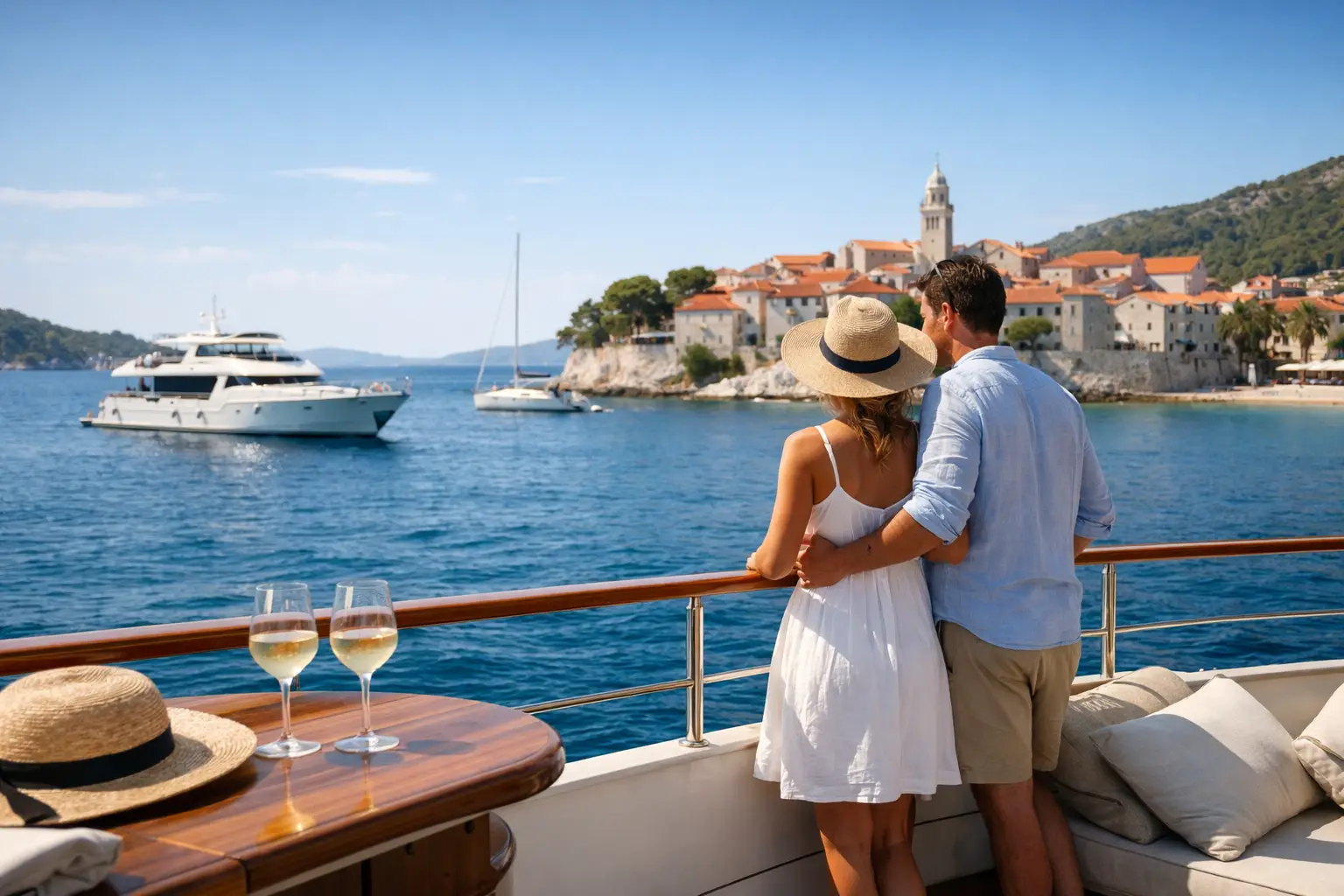
The appeal of the Dalmatian Coast is not simply that it is beautiful. It is that each day can unfold differently: morning coffee in a Venetian-era harbor, a swim in a quiet cove before lunch, an afternoon wandering stone lanes scented with rosemary, and dinner beneath the walls of a centuries-old town. Croatia yacht cruises explained begins with this distinction: this is less about being transported between ports and more about experiencing the Adriatic at its natural pace.
For travelers accustomed to exceptional land journeys and intimate small-ship experiences, Croatia offers a rare combination of ease, cultural depth, and sensory pleasure. Yet the term “yacht cruise” covers several very different styles of travel. The right choice depends on how private you want the experience to feel, how much time you wish to spend ashore, and whether your ideal day is structured around discovery, relaxation, or a considered mix of both.
What a Croatia Yacht Cruise Really Is
A Croatia yacht cruise generally follows the island-dotted coast between Split and Dubrovnik, although itineraries may also explore the northern islands, Istria, or Montenegro. Rather than crossing open ocean for days at a time, these journeys are typically coastal and island-based. Sailing distances are short, scenery is constantly changing, and the ship often arrives in port early enough to make an evening ashore part of the experience.
Most travelers will encounter three broad options. Small luxury ships are the most cruise-like, carrying roughly 20 to 40 guests with a crew, restaurant, lounge areas, and a modest range of cabins or suites. They offer an easy, sociable format while retaining a far more personal atmosphere than a large ocean vessel.
Motor yachts tend to be smaller and more design-forward, often with fewer guests, elevated cuisine, and a stronger emphasis on attentive service. They may feel like a boutique hotel that happens to move through the islands. A private charter, meanwhile, offers the greatest freedom. Families, couples traveling together, or a group of friends can shape the route, dining preferences, shore experiences, and rhythm of each day around their own interests.
The word “yacht” should not automatically suggest sailboats, however. Many Croatia yacht cruises operate on elegant motor vessels. Sailing yachts are available and can be extraordinary for travelers who value the romance of wind and water, but their itineraries are more dependent on weather and wind conditions.
Croatia Yacht Cruises Explained: The Routes That Matter
The classic southern Dalmatian route is popular for good reason. It connects Split and Dubrovnik through a landscape of limestone islands, pine-covered hillsides, sheltered bays, and historic ports. It is exceptionally well suited to first-time visitors who want both iconic places and the pleasure of unhurried coastal travel.
Split to Dubrovnik
A typical one-way sailing might include Split, Hvar, Vis, Korčula, Mljet, and Dubrovnik. Each stop has its own character. Split is lively and layered, built around Diocletian’s Palace. Hvar offers polished restaurants, waterfront energy, and access to quieter inland villages and vineyards. Vis feels more remote, with a long military history and a gentler, more authentic pace.
Korčula is beloved for its medieval walls and narrow lanes, while nearby family estates invite travelers to taste local olive oil, wines, and traditional island dishes. Mljet, much of it protected as a national park, brings forested walking trails and saltwater lakes. Dubrovnik provides a dramatic finale, especially when explored beyond the busiest midday hours.
This route is ideal for travelers who want a balanced introduction to the coast. It does come with a trade-off: in high summer, headline ports such as Hvar and Dubrovnik can be busy. A thoughtfully designed itinerary can soften that by arranging private guides, choosing the right arrival times, and including quieter anchorages or less-visited villages.
Northern Dalmatia and Istria
Travelers returning to Croatia, or those who prefer a more understated itinerary, may find the northern coast especially rewarding. The Kornati archipelago offers a stark, beautiful maze of islands and clear water. Zadar brings Roman remains, contemporary public art, and a lively local atmosphere. Farther north, Istria feels culturally distinct, with Italian influences, hill towns, truffle-rich cuisine, and excellent wineries.
These routes can feel less performative than the southern highlights, though logistics may be somewhat more complex. They reward travelers who value culinary discovery, natural landscapes, and a deeper sense of place over checking off famous names.
The Best Time to Sail the Croatian Coast
The cruising season generally runs from late spring through early fall, but the experience changes considerably by month. May, June, September, and early October are especially appealing for discerning travelers. Temperatures are comfortable, the sea is inviting, and ports are generally less crowded than in July and August.
July and August deliver the warmest weather, the most animated nightlife, and long, sun-filled days. They are well suited to multigenerational families traveling around school schedules or guests who enjoy a lively social atmosphere. The compromise is higher demand, warmer cities, and more traffic in the best-known ports.
May and October feel quieter and more reflective. Water temperatures may be cooler, and occasional weather shifts are more likely, but the rewards include peaceful harbors, easier restaurant reservations, and a stronger connection with local life. For a milestone anniversary or a second honeymoon, September often strikes an exceptional balance.
What the Days Feel Like Onboard
The best Croatia yacht cruises do not rush. A well-planned day might begin with the vessel leaving port after breakfast, followed by a few hours on deck as islands drift past. Before lunch, the captain may anchor in a secluded bay for swimming, paddleboarding, or simply floating in water clear enough to see the seabed below.
Afternoons can be devoted to a guided walk, a winery visit, a market tour, or free time to explore independently. Evenings are usually spent in port, allowing guests to dine ashore rather than remaining on the ship. This matters in Croatia, where family-run konobas, seafood restaurants, and small wine bars are an essential part of the cultural experience.
On a private charter, the day can be even more flexible. Perhaps you linger in a bay because everyone is enjoying the water, then choose a late lunch at an island restaurant accessible by tender. Or perhaps your priority is history, with a private guide meeting you in Korčula and a reserved table afterward. Freedom is the luxury, but it works best when paired with knowledgeable planning.
What Is Usually Included, and What Deserves Attention
Inclusions vary widely by vessel and operator. Accommodations, crew, breakfast, certain onboard meals, Wi-Fi, and water toys are common, but they should never be assumed. Some sailings include guided walks or selected excursions; others leave nearly all experiences optional. Private charters have their own structure, often involving a base rate plus provisions, fuel, port fees, gratuities, and customized activities.
The cabin category also deserves careful consideration. On some vessels, lower-deck cabins offer excellent value but have smaller windows and less natural light. Main-deck and upper-deck cabins often feel more connected to the passing landscape, though availability is limited. A true suite may be worthwhile for travelers who appreciate more space and a private outdoor area, particularly on a longer journey.
It is equally wise to ask about the ship’s guest profile, dining style, tender access, and physical requirements. Croatia’s historic towns are wonderful to explore, but cobbled lanes and steps are part of the terrain. Guests with mobility concerns can still enjoy a highly rewarding voyage, provided the itinerary and vessel are selected with care.
Why Expert Curation Changes the Experience
The vessel is only one part of the journey. The most memorable Croatian experiences often happen off the expected path: a private tasting with a winemaker on Hvar, an early visit to Dubrovnik’s old town before the crowds arrive, or a leisurely lunch at a family-owned estate where the host explains the island’s culinary traditions.
This is where a personalized approach makes a meaningful difference. Rather than choosing a ship based solely on photographs or cabin size, the itinerary should reflect the way you travel. Some guests want convivial evenings and the ease of a small group. Others prefer private space, flexible timing, and experiences arranged exclusively for them. Dream Vacations – Matt Boshcka can help align the right vessel, route, pre- or post-cruise stays, and onshore moments with the journey you have in mind.
A Croatia yacht cruise is at its finest when there is room for serendipity: an unplanned swim, a conversation with a local host, a sunset seen from a harbor that was not on last year’s wish list. Choose the framework carefully, then leave space for the Adriatic to surprise you.
Leave a Reply