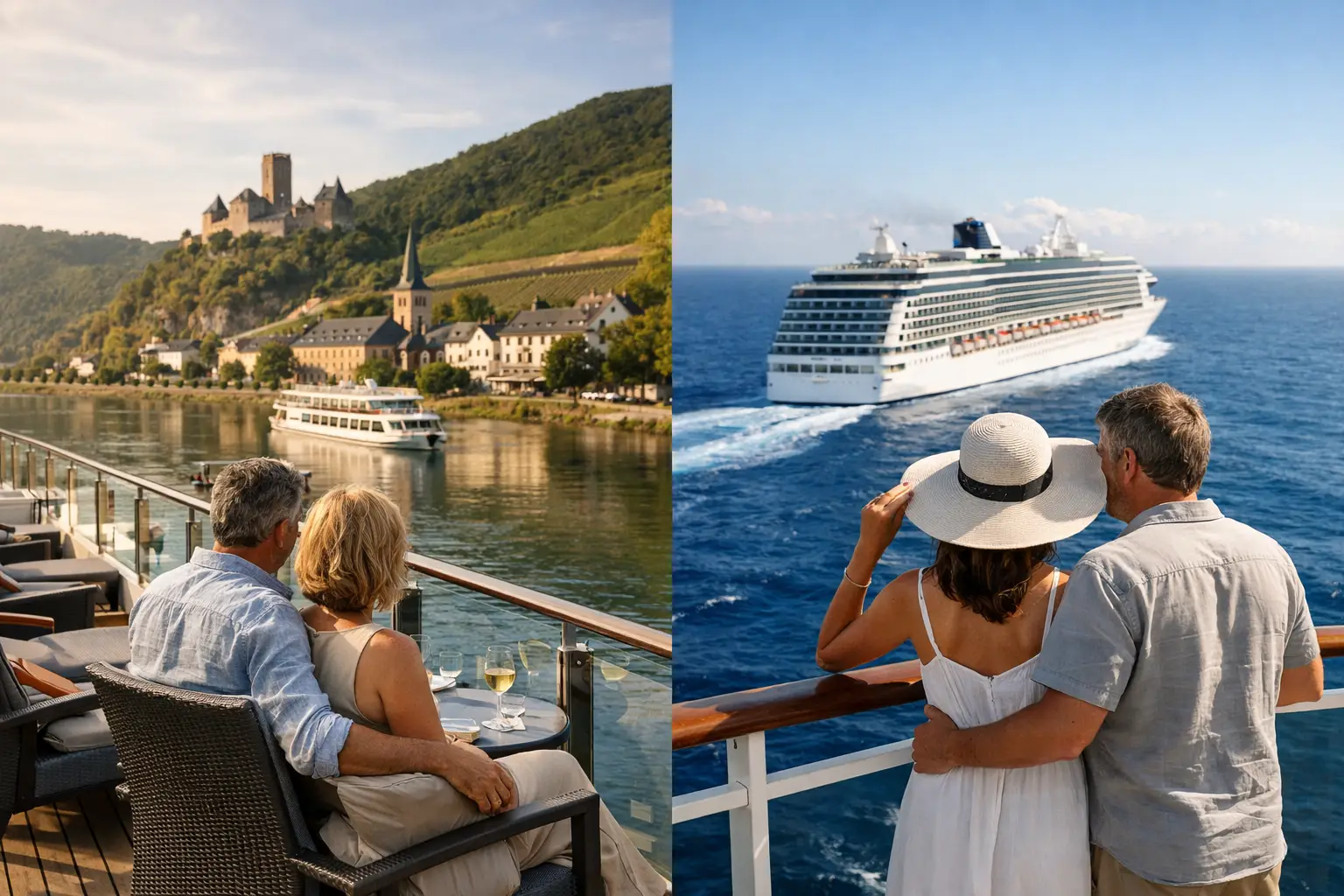
A cruise can be a floating resort, a moving boutique hotel, or a remarkably intimate gateway into a destination. That distinction is at the heart of river cruises vs ocean cruises: which offers more value? For travelers who have moved beyond simply checking places off a list, the answer is rarely about the lowest fare. It is about how much of the destination you truly experience, how comfortably you travel, and whether the journey reflects the way you want to spend your most valuable asset: time.
Neither style is inherently better. A thoughtfully selected ocean cruise can be exceptional for remote landscapes, island chains, and vast itineraries. A luxury river cruise can offer an unusually graceful way to experience Europe, Asia, Africa, or Egypt at a more intimate pace. The greater value comes from choosing the right ship and itinerary for your priorities.
River Cruises vs Ocean Cruises: Which Offers More Value?
Value in luxury travel is not a single number on an invoice. It is the relationship between what is included, what requires additional planning, the quality of your time ashore, and the ease of the overall experience.
River cruising often delivers value through proximity. Ships typically dock in or near the heart of historic towns and cities, so a morning in Vienna, Bordeaux, Budapest, or Avignon can begin with a short walk rather than a lengthy transfer. The ship becomes a comfortable, consistent home base while the destination remains the focus.
Ocean cruises tend to deliver value through range and scale. They can carry you between Greek islands, along Norway’s coast, through the Galápagos, or across the Southern Ocean toward Antarctica. On the right small ship, the sea itself becomes part of the experience, offering access to places no river vessel could reach.
The essential question is not whether one has more value in the abstract. It is whether you value immersion over variety, intimacy over extensive onboard choice, or a quieter cultural rhythm over the energy of a larger voyage.
What Your Fare Really Includes
At first glance, river cruising can appear more expensive than an ocean itinerary of comparable length. That comparison can be misleading. Luxury river cruise fares frequently include many of the elements travelers would otherwise arrange and purchase separately: dining, beverages with meals, daily guided excursions, Wi-Fi, gratuities, transfers, and occasionally rail or hotel components.
The best river cruise lines also make shore experiences central to the voyage. Instead of treating excursions as a secondary sales opportunity, they may offer a choice of walking tours, active outings, culinary experiences, and slower-paced options included in the fare. For travelers who appreciate clarity and prefer fewer decisions once they are underway, this can represent meaningful value.
Ocean cruises vary dramatically by ship and cruise line. A mainstream ocean fare may cover accommodations, standard dining, and entertainment, while specialty restaurants, drinks, shore excursions, gratuities, and Wi-Fi add considerably to the final cost. Luxury and small-ship ocean lines, by contrast, can be highly inclusive, often incorporating fine dining, premium beverages, excursions, onboard gratuities, and sometimes business-class air or pre-cruise hotel stays.
The wise comparison is not brochure fare against brochure fare. Compare the total anticipated investment, including flights, transfers, excursions, dining preferences, gratuities, and any hotel nights needed before or after sailing. Then consider what each journey makes possible.
The Destination Experience Is Fundamentally Different
A river cruise is often designed around the pleasure of lingering. You may wake as vineyards slide past your balcony, walk into a medieval town before the day’s visitors arrive, and return for an unhurried lunch on the sun deck. Evenings might bring a private concert in a Baroque hall, a local wine tasting, or time to wander independently through an illuminated old town.
Because river ships are small, usually carrying fewer than 200 guests, the experience feels more personal and less anonymous. There are fewer dining venues, fewer entertainment options, and no casino or waterslide competing for attention. For many well-traveled couples, that is precisely the appeal. The ship supports the journey rather than becoming the main event.
Ocean cruises offer a broader canvas. A Mediterranean voyage can connect iconic ports such as Barcelona, Monte Carlo, Florence, and the Greek islands. An expedition voyage can place you among penguin colonies in Antarctica, beside glaciers in Alaska, or in the company of naturalists in the Arctic. Onboard, even small luxury ships can offer multiple restaurants, lectures, spas, lounges, and more varied public spaces than a river vessel can accommodate.
The trade-off is that some ocean ports involve tender rides, longer drives to major sites, or a concentrated influx of passengers from several ships. A carefully designed itinerary and the right shore program make an enormous difference.
Intimacy, Service, and the Pace of the Journey
River cruising generally rewards travelers who enjoy a sociable but peaceful atmosphere. Guest counts are low, staff members quickly learn preferences, and the pace is predictable. You unpack once, yet you see a new place nearly every day. There is a satisfying simplicity to it, particularly for travelers who prefer not to manage trains, hotel changes, restaurant reservations, and daily logistics across several countries.
Ocean cruising offers more choice in both pace and personality. Larger ships create an active, resort-like environment with countless ways to fill a sea day. Small-ship ocean voyages feel more curated, with a greater emphasis on destination experts, regional cuisine, and flexible exploration. They can be ideal for travelers who want refined service but have little interest in the crowds and spectacle of a mega-ship.
Consider sea days honestly. Some travelers relish them – reading on deck, enjoying the spa, attending lectures, and watching the horizon unfold. Others find them disconnected from the reason they travel. River cruises have very few true sea days, though scenic sailing time is part of their charm.
When River Cruising Offers the Better Value
River cruising is particularly compelling for travelers who want to experience Europe’s cultural heart with minimal friction. It can be an elegant first visit to the Danube, Rhine, Rhône, Seine, Douro, or Dutch waterways, but it is equally rewarding for returning travelers ready to explore a region more deeply.
It is also a strong choice when convenience matters as much as luxury. The daily rhythm is exceptionally easy: breakfast, an expertly guided exploration, time for independent discovery, and an evening aboard a ship where your suite is never more than a few minutes away.
For culinary-minded travelers, itineraries through France, Portugal, and Italy can deliver rich local flavor. For history lovers, the Danube and Nile offer layered stories that become more vivid when experienced from the water. For multigenerational groups or couples with varied energy levels, included excursion choices can allow everyone to travel together without doing exactly the same thing.
River cruising is not ideal for every traveler. Cabins and public spaces are necessarily more compact, and there is less private balcony space on some ships. River conditions can occasionally affect schedules, especially during periods of high or low water. The experience also has a more structured cadence, which may not suit travelers seeking long stretches in a single city.
When Ocean Cruising Offers the Better Value
Ocean cruising becomes the clear choice when the destination requires open water. Alaska, the Caribbean, the South Pacific, the Galápagos, the Norwegian fjords, Antarctica, and the Arctic are not substitutes for a river journey. Here, the ship can provide access to extraordinary scenery and wildlife while avoiding frequent flights and hotel changes.
It can also offer superior value for travelers who want more space, more entertainment, and a wider choice of dining and onboard activities. A luxury ocean suite may provide a genuinely residential feel, while a small expedition ship can carry kayaks, Zodiacs, and a team of specialists who turn a voyage into a deeper field experience.
The key is to distinguish between large-ship convenience and small-ship access. A larger vessel may offer more amenities and attractive pricing, but it may not reach the smaller harbors or provide the same level of personalized exploration. For a destination such as the Galápagos or Antarctica, ship size and expedition leadership are central to the value equation.
How to Choose the Journey That Feels Worthwhile
Begin with the story you hope to bring home. If you picture café-lined squares, local markets, vineyards, museums, and the pleasure of stepping directly into a historic town, a river cruise may be your ideal framework. If you picture sea ice, volcanic islands, dramatic coastlines, remote wildlife, or a sequence of islands best connected by water, an ocean voyage may be the more meaningful choice.
Then consider your preferred travel rhythm. River cruises favor cultural discovery and effortless logistics. Ocean cruises favor geographic breadth, onboard variety, and access to places beyond the reach of land-based travel. Both can be luxurious. Both can be deeply personal when the itinerary, ship, suite, and shore experiences are selected with care.
At Dream Vacations – Matt Boshcka, the most successful journeys often begin with a conversation about what matters long after the trip is over. The right cruise should not merely be a good value on paper. It should give you more of what you travel for: time together, a sense of place, and experiences that remain vivid long after you have unpacked.
Leave a Reply