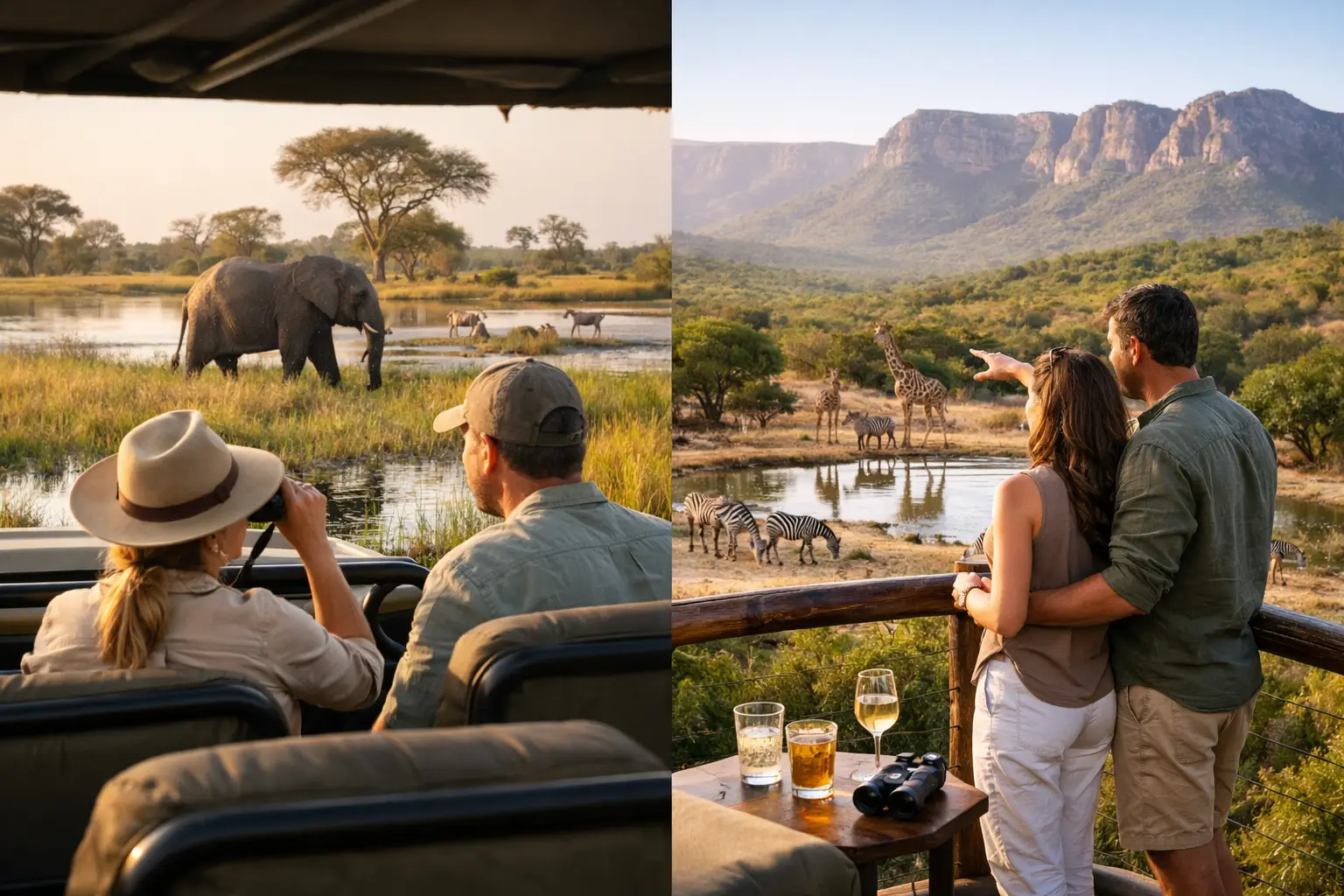
The first elephant encounter often answers the Botswana vs South Africa safari question better than a map can. In Botswana’s Okavango Delta, you may watch a family cross a reed-fringed channel from the quiet of a mokoro canoe, with no other vehicle in sight. In South Africa’s private reserves, you may follow a leopard at dusk with an expert tracker, then return to a polished lodge for an exceptional cellar selection and dinner beneath the stars. Both are extraordinary. They simply deliver luxury through different rhythms.
For travelers investing in a once-in-a-lifetime African journey, the choice is rarely about which country is objectively better. It is about the kind of wilderness you want to feel, how much time you have, who is traveling with you, and whether your ideal safari includes a broader journey through wine country, Cape Town, Victoria Falls, or the pristine waterways of the Delta.
Botswana vs South Africa Safari: The Essential Difference
Botswana is defined by space, water, and a feeling of profound remoteness. Its low-impact tourism model limits visitor numbers in many key areas, particularly the Okavango Delta and Linyanti. The result can feel deeply private: fewer vehicles at sightings, camps set far from towns, and days shaped by the movement of wildlife and the changing light across vast floodplains.
South Africa offers remarkable safari experiences with greater variety around them. A stay in the Greater Kruger region can pair superb wildlife viewing with a few restorative days in Cape Town, the Winelands, or along the coast. It also offers a wide range of lodge styles, from intimate owner-run properties to larger, design-forward retreats with extensive wellness facilities.
Neither approach is inherently more luxurious. Botswana’s luxury is often found in exclusivity, silence, and access to unspoiled landscapes. South Africa’s is often expressed through choice, culinary depth, sophisticated lodge design, and the ease of creating a multi-dimensional itinerary.
Wildlife Encounters and the Style of Viewing
Botswana: Wilderness on a Grand Scale
Botswana is especially compelling for travelers drawn to elephants, big cats, wild dogs, and the drama of a living wetland. The Okavango Delta is a seasonal miracle, where floodwaters spread across the Kalahari and create a mosaic of lagoons, islands, grasslands, and channels. Game drives are exceptional, but they are only part of the experience. Depending on the camp and water levels, safari days may include mokoro excursions, boating, guided walks, and sleep-outs beneath a sky crowded with stars.
The Linyanti and Chobe regions are renowned for large elephant herds, while the Moremi Game Reserve offers an extraordinary mix of habitats and strong predator viewing. Botswana’s private concessions can allow carefully managed off-road driving at sightings, night drives, and guided walks, creating opportunities to observe wildlife with both freedom and respect.
The trade-off is that sightings can be less predictable. This is true wilderness, not a carefully staged wildlife experience. A lion may disappear into tall grass. A drive may become an unforgettable study in tracks, birdlife, and the quiet anticipation of what is around the next bend. For many experienced travelers, that uncertainty is precisely the appeal.
South Africa: Exceptional Big Five Viewing
South Africa, particularly the private reserves bordering Kruger National Park, is often one of Africa’s most rewarding destinations for close, consistent Big Five viewing. Skilled rangers and trackers work together, often following animal movements on foot while guests remain safely in the vehicle. This can lead to remarkable moments with leopards, lions, rhinos, elephants, buffalo, and the full cast of smaller creatures that make a safari richly layered.
Private reserves such as Sabi Sand, Timbavati, Klaserie, and Manyeleti have long-standing reputations for superb guiding and highly refined service. Off-road tracking is permitted in many areas under strict protocols, allowing guides to position vehicles thoughtfully without turning a sighting into a crowd. Night drives reveal a different world: a leopard on the hunt, a genet in the trees, or the reflective eyes of a chameleon along the road.
For first-time safari travelers, South Africa’s game viewing can feel reassuringly productive. For photographers, families, and anyone hoping for a strong chance of seeing the Big Five in a relatively short stay, it is an exceptional choice. Yet it can be busier than Botswana, especially in the most celebrated private reserves, and the bush experience may feel less remote.
Landscapes, Lodges, and the Feeling of Place
Botswana’s camps tend to immerse you in the landscape rather than separate you from it. Think canvas-and-timber suites open to the sounds of hippos, elevated decks overlooking a floodplain, and evenings when the only lights nearby are lanterns and the Southern Cross. The finest camps are beautifully designed and deeply comfortable, but their sophistication is usually understated. The setting remains the main event.
South Africa offers an exceptionally broad spectrum of luxury. You can choose a secluded bush villa with a private pool and dedicated vehicle, a contemporary lodge with a world-class wine program, or a classic safari camp with a more traditional atmosphere. The country’s food and wine culture gives evenings an added dimension, and many lodges excel at tailoring dining, spa, and wellness experiences around a guest’s preferences.
Travelers celebrating a milestone anniversary or seeking a second honeymoon often appreciate the romance and privacy available in both countries. Botswana may be the more compelling choice for a couple who wants the outside world to fall away completely. South Africa may be ideal for those who want the bush to be one memorable chapter in a journey that also includes art, gastronomy, coast, and culture.
When to Go and How Long to Stay
Botswana’s classic dry season, generally from June through October, brings excellent wildlife concentrations as animals gather around remaining water sources. The Okavango Delta is usually in flood during this period, making it especially attractive for water-based activities. July through September is often considered peak season, with crisp mornings, dry landscapes, and outstanding game viewing.
South Africa’s Greater Kruger region is also excellent during the dry winter months, roughly May through September, when vegetation thins and wildlife becomes easier to spot. Summer, from November through March, brings heat, lush scenery, newborn animals, and dramatic afternoon storms. It can be a rewarding time to travel, particularly for birders, though viewing conditions are less straightforward.
A meaningful Botswana safari generally deserves at least six or seven nights across two or three distinct areas. Light aircraft transfers are part of the experience, offering an aerial view of the Delta’s labyrinth of channels and islands, but they also make this a journey best suited to travelers comfortable with small-plane travel.
South Africa is more flexible. Four nights in a private reserve can provide an excellent safari introduction, while seven nights allows time for two different lodges or regions. Add three or four nights in Cape Town, and the trip becomes a particularly satisfying first Africa itinerary. For a more expansive journey, South Africa also pairs naturally with Victoria Falls, Zimbabwe, Zambia, Mozambique, or Botswana.
Who Should Choose Botswana?
Choose Botswana if your priority is a profound sense of wilderness, small-scale camps, and safari activities that extend beyond the vehicle. It is particularly well suited to travelers who have already enjoyed a traditional game-drive safari and now want something more elemental and remote. It also rewards patience. The most memorable moments may arrive not through a checklist, but in the hush of a canoe channel, the alarm call of impala at night, or a lion’s roar carrying across the water.
Botswana is also a natural fit for those who value conservation-minded travel. Its high-value, low-volume model supports a more exclusive guest experience while helping protect landscapes where wildlife can still move across immense distances.
Who Should Choose South Africa?
Choose South Africa if you want extraordinary wildlife viewing with more itinerary flexibility and a compelling cultural dimension beyond the bush. It is an excellent choice for a first safari, a multigenerational family celebration, or travelers who want to combine wildlife with Cape Town’s restaurants, galleries, history, and nearby Winelands.
It can also be the better match for guests who prefer shorter transfer times, more direct international flight options, or a polished lodge experience with extensive amenities. That does not make it a lesser safari. With the right reserve, lodge, guide, and pacing, South Africa can be as intimate and transformative as any wilderness journey on the continent.
The Most Rewarding Answer May Be Both
For travelers with sufficient time, Botswana and South Africa complement one another beautifully. Begin in Cape Town for its dramatic setting and refined culinary scene, continue to a private Greater Kruger reserve for exceptional Big Five viewing, then fly north to the Okavango Delta for a quieter, water-shaped finale. The contrast makes each destination more memorable: the precision of tracking in South Africa, followed by Botswana’s immense stillness.
At Dream Vacations – Matt Boshcka, a safari is planned around more than a wish list of animals. The right journey considers your preferred pace, comfort level, interests, celebration, and the experiences you want to carry home long after the photographs are framed.
The best choice begins with an honest question: do you want Africa to impress you with abundance, or do you want it to leave you awed by its silence? Either answer can lead to an extraordinary safari, provided the itinerary leaves room for the unexpected moments that become the stories you share for years.
Leave a Reply