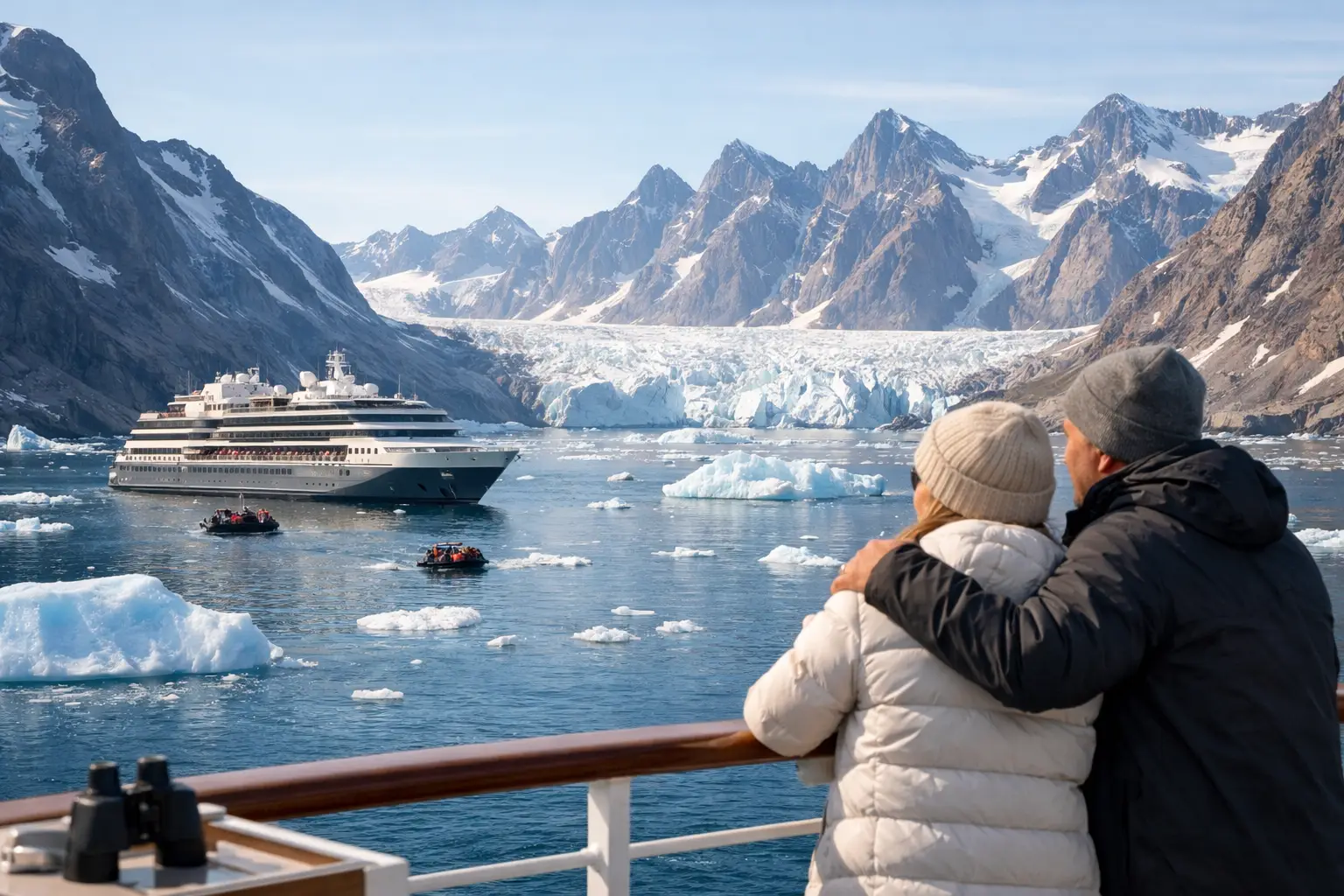
The first sound many travelers remember is not the ship’s engine or the wind across the deck. It is the sharp, crystalline crack of an iceberg calving into a silent fjord. This Greenland expedition cruises guide is designed for travelers who want more than a remarkable view from a balcony. Greenland rewards curiosity, patience, and thoughtful planning with encounters that feel genuinely rare: vast ice fields, intimate Inuit communities, breaching whales, and landscapes that make even seasoned travelers pause.
An expedition here is not a conventional cruise with a few scenic ports added to the itinerary. It is an active, changeable Arctic journey shaped by weather, sea ice, wildlife, and the judgment of an experienced expedition team. That uncertainty is not a flaw in the experience. It is precisely what makes each voyage singular.
A Greenland Expedition Cruises Guide to Choosing Your Route
Greenland is immense, and the route you select determines the character of your journey. For most first-time visitors, West Greenland offers the strongest balance of accessible communities, dramatic fjords, wildlife, and reliable summer sailing conditions. It is a wonderful choice for travelers seeking a first Arctic expedition without compromising on depth or comfort.
West Greenland itineraries often include Ilulissat Icefjord, where the Sermeq Kujalleq glacier releases monumental icebergs into Disko Bay. A Zodiac cruise among these sculptural blue-and-white forms can be humbling, particularly in the evening light. Voyages may also call in Sisimiut, Qeqertarsuaq, or Nuuk, providing opportunities to understand Greenlandic life beyond the wilderness imagery.
East Greenland is wilder, less populated, and often more dependent on ice conditions. It appeals to travelers who have already explored the polar regions or who value a stronger sense of remoteness. The towering mountains and intricate waterways of Scoresby Sund are among the Arctic’s great landscapes, but the conditions can be more demanding and schedules more fluid.
For those drawn to a true frontier experience, longer voyages may explore Northwest Greenland, combine Greenland with Iceland, or follow portions of the historic Northwest Passage. These itineraries require more time and a greater comfort with unpredictability. In return, they can deliver exceptional wildlife viewing, profound isolation, and the satisfaction of traveling through a region few people will ever see.
When to Sail: Light, Ice, Wildlife, and Comfort
The Greenland expedition season generally runs from late spring through early fall, but no single month is universally best. The right choice depends on what you hope to experience.
Early-season voyages, typically June into early July, bring lingering sea ice, snow-draped mountains, and a powerful feeling of Arctic awakening. This period can be especially compelling for photographers and travelers who want to see the region at its most wintry. It may also involve more itinerary adjustments, as ice conditions influence where ships can travel.
July and August offer the mildest temperatures, long days, and often the widest range of landing opportunities. Wildflowers appear on tundra slopes, whales are frequently sighted, and communities are particularly engaging during their active summer season. For many guests, this is the ideal window for a first Greenland voyage.
By late August and September, the light begins to soften, autumn colors arrive, and the larger crowds of the brief Arctic summer have eased. Some routes offer the possibility of seeing the northern lights, although they should always be treated as a welcome possibility rather than a promise. The trade-off is cooler weather and fewer daylight hours.
The Ship Matters More Than Most Travelers Expect
In Greenland, choosing an expedition ship is as important as choosing the route. The finest vessels balance capability with an atmosphere that feels relaxed, polished, and personal. They carry a fleet of Zodiacs for shore landings and close exploration, employ expedition leaders with deep regional knowledge, and offer lectures that add meaning without making the journey feel like a classroom.
Smaller ships generally create a more intimate experience and can often access narrower fjords or make landings more efficiently. They are also better suited to travelers who value knowing their fellow guests and expedition staff. Larger expedition ships may provide more dining venues, spa facilities, and cabin categories, but can carry more guests ashore in rotating groups.
Look beyond square footage when comparing accommodations. A private balcony can be lovely when conditions allow, yet a well-designed observation lounge may become the heart of the voyage. Consider the ship’s ice classification, stabilization, onboard medical capability, elevator access, and the quality of its outerwear program. These details have a direct effect on daily comfort.
For many discerning travelers, a suite is worth considering not simply for added space but for the ability to retreat after a full day of cold-air exploration. The best choice, however, depends on how you travel. Guests who plan to spend every available moment on deck may prioritize expedition operations and route design over the largest possible cabin.
What a Day on an Expedition Really Feels Like
A Greenland expedition operates to nature’s timetable. You might wake to an announcement that humpback whales are feeding beside the ship, then spend the morning cruising by Zodiac beneath a glacier face. Another day could include a guided landing, an easy walk across tundra, and a visit with residents in a coastal settlement.
There is activity, but it is not about checking off strenuous achievements. Expedition teams usually offer varied options, from gentle cultural walks to longer hikes over uneven ground. Travelers with good mobility will have the greatest flexibility, particularly when stepping in and out of Zodiacs. That said, many voyages can accommodate different activity levels when expectations are discussed carefully before booking.
The most meaningful moments are often unplanned. A polar bear sighting from a respectful distance, a narwhal breaking the surface, or a conversation with a local guide can alter the day’s agenda entirely. Wildlife sightings are never guaranteed, and responsible operators do not chase animals for a photograph. The privilege lies in being present when the Arctic chooses to reveal itself.
Cultural Encounters Deserve the Same Attention as Icebergs
Greenland is not an empty wilderness. Its communities carry a living culture shaped by Inuit traditions, maritime skill, art, language, and an enduring relationship with the land and sea. Thoughtful itineraries create time to meet local residents, visit museums or artisan workshops, and learn about contemporary Greenland as well as its history.
These encounters call for humility. Visitors are guests, not spectators. A skilled expedition team provides context around photography, local customs, and the practical realities of life in remote settlements. This perspective transforms a port call from a pleasant stroll into a more meaningful connection with the place.
Preparing Well Without Overpacking
Luxury in the Arctic is not about dressing formally. It is about being comfortable enough to stay outside when the light turns extraordinary. Most expedition operators provide waterproof outer layers and rubber boots, but travelers should confirm exactly what is included.
Bring insulating base layers, a warm midlayer, waterproof gloves, a hat that covers the ears, and sunglasses with good UV protection. A small daypack, binoculars, and a camera that can be operated with gloves are useful additions. Pack medications in your carry-on, along with a change of clothes, since weather disruptions can occasionally affect flights into Arctic gateway cities.
Motion sensitivity also deserves an honest conversation. Greenlandic waters can be calm, but open-sea crossings can be lively. Modern expedition ships offer stabilization, and physicians can recommend appropriate remedies, yet no vessel can remove the reality of the ocean. Choosing an itinerary with fewer exposed crossings may be the wiser decision for some travelers.
Why Expert Planning Changes the Experience
A Greenland expedition deserves planning that extends beyond the sailing itself. The right pre-cruise stay can allow time to recover from international travel and explore Reykjavik or Copenhagen at an unhurried pace. Post-cruise arrangements should account for the possibility of weather-related schedule changes rather than relying on a tight onward connection.
At Dream Vacations – Matt Boshcka, we begin with the traveler rather than a ship brochure. Some clients want the finest suite and a quiet, refined onboard atmosphere. Others care most about photography, natural history, active landings, or the chance to pair Greenland with Iceland or Norway. Those preferences shape the operator, itinerary, cabin, flights, hotels, and practical details around the voyage.
The most successful Arctic journeys leave room for the unexpected while ensuring every controllable element has been considered. Choose a route that matches your appetite for adventure, a ship that supports how you like to travel, and an advisor who can help you prepare with confidence. Then, when the ice opens ahead and the captain changes course toward something extraordinary, you will be ready to say yes.
Leave a Reply