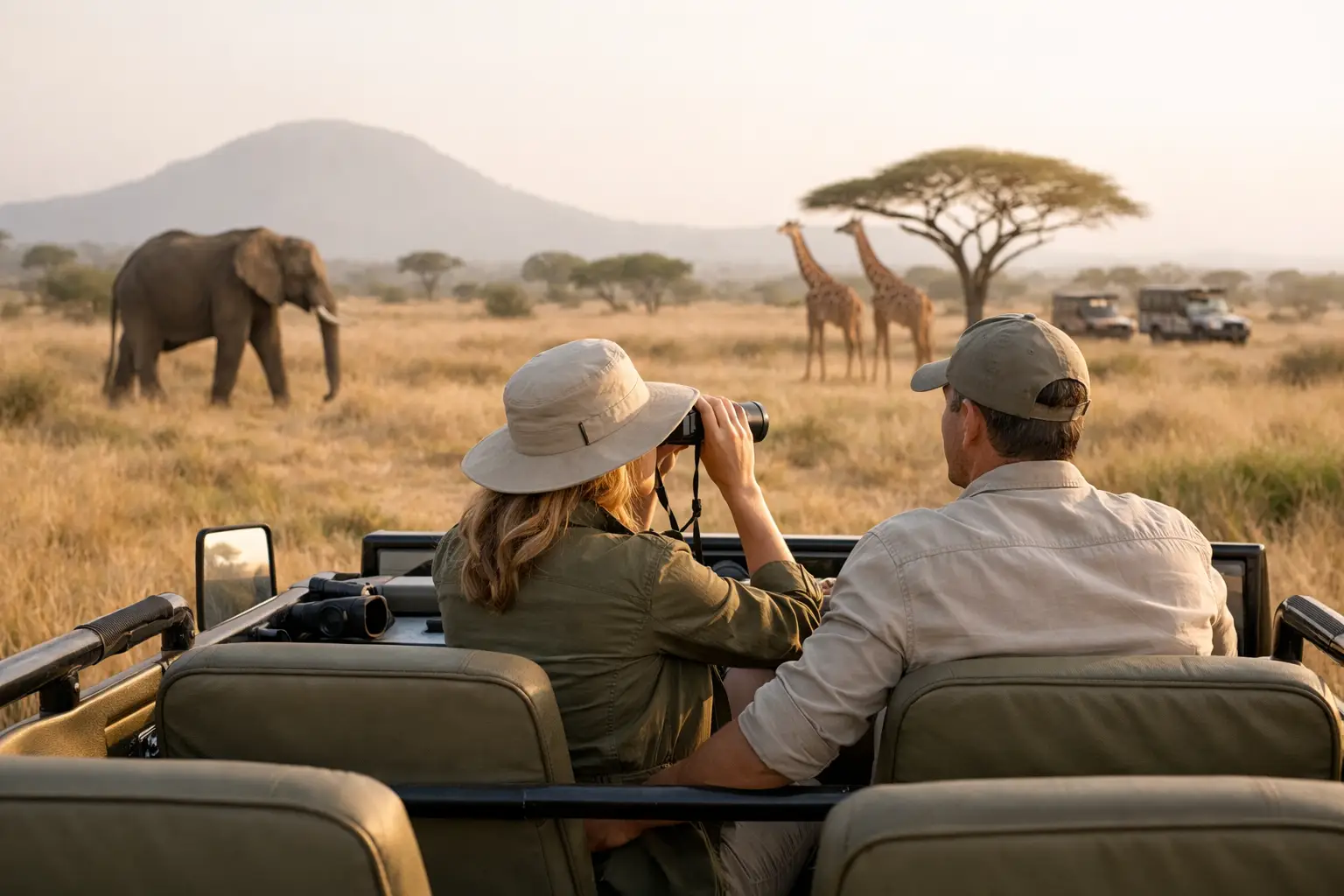
The first elephant sighting rarely happens as people imagine it will. It may be at dawn, when the bush is still silver with morning light and a quiet bull steps from the trees just yards from your vehicle. Or it may be beside a waterhole at lunch, viewed from the shaded deck of an intimate camp. The best African safaris for first-time visitors are not defined by how many parks fit onto an itinerary. They are the journeys that pair exceptional wildlife with an unhurried pace, thoughtful guiding, and the reassurance that every detail has been anticipated.
For a first safari, the right destination should feel exhilarating, not complicated. That often means choosing areas with reliably strong wildlife viewing, well-run luxury camps, and travel logistics that support the experience rather than consume it. Africa is vast, and each region offers a distinct rhythm. The ideal itinerary depends on whether you picture the Great Migration, a private Big Five reserve, wide-open desert landscapes, or a quieter, water-based wilderness.
What Makes a Safari Ideal for First-Time Travelers
A remarkable first safari is built around more than the Big Five. Leopards, lions, elephants, buffalo, and rhino are compelling, of course, but the lasting magic often comes from smaller moments: a guide interpreting fresh tracks in the sand, a lilac-breasted roller flashing across the road, or the sound of hippos calling after dark.
For most first-time visitors, a safari should include no more than two or three camps over a 9- to 12-night journey. Moving every other day can turn a meaningful experience into a series of transfers. Staying three or four nights in one place allows time to settle into the landscape, get to know your guide, and let wildlife encounters unfold naturally rather than feeling like a checklist.
The quality of guiding matters enormously. An exceptional guide understands animal behavior, reads the terrain, and knows when to stop talking so the moment can speak for itself. Private concessions and smaller camps also tend to offer greater flexibility, including off-road viewing where permitted, night drives, and walking safaris. These experiences can transform a wonderful wildlife trip into something far more personal.
Best African Safari Destinations for First-Time Visitors
South Africa: A Refined and Accessible Introduction
South Africa is often an excellent first choice for travelers who want extraordinary wildlife with straightforward logistics. Private reserves bordering Kruger National Park, such as Sabi Sand and Timbavati, are celebrated for close Big Five encounters and particularly strong leopard viewing. The experience is polished without feeling artificial: elegant lodges, excellent cuisine, attentive service, and skilled guides create an easy transition into the African bush.
A South Africa safari also combines beautifully with Cape Town and the Winelands. Spend several days exploring the city’s dramatic coastal setting, private art and culinary experiences, and vineyard estates before flying to the bush. It is a compelling choice for couples, multigenerational families, and travelers who appreciate a varied itinerary with both urban culture and wildlife.
There is a trade-off. Private reserves can feel more curated than the vast, remote wilderness areas of Botswana or Tanzania. For many first-time safari travelers, that is precisely the appeal. The experience is comfortable, highly organized, and rich in wildlife from the very first game drive.
Botswana: For Space, Privacy, and Wild Beauty
Botswana is for travelers who imagine safari as a deep immersion in wilderness. The Okavango Delta, a mosaic of seasonal channels, islands, and floodplains, offers a different perspective on Africa. One morning might bring a mokoro excursion through reed-lined waterways; the next, a game drive following wild dogs across open grassland.
The Delta and neighboring Moremi Game Reserve are known for beautiful camps, low visitor density, and an extraordinary range of habitats. Chobe National Park adds remarkable elephant viewing, especially along the river, while the arid landscapes of the Kalahari deliver a striking contrast and superb opportunities to see meerkats, black-maned lions, and nocturnal species.
Botswana is especially well suited to travelers who value privacy and a sense of remoteness. It is typically a higher-investment destination, partly because of its low-impact tourism model and reliance on light aircraft between camps. For the right traveler, those short scenic flights and secluded settings are part of the experience, not an inconvenience.
Tanzania: The Classic East African Safari
Tanzania delivers the safari many travelers have carried in their imagination for years: acacia-dotted plains, immense skies, lion prides resting in golden grass, and herds stretching to the horizon. The Serengeti is the centerpiece, offering excellent wildlife viewing throughout the year and a profound sense of scale that is difficult to match.
The Great Migration is Tanzania’s most famous spectacle, but it deserves careful planning. The migration is not a single event that appears on a fixed date. Its movements follow rainfall and grazing conditions. From roughly December through March, the southern Serengeti and Ndutu region often host the calving season. From late spring into summer, the herds generally move through the western and central Serengeti. River crossings are most often associated with the northern Serengeti from approximately July through October, though nature does not follow a calendar.
For first-time visitors, a well-paced Tanzania itinerary often combines the Serengeti with the Ngorongoro Crater. The crater offers concentrated wildlife viewing within a remarkable volcanic caldera, while the Serengeti provides the expansive, immersive wilderness experience. Add a few restful nights on Zanzibar if time allows, particularly after early mornings and dusty game drives.
Kenya: Wildlife, Culture, and the Maasai Mara
Kenya’s Maasai Mara is another exceptional choice for a first safari, particularly for travelers drawn to the drama of the migration and the cultural richness of East Africa. The Mara’s rolling grasslands support abundant resident wildlife year-round, so a visit does not depend entirely on migration timing. Big cats are often a highlight, and the open terrain can make viewing especially rewarding for photographers.
Staying in a private conservancy adjacent to the main reserve can offer a more exclusive experience. Conservancies often limit vehicle numbers and may permit activities unavailable in the national reserve, such as guided walks, night drives, and select off-road encounters. They also create meaningful connections with local communities through conservation partnerships.
Kenya works beautifully as a standalone safari or in combination with Tanzania. However, crossing between the two is not always as simple as it appears on a map. A carefully planned itinerary accounts for flight schedules, border procedures, and the pace of the journey. The best combinations feel effortless because the logistical work has been handled long before departure.
How to Choose Between East and Southern Africa
If your dream centers on the Great Migration, sweeping savannas, and the visual drama of classic safari photography, East Africa is likely the natural fit. Tanzania and Kenya reward travelers with vast landscapes, rich Maasai culture, and some of the world’s most iconic wildlife scenes.
If you prefer intimate camps, varied activities, easier connections, and a more lodge-forward style of travel, Southern Africa may be the better match. South Africa offers accessibility and sophisticated pairing options, while Botswana delivers privacy and pristine wilderness. Zambia is another outstanding choice for returning safari guests or active travelers interested in walking safaris, though it may be less ideal as a first and only safari destination if seeing the full range of wildlife is the central priority.
There is no universally best answer. A first safari should reflect how you travel. Some guests want sunrise coffee delivered before a game drive and a beautiful suite to return to afterward. Others want canvas walls, lantern light, and the feeling of being far from anything familiar. Both can be luxurious when chosen with intention.
When to Go on Your First Safari
The dry season, generally from June through October in much of East and Southern Africa, is popular for good reason. Vegetation is thinner, wildlife often gathers near reliable water sources, and conditions are typically favorable for game viewing. It is also the busiest period, particularly around school holidays and major migration areas.
Green season travel can be equally rewarding for those with flexibility. From roughly নভেম্বর through March, depending on the destination, landscapes are lush, birdlife is abundant, and there may be fewer visitors. This is an especially appealing time for photographers, travelers seeking excellent value in select camps, and those interested in the Serengeti calving season. Afternoon rain showers are possible, but they rarely diminish the beauty of the experience.
The Details That Elevate a First Safari
The right camp style, room location, dietary planning, luggage strategy, and flight connections all shape how relaxed a journey feels. Light aircraft have strict baggage allowances, and soft-sided luggage is usually essential. Travel insurance with appropriate medical evacuation coverage is wise, while required vaccinations and health guidance should be discussed with a qualified travel health professional well before departure.
It is also worth considering your tolerance for early starts. Game drives often begin before sunrise, when wildlife is most active and the light is exquisite. A private vehicle can be a worthwhile addition for travelers who enjoy photography, have specific interests, or simply want the freedom to linger without feeling rushed.
At Dream Vacations – Matt Boshcka, a first safari is designed around those personal preferences: the wildlife you hope to see, the level of privacy you value, the landscapes that call to you, and the kind of memories you want to bring home.
Your first safari need not attempt to capture all of Africa at once. Choose a journey with room to be surprised, a camp where you can truly exhale, and enough time in the wild for the landscape to become more than a view from the vehicle. That is when a safari becomes a story you will keep telling for years.
Leave a Reply