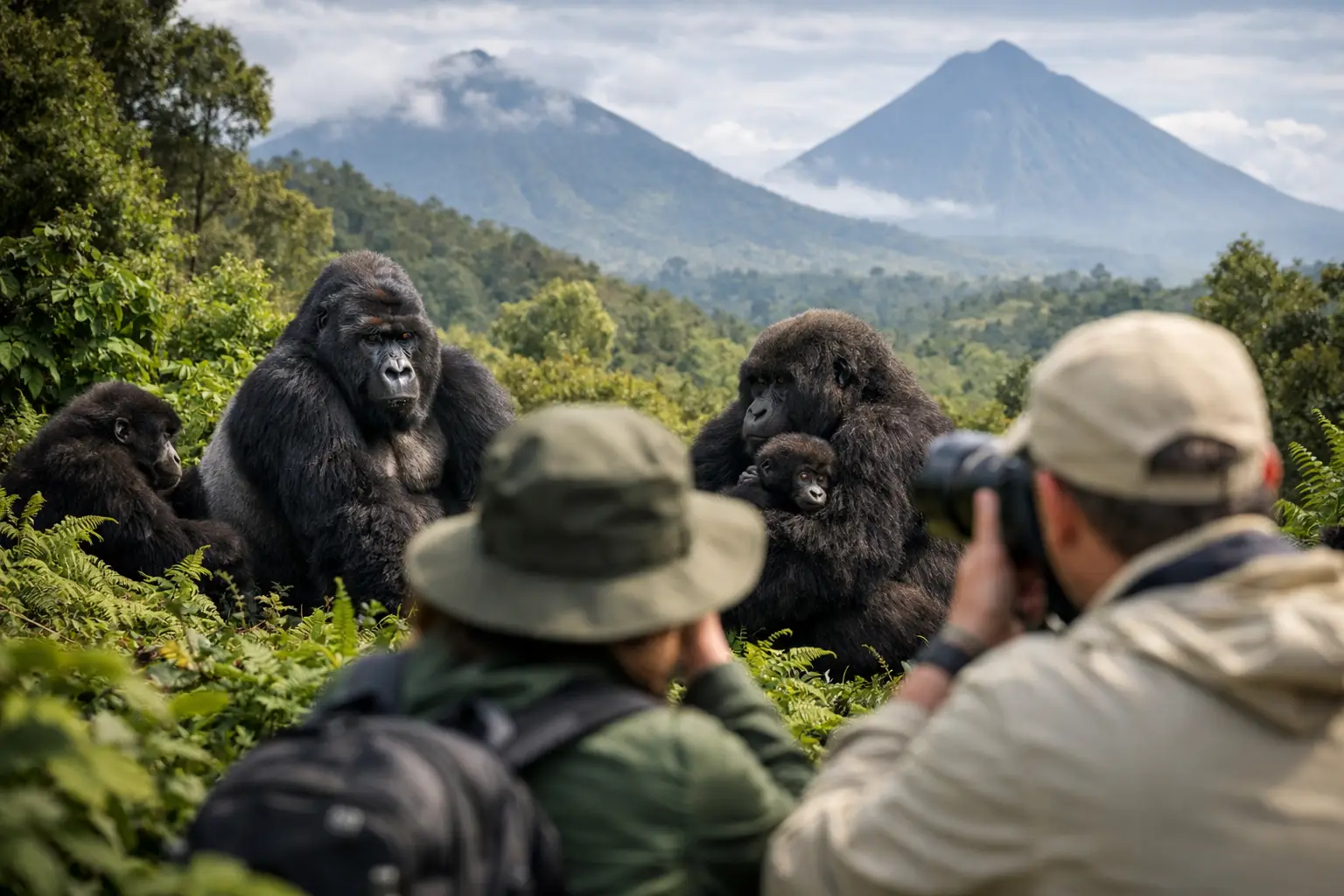
The first sight is rarely dramatic in the way travelers expect. There is no wide-open savanna or distant silhouette against a sunset. Instead, after a quiet climb through the dense, green folds of Volcanoes National Park, the forest parts. A silverback may be sitting only yards away, calm and immensely present, while young gorillas tumble through the undergrowth nearby. For many well-traveled guests, Rwanda gorilla trekking becomes the defining hour of an African journey precisely because it feels so intimate, unscripted, and profoundly real.
This is not a safari experience to fit casually between sightseeing stops. It rewards thoughtful preparation, a well-paced itinerary, and accommodations that allow the day to begin and end in comfort. Rwanda offers an exceptionally polished way to encounter mountain gorillas, pairing conservation-led wildlife travel with warm hospitality, beautiful landscapes, and the ease of a compact, well-managed destination.
Why Rwanda Makes Gorilla Trekking Feel So Personal
Volcanoes National Park lies in northwestern Rwanda, within the Virunga Mountains, a chain of ancient volcanoes shared with Uganda and the Democratic Republic of the Congo. Its bamboo forests, moss-covered trees, and misty ridgelines create the setting many travelers imagine when they picture this experience. Yet the atmosphere is not merely cinematic. It is a living conservation landscape where habituated mountain gorilla families are protected, monitored, and visited under carefully controlled conditions.
Each trekking group is small, with a limited number of visitors assigned to a gorilla family each day. Once the group reaches the gorillas, the visit lasts one hour. That constraint is essential to the experience. It protects the animals, keeps encounters calm, and gives the moment a sense of occasion that a longer, less regulated wildlife viewing experience might lack.
Rwanda is especially appealing to travelers who value a refined journey without sacrificing authenticity. The drive from Kigali to the park is typically around two and a half to three hours, depending on road conditions and stops along the way. That relative accessibility means a traveler can arrive in Rwanda, enjoy an excellent overnight in Kigali, and be at a sophisticated lodge near the park the following day. It is an elegant contrast to more remote safari logistics.
What Rwanda Gorilla Trekking Actually Requires
The trek begins early, generally with a lodge departure after breakfast for park headquarters. There, guests are assigned to a gorilla family and meet their local guides, trackers, and fellow trekkers. The exact duration and difficulty cannot be guaranteed. Gorillas move freely through their habitat, and trackers locate them each morning before visitors set out.
Some treks can be relatively short, while others may involve several hours on steep, muddy, uneven terrain at altitude. The park sits at roughly 7,500 to 14,000 feet above sea level, so even fit travelers may notice the effects of elevation. Weather changes quickly, and rain is possible in every season.
That uncertainty is part of the privilege. You are entering the gorillas’ world rather than arriving at a viewing platform designed for human convenience. Still, the experience should not be confused with an extreme expedition reserved only for elite athletes. A thoughtful itinerary, the right guide support, a sensible pace, and realistic expectations make it achievable for many active travelers in their 50s, 60s, and beyond.
Porters are among the wisest additions to the day. They can carry a daypack, provide balance on difficult sections, and offer quiet encouragement when the trail steepens. Their assistance also supports local livelihoods. Trekking sticks are typically available, and sturdy waterproof hiking boots, gloves, long pants, and a rain jacket are practical essentials rather than optional extras.
The Permit Is More Than a Reservation
A Rwanda gorilla trekking permit is required for every visitor and is issued for a specific date. Availability is limited, particularly during popular travel periods, so the permit should shape the itinerary rather than be treated as a final detail. Once permits are secured, the rest of the journey can be designed around them: lodge stays, Kigali experiences, private transfers, and onward safari connections.
For most travelers, three nights near Volcanoes National Park is the ideal rhythm. It allows time to arrive, settle into the landscape, and trek without feeling rushed. A second gorilla trek may be deeply rewarding for those with the appetite and budget for it, as no two encounters are alike. Others prefer to devote the following day to golden monkey trekking, a visit to local communities, a scenic hike, or simply an unhurried afternoon at the lodge.
A single trek can be extraordinary. Two treks provide more time to observe behavior, personalities, and family dynamics, but they also demand more physically. The right choice depends on fitness, curiosity, and the broader journey. A guest combining Rwanda with a Serengeti safari or a beach escape may prefer one perfectly paced trek. Someone traveling specifically for primates may find a second morning in the forest indispensable.
Choosing the Right Season and the Right Pace
Rwanda can be visited year-round. The drier periods, generally from June through September and again from December through February, often bring firmer trails and clearer conditions. These months are attractive for travelers who want the most comfortable trekking conditions, though they are also in higher demand.
The wetter months bring greener landscapes, fewer visitors in some periods, and a particularly atmospheric forest. Rain can make trails more challenging, but it also enhances the lush, misty character that makes Volcanoes National Park so memorable. Because mountain gorillas live in the forest year-round, wildlife viewing is not seasonal in the same way as a Great Migration safari.
For a luxury journey, timing should be considered beyond weather alone. Consider how Rwanda fits with the rest of your travels, how much recovery time you want after long-haul flights, and whether your ideal trip feels more like an active adventure or a restorative escape. One of the most common planning errors is trying to do too much too quickly. The most rewarding itineraries leave room for a quiet arrival in Kigali, an unhurried lodge afternoon, and time to absorb what the forest has given you.
Beyond the Hour With the Gorillas
The gorilla encounter may be the centerpiece, but Rwanda deserves to be experienced with greater depth. Kigali is one of East Africa’s most orderly and welcoming capitals, with a growing culinary scene, compelling artisan workshops, and a meaningful cultural context. A carefully guided city experience can offer perspective before the journey turns toward the mountains.
Near Volcanoes National Park, the surrounding communities and landscapes add texture to a stay. Golden monkey trekking offers a lively contrast to the stillness of gorilla viewing. Visits centered on Rwandan culture, conservation, and local enterprise can make the trip feel connected rather than extractive. For guests with additional time, Rwanda’s Akagera National Park offers a distinctive Big Five safari setting, while Nyungwe Forest National Park opens another chapter of primate and birdlife exploration.
The lodge choice matters greatly here. After a wet morning on the trail, returning to a warm fire, a restorative treatment, an excellent meal, and a room with views of the volcanoes is not an indulgence detached from the adventure. It is what allows the journey to feel generous rather than exhausting. The best properties also deepen the sense of place through local design, seasonal cuisine, and meaningful conservation partnerships.
Planning an Experience Worth the Journey
A gorilla trek is one of the few travel experiences where meticulous planning creates more freedom in the moment. It means permits are handled early, driving times are realistic, dietary needs are known, and lodge staff understand whether you want a celebratory dinner, a private guide, or a lighter activity after trekking. It also means building in contingency and comfort without overengineering a place that remains delightfully wild.
At Dream Vacations – Matt Boshcka, we approach Rwanda as part of a personal story rather than a checklist. For some travelers, it is the emotional pinnacle of a longer East African safari. For others, it is a transformative anniversary journey designed around the forests, the volcanoes, and the remarkable privilege of sitting quietly among mountain gorillas.
Bring good boots, an open mind, and enough time to let the experience settle in. Long after the mud has been cleaned from your trousers and the photographs have been shared, you may remember something smaller: the sound of leaves moving overhead, the patient gaze of a gorilla, and the rare feeling of having been welcomed, briefly and respectfully, into another world.